Auckland F50 Collision: Damage, Injuries, Penalties
Alexandra
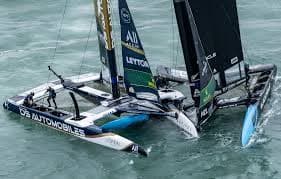
At roughly 90 km/h down the windward leg of Race 3 on 14 February 2026, the New Zealand F50 turned sharply in front of the DS Team France F50, producing a high-energy impact that damaged foils, crossbeams and hull fairings and immediately forced both teams out of competition while onshore medical and logistics teams mobilised.
What happened on the water
Racing at the ITM New Zealand Sail Grand Prix in Auckland, the incident occurred early in the race series when the Black Foils’ maneuver left the DS Team France F50 with no room to avoid contact. The collision concentrated damage on the starboard foils and the port amas; both boats left the racecourse with structural and systems failures that required immediate assessment.
Immediate operational response
The regatta’s safety and logistics chain swung into action: medevac for two crew members, retrieval tugs to tow disabled F50s to the marina, and emergency shore teams to quarantine debris and assess environmental risk. Spare parts and specialist technicians were summoned from regional marinas and service providers, highlighting how little margin there is in high-performance foiling logistics.
📚 Vous aimerez peut-être aussi
Key incident facts
| Date | Venue | Speed | Vessels | Umpire action |
|---|---|---|---|---|
| 14 February 2026 | Auckland — ITM New Zealand Sail Grand Prix | ~90 km/h | Black Foils (New Zealand F50) & DS Team France (F50) | Eight-point penalty to Black Foils; disqualification from subsequent races |
Casualties, care and crew welfare
Two athletes were taken to hospital: Black Foils grinder Louis Sinclair with compound fractures to both legs, and DS Team France strategist Manon Audinet with abdominal trauma. Immediate care included trauma stabilisation and follow-up imaging; both teams have been coordinating with medical advisors and the event’s safety officer. Driver Quentin Delapierre reported being shaken but conscious and cooperative with incident review procedures.
Statements and team reactions
On return to shore, team personnel expressed shock and concern for crew wellbeing. Officials emphasised that on-water decision windows at these speeds are measured in fractions of a second; a sharp, unexpected course change becomes a logistics and safety nightmare in no time flat. As one team manager put it, "you blink and the playbook changes" — a reminder of how fast things escalate in foiling regattas.
Damage assessment and repair logistics
Initial shore inspections identified the following priority repairs and logistics needs:
- Foil and foil arm replacement — specialist materials, lead times up to several days if not prepositioned.
- Crossbeam and deck repairs — structural re-bonding and non-destructive testing required.
- Hydraulic and flight-control recalibration — skilled technicians needed for re‑commissioning.
| System | Damage | Estimated repair window |
|---|---|---|
| Foils | Fractures and delamination | 48–96 hours (with spares) |
| Crossbeams | Crack propagation at joints | 72+ hours (structural work) |
| Electronics | Water ingress, sensor faults | 24–48 hours (diagnostics) |
Regatta and supply-chain implications
For organisers and teams, the crash exposed how dependent modern SailGP operations are on fast supply chains for composite parts, on-call technicians, and marina infrastructure capable of handling disabled foilers. When a boat is out of commission, charter scheduling, crew rotations and promotional obligations all get tangled. For smaller operators in the recreational market, it’s a cautionary tale about the value of redundancy and insurance.
What this means for charter and the wider boating community
High-profile incidents like this one ripple beyond the racecourse. Charter companies, yacht brokers and marinas watch any serious SailGP crash because it affects public perception of safety in foiling and high-speed sailing. For those in the rental and charter market, the lesson is clear: investment in safety briefings, emergency plans, and reliable tow and hauling services matters. Buyers and charter customers may ask more pointed questions about crew training, captain experience and on‑board safety kits — and who can blame them?
Practical takeaways for captains and charter operators
- Review emergency tow and medevac procedures with local marinas.
- Ensure spare-parts inventories or fast access agreements with suppliers.
- Train crews for rapid stabilisation and evacuation in high-speed incidents.
- Communicate transparently with clients about safety protocols to maintain trust.
In short, the Auckland collision was not only a dramatic sporting moment but also a logistical stress test for modern sailing operations. Teams, organisers and service providers are already adjusting protocols, stockpiles and response plans. For skippers, charter firms and marina operators, the incident underlines the importance of readiness — whether you run a superyacht or a rented day-boat. The key points: damaged F50s, two injured crew, an eight-point penalty for the Black Foils and immediate supply-chain pressures for repairs. Wrap-up: the collision highlights risks in high-performance sailing and the knock-on effects for yacht and boat charter, beach and lake operators, captains and marinas, sale and maintenance markets, yachting activities and the wider boating community from gulf to ocean — a reminder that whether it’s a superyacht, a Sunseeker, or a small charter, safety, spares and experienced crews keep us all afloat.


