


 Français
  English (UK)
  Русский
  العربية
  日本語
日本語  한국어
한국어  Magyar
  Türkçe
  Español
  Čeština
  Svenska
  Português
  Ελληνικά
  Suomi
Suomi  Nederlands
  Română
  Italiano
  Polski
  Українська
  Deutsch
  简体中文
简体中文  Slovenčina
  Kneeboarding for Beginners – The Ultimate Guide to Riding Waves with Confidence">

Stand tall with knees bent, hips over the board, and eyes on the horizon; this stance immediately improves balance, which helps you understand weight transfer under the hips and gain better control of direction.
Choose a kneeboard suitable for your weight and leg length; a compact profile with a soft deck reduces fatigue, and a stable platform makes boarder sessions easier as you begin.
Between sessions, focus on a subtle slash of the torso to steer, keep your legs engaged, and maintain a steady engine of your core; this sequence helps you play with balance and translates into better wake control.
Safety priority: swimming skills, a driver supervising, and a safety line on shore keep you afloat while kneeboarders nearby share wake-focused tips and encouragement against mishaps.
Warm up thoroughly before water work; a 5-minute shoulder drill, 3-minute hip mobility, and a light swim to enjoy buoyancy prep your body for sustained sessions, and this routine offers steady gain in balance and feel.
As kneeboarders advance, pivot your priority toward consistency: this pivotal focus helps practice pop-up timing, keep the board between your knees on a calm surface, and remember that enjoying each small milestone serves as fuel to improve.
Kneeboarding for Beginners: Practical Guide to Wave Riding Confidence and Safety
Begin by selecting a board sized to weight and height. A snug deck sits close to chest when kneeling and floats easily when rising, improving balance. As a rule of thumb, length roughly equals rider height minus 6 to 12 inches; lighter riders choose shorter profiles, heavier riders longer ones. Test in calm, warm water with a spotter on shore and a steady rope around 60 feet; adjust stance until weight rests evenly on hips.
Safety basics: wear a PFD suitable for adults and kids; keep a safe distance from wake created by boat; have a spotter watch line end; rope length should let rise without tugging. Secure strap snug around thighs; keep nose slightly up to prevent diving underwater.
Skill progression: start on flat water, then move toward gentle chop. Learn to steer with hips, not arms; practice slow turns, then add small rotations to improve rotational control. Mind stays relaxed; eyes scan ahead to anticipate splash and wind shifts.
Gear choices: select a board with a wide nose and soft rocker for easier planing; a curved nose helps float, reduces nose dive. Choose a size that feels balanced on thighs; a snug strap aids control. In warmer californian lakes, adults and kids can start earlier; begin with warm-up stretches to build comfort.
Performance habits: respect others on lakes; understand ahead where traffic forms and how to avoid entanglement. A sudden gust gives a jolt; respond by raising knees and staying afloat. Rope management stays tidy; once back near shore, pause, stretch, hydrate.
Choose the Right Kneeboard: Size, Rocker, and Buoyancy
Size matters. Pick a board roughly your height with enough length to stay balanced on surface. Typical range 36–40 inches in lakes with light winds; heavier riders move up to 40–42 inches. A board too short slants the nose left and makes control harder. Use this base to establish a comfortable setup immediately; learn and keep skills at a steady level. Sizes vary by rider, so test a couple to find your sweet spot.
Rocker choice helps keep you moving. A flat or low nose rocker keeps surface flat, making pulling across wake easier; it reduces spray and slash when accelerating. Deeper nose rocker powers through deep chop and rough water, but adds drag on calm days. A mid-range rocker works across lakes and parks where you play sports.
Buoyancy matters. Higher buoyancy keeps you floating high on surface, making starts immediate and keeping you comfortable as you learn. Medium density foam provides enough lift across sizes; heavier riders can push to higher buoyancy to keep nose from sinking. When towing or cruising, adjust buoyancy until balance feels natural; theyre stability improves as you dial in your setup.
Test plan: start with a mid-size board, then explore sizes until you find balance. Another path exists to progress. In calm parks and lakes, you keep pushing skills and level up faster. With towing or casual sessions, surface stays steady and nose remains calm. Your choice makes progress easier; you’ll feel a thrill as you gain control.
Master the Pop-Up: A Safe, Repeatable Start
Plan splits pop-up into four steps on a calm lake near a dock. jobe equipment offers reliable grip and comfort; performance rises through gradual, controlled motion. Tailored drills adapt to your level. Practice slowly, focusing on traction, materials, your balance during each repeatable start.
Key cue: maintain a steady handle grip during transitions.
- Positioning: Sit with board parallel to shore, chest over deck, hands on handles at chest height, eyes forward. A steady breath supports balanced starts.
- Grip and traction: Inspect surface; ensure grip on handles remains relaxed yet secure. Use legs to transfer weight gradually against water motion.
- Pop sequence: Push with arms, lift chest, slide knees toward hips, then center weight onto feet to establish a balanced stance. Keep heels slightly back, toes forward, and breathe slowly.
- Recovery: If wobble occurs, return to sitting, reset stance, repeat; aim toward 6–8 second cycles, then progress toward longer starts.
- Equipment notes: a jobe board made from durable materials; padded grip improves comfort; traction texture offers security on wet surfaces; joints stay safe when starts are made safely.
- Progression tip: Paramount goal remains lead in competitions; prioritize safety, gradually build experience; use techniques learned by experienced riders near a dock.
- Longer term: Made by quality teams, boards resist abuse, aiding against making bad choices; practice in calm water during each session to reduce risk.
Positioning and Stance: Balance for Early Rides
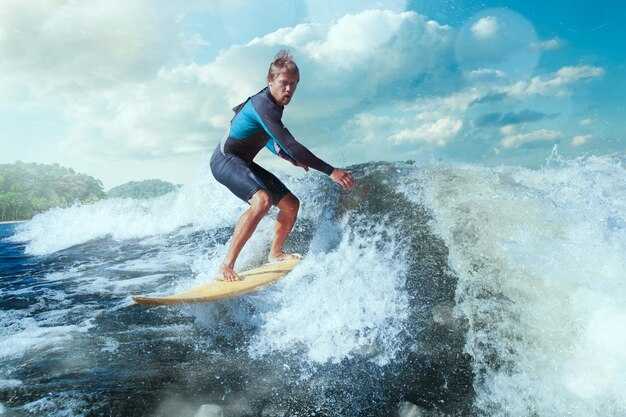
Center weight over surfboard midline; shoulders squared to the travel axis; hips over the knee on top of the board. Maintain a balanced feel by distributing weight evenly between front and rear contact points. Usually, stance width should be about shoulder width, helping the center of gravity stay aligned with the board. In the early stage, this posture builds an excellent base for higher performance, especially as skills develop and confidence grows. Engine of balance relies on subtle micro-adjustments from the driver within you. Getting warm in calm water aids repetition; keep gaze miles ahead, shoulders relaxed, and elbows soft. In choppier water, small shifts raise or lower your center and help lift the board toward smoother turns. In watersports, this stance translates to steadier handling. Boarder feels improved balance with this approach.
| Aspect | How to set | Why it matters |
|---|---|---|
| Body alignment | Shoulders squared to travel axis; hips over the board’s midline; weight centered | Prevents drift; improves balance and control |
| Stance width | Usually about shoulder width; adjust by feel during warmups | Maintains stable CG; supports higher performance |
| Gaze and head | Look miles ahead; head level; chin neutral | Prepares reaction to early changes in watercraft movement |
| Arm position | Elbows soft; hands resting on thighs or lightly on board | Reduces tension; aids subtle balance shifts |
| Weight transfer | Shift weight slightly forward during lift; back during settle | Controls lift, planing, and speed stability |
| Adaptation de la texture de l'eau | Dans une eau plus agitée : micro-ajuster la posture ; rester centré. | Maintient le soutien et la stabilité |
| Progression des étapes | Concentration initiale sur l'alignement ; ajuster au fur et à mesure que les compétences augmentent. | Prend en charge l'amélioration constante des performances dans les sports nautiques. |
| Note post-trajet | Enregistrer la rigidité ou la souplesse ; planifier des étirements pour les hanches et les épaules | Guide la progression et la prévention des blessures |
Après l'effort, effectuez des étirements légers pour maintenir la flexibilité et réduire la raideur des épaules et des hanches.
Lire les vagues et synchroniser votre entrée : comment attraper la bonne vague
Choisissez un pic idéal avec une surface nette ; la priorité est de synchroniser votre élévation lorsque le sommet approche tout en maintenant un centre solide au-dessus de la surface.
Positionnez la planche de genoux, répartissez le poids uniformément, gardez les mains le long des côtés pour faciliter l'équilibre ; la répétition développe la capacité.
Gardez les yeux sur la surface de la vague ; rester concentré aide à prédire le soulèvement et la chute et à se préparer à tenir debout.
Pour les élévations des lèvres, initiez de petits mouvements de rotation et de vrille pour vous aligner sur l'énergie ; le mouvement reste contrôlé.
Lever la poitrine, redresser la colonne vertébrale, maintenir un contact solide avec la surface ; garder le centre au-dessus du sabot pendant le déplacement.
À l'entrée, maintenir la priorité pour rester équilibré ; si la vitesse diminue, ajuster et essayer une autre approche.
Drills : six essais par séance, trois séries ; travailler sur le timing, moins de quatre secondes de contact avec la lèvre au plateau.
Le conditionnement de base améliore les performances ; la capacité augmente à mesure que vous continuez à vous exercer et que l'équilibre devient plus facile.
Utilisez les hanches pour soulever, pas les bras ; maintenez un mouvement linéaire et une surface plane ; redressez la colonne vertébrale pour améliorer la stabilité.
Partager l'espace avec ses pairs exige du respect ; utilisez vos mains pour signaler, évitez de faire de l'entassement ; rester calme aide à maintenir la sécurité.
Profiter des progrès renforce l'attrait ; une autre petite victoire réaffirme la priorité et consolide le centre.
Dans des conditions calmes, vous pouvez maintenir des performances solides tout en augmentant la capacité.
Protocoles de sécurité en milieu aquatique : Équipement, signaux et système d'amis
Recommandation : porter un gilet de sauvetage certifié et attacher un décolle-vite à la planche avant d'entrer dans l'eau. Avoir avec soi un sifflet de signalisation et un dispositif de signalisation flottante de rechange, puis marquer la zone de départ en plaçant des bouées au centre et à chaque coin.
Signaux et système de binôme : affecter un observateur dédié à terre ou sur un bateau ; chaque personne reste à flot dans une zone d'ouïe, avec un autre participant à proximité, puis vérifier après chaque segment. Utiliser des signaux au poignet ou des signaux de la main pour communiquer des actions claires : lever le bras pour indiquer le démarrage, paume de la main tendue pour indiquer une pause, et pointer vers un endroit en détresse si quelque chose ne va pas là-bas.
Contrôle de l'équipement : inspecter la durabilité du gilet de sauvetage et l'intégrité des sangles ; fixer des lignes à déclenchement rapide à la planche ; confirmer la répartition du poids sur le centre de gravité ; s'assurer que les lignes et les raccords ne présentent aucune usure et peuvent résister aux contraintes de rotation lors des tests de maniabilité.
Débuter les exercices : commencer en stationnaire, puis progresser sur une eau calme ; 15 à 20 secondes à flot par tentative pour vérifier l'équilibre ; jambes pliées, position centrée, rotation contrôlée ; surveiller le centre, les côtés et les coins pour des manœuvres plus fluides.
Gestion des risques : examiner les profils de chacun à bord ; éviter les zones bondées ; planifier l'espacement pour réduire les risques ; un observateur au rivage surveille les déplacements et alerte si quelqu'un s'éloigne de la zone de portée ; un binôme sur l'eau assure une surveillance de sûreté par signaux manuels.
Considérations relatives à l'équipement : les dollars investis dans des gilets de sauvetage adaptés, des casques si nécessaire, des cordes robustes et des équipements pour bateaux à moteur se amortissent grâce à des sessions plus longues à flot ; vérifier la taille des cordes et les points d'attache ; ranger des bouées de rechange à portée de main pour un déploiement rapide.