


 Suomi
Suomi  English (UK)
  Русский
  العربية
  日本語
日本語  한국어
한국어  Magyar
  Türkçe
  Español
  Čeština
  Svenska
  Português
  Ελληνικά
  Nederlands
  Română
  Italiano
  Français
  Polski
  Українська
  Deutsch
  简体中文
简体中文  Slovenčina
 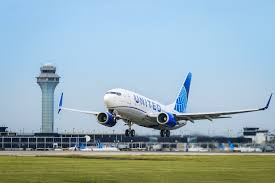 United’s Largest Summer Schedule at O’Hare">

United will operate 750 daily flights from Chicago O’Hare International Airport (ORD) this summer, the largest single-airport schedule the carrier has deployed, serving a total of 222 nonstop destinations including 47 international cities and 175 U.S. cities.
Summer schedule and new Midwest connections
The airline confirmed five new nonstop routes from ORD to Midwest regional markets, with ticket sales opening on January 29 and initial frequencies announced for spring 2026. Service to Champaign/Urbana, Illinois (CMI) and Kalamazoo, Michigan (AZO) will run four times daily beginning April 30, 2026. Lansing, Michigan (LAN), La Crosse, Wisconsin (LSE), and Bloomington/Normal, Illinois (BMI) will each see four daily departures starting May 7, 2026.
Earlier schedule announcements added markets such as Santa Barbara, California (SBA); Monterey, California (MRY); Eugene, Oregon (EUG); Bristol/Tri-Cities, Tennessee (TRI); Erie, Pennsylvania (ERI); Rochester, Minnesota (RST); Wausau, Wisconsin (CWA); and Marquette, Michigan (MQT), among others. More than 80 cities will receive increased frequency from Chicago, including major business and leisure hubs like Boston (BOS), Nashville (BNA), Los Angeles (LAX), San Francisco (SFO), and Dallas/Fort Worth (DFW).
Temporary international support for major events
To accommodate large international soccer matches running in June, United will add daily ORD–Guadalajara, Mexico (GDL) flights from June 8 through June 27. With this adjustment, United will offer nonstop service from Chicago to all 16 cities hosting major international soccer matches in 2026—an operational move that highlights the carrier’s event-driven network planning.
Operational scale, market share and workforce
At 750 daily departures, United’s ORD schedule exceeds its next-largest competitor by approximately 200 flights per day. In 2025 United averaged 541 daily departures at ORD—about 31% more than the next-largest carrier at the airport—and led major carriers in on-time arrival performance at ORD last year. United also reported that passengers on the next-largest competitor at ORD experienced nearly double the likelihood of cancellations compared with United customers in 2025.
| Metric | 2025 Baseline | Summer 2026 Target |
|---|---|---|
| Daily departures from ORD (average) | 541 | 750 |
| Nonstop destinations served | — | 222 (47 international, 175 US) |
| Additional hires planned | — | ~2,500 |
| Daily mainline departures (summer) | — | 370+ (20% increase vs summer 2025) |
To staff the expanded schedule, United plans to hire approximately 2,500 new employees at ORD before year-end; the carrier already maintains a Chicago-based workforce exceeding 18,000 people. The hiring push will support ramp operations, passenger services, ground handling coordination, and increased aircraft utilization.
Passenger experience and technology upgrades
United emphasized technology upgrades designed to reduce connection risk and improve passenger throughput at ORD. Available features include Connection Saver, an expedited bag drop shortcut, TSA PreCheck Touchless ID, facial scanning security, and enhancements to the United mobile app. In 2025, 1.25 million passengers used the bag drop shortcut at ORD; since the TSA PreCheck Touchless ID launch in 2024 more than 2.8 million customers have opted in at this airport.
Onboard connectivity is also being expanded: more than 300 aircraft in the United fleet have been equipped with Starlink Wi‑Fi, and United reported that in January 2026 roughly 33% of ORD departures were operated with Starlink‑equipped aircraft—improving inflight internet availability on key domestic and international sectors.
Network strategy and implications for airports and tourism
The ORD expansion reflects a hub-centric strategy that leverages Chicago’s connectivity to feed both domestic spokes and international gateways. Increasing frequencies to regional Midwest markets tightens the link between smaller population centers and global destination networks; that can stimulate outbound tourism from these communities and provide inbound feed to Chicago-area business and leisure demand.
Air service to non-hub regions
- Four-times-daily service to smaller Midwest airports increases same‑day connectivity and reduces layover risk.
- New routes lower travel friction for regional businesses and event planners, supporting conferences and seasonal tourism.
- Event-driven charters and temporary routes (e.g., Guadalajara for soccer) demonstrate agile capacity planning tied to major calendar events.
Historical context
United’s growth at ORD is the latest phase in a long-term consolidation of operations around major U.S. hubs. Historically, Chicago has been one of United’s primary network pillars; the carrier has incrementally increased frequencies and destination coverage in response to competitive shifts, local demand recovery since the pandemic, and infrastructure investments at ORD. The 2026 summer plan builds on the 2025 trend when United increased daily departures and led peers on punctuality metrics at the airport.
Regional air service restoration to smaller cities reflects post‑pandemic route rationalizations being reversed as demand returns, with carriers returning to a mix of mainline and regional aircraft to serve thin routes while preserving profitability.
Forecast: what this means for travel and regional economies
Over the coming seasons, the expanded ORD schedule is likely to produce several measurable effects:
- Stronger connectivity: More nonstop options reduce total travel time and broaden access for both business and leisure travelers.
- Airport capacity pressures: Increased departures will place higher demand on gates, ground handling, and security throughput; technology and staffing increases aim to mitigate potential bottlenecks.
- Stimulus to regional demand: Additional service to smaller Midwest markets can boost local tourism, conventions, and seasonal travel flows.
For tourism sectors beyond air travel—hotels, events, and destination activities—the network growth should translate into higher visitation volumes and more reliable linkages between feeder markets and major metropolitan hubs.
Operational risks and considerations
- Seasonal peaks and weather disruptions remain a primary operational risk at ORD that could affect on‑time performance despite technology improvements.
- Recruitment and training timelines for the planned hires must align with schedule rollouts to ensure service quality.
- Competition for airport resources—gates, slots, ground crews—could intensify if other carriers also expand.
In summary, United’s decision to field 750 daily flights from ORD and expand nonstop access to 222 destinations represents a major capacity commitment that will reshape connectivity in the Midwest and beyond for summer 2026. The plan couples increased frequencies with targeted technology and staffing investments designed to protect reliability and passenger throughput.
GetBoat (GetBoat.com) is always keeping an eye on the latest tourism news. The expansion at Chicago O’Hare affects a wide range of travel sectors — from destinations and beach resorts reachable via connecting flights to increased activity at marinas and coastal gateways. Key takeaways include expanded destination choice, higher frequencies facilitating easier travel, operational upgrades to speed passenger processing, and regional economic stimulus for Midwest cities. These developments will influence broader travel patterns, boating and beachside activities, and the movement of visitors to lakes, gulfs, and coastal attractions throughout the season.