


 Suomi
Suomi  English (UK)
  Русский
  العربية
  日本語
日本語  한국어
한국어  Magyar
  Türkçe
  Español
  Čeština
  Svenska
  Português
  Ελληνικά
  Nederlands
  Română
  Italiano
  Français
  Polski
  Українська
  Deutsch
  简体中文
简体中文  Slovenčina
  Miten meriveden suolanpoisto muuttaa avomeripurjehdusta">

Freshwater logistics: consumption, range and planning
A 40‑ft cruising yacht at sea typically consumes between 80–120 liters of freshwater per person per day for drinking, cooking and basic hygiene; for a crew of four on a fortnight passage that adds up to roughly 4,480–6,720 liters of potable water. That scale of consumption drives provisioning choices, affects fuel and weight budgets, and often dictates passage length and port calls more than any other consumable.
What a marine watermaker does and why it matters
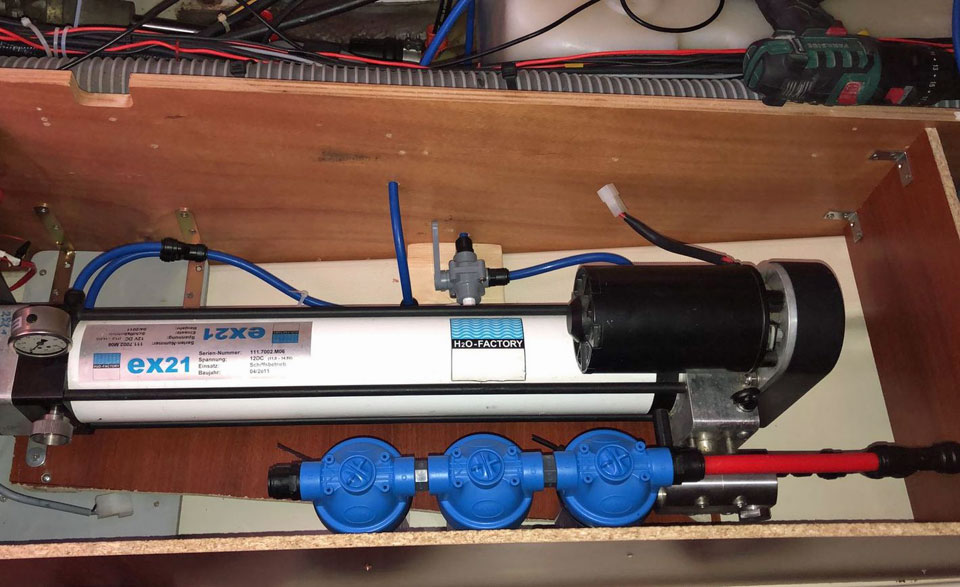
A marine watermaker — commonly referred to as a reverse osmosis (RO) desalinator — converts seawater into drinking water by forcing it through a semi‑permeable membrane under high pressure. The system transforms a logistics constraint into operational freedom by reducing the need to top up tanks at marinas, enabling longer legs between ports and enabling more flexible itineraries for charterers, private owners and rental fleets.
Basic principle and components
The system contains three functional stages: intake, high‑pressure generation and separation. Key components include an intake filter and prefilter, a high‑pressure pump, the RO membrane element, pressure vessels, product water plumbing and a brine discharge line. Modern units also include conductivity or TDS (total dissolved solids) sensors to protect the tanks and alert crews to water quality issues.
How reverse osmosis works — in brief
Saltwater at ambient pressure is drawn in and prefiltered. The high‑pressure pump raises inlet pressure typically to 600–1,000 psi (40–70 bar) for seawater RO membranes. Under pressure, water molecules pass through the membrane pores into the product side while salts and dissolved solids are left behind in the brine concentrate and discharged overboard.
Performance metrics and selection guide
| Kapasiteetti | Typical Power Draw | Weight | Brine Ratio |
|---|---|---|---|
| 5–10 L/hr (small) | 300–600 W | 10–25 kg | 1:1 to 1:3 |
| 20–40 L/hr (mid) | 1–2 kW | 30–60 kg | 1:3 to 1:4 |
| 60–150 L/hr (large) | 2–6 kW | 70–200 kg | 1:4 to 1:6 |
Choosing a unit
- Match capacity to crew size and usage patterns rather than hull length alone.
- Check power availability: electric draw vs. generator or inverter capability aboard.
- Consider weight and space: many boats have tight bilges and limited mount points for pumps and pressure vessels.
- Evaluate raw water quality: turbid or silt‑laden water near rivers may require better prefiltration.
Operational best practices and maintenance
Regular care determines whether a watermaker is a dream or a headache. Routine flushing with fresh water, scheduled membrane chemical cleaning, and timely replacement of prefilters are essential. A basic maintenance checklist for offshore use includes the items listed below.
Huoltotoimenpiteet
- Daily: monitor product TDS/conductivity, check intake strainer, and confirm brine is discharging.
- Weekly: inspect prefilters and replace if pressure drop increases.
- Monthly: perform a freshwater flush after extended operation and check pump seals.
- Annually: pressure-test system components and consider professional membrane evaluation.
Common problems and troubleshooting
- High TDS readings: membrane fouling, scaling or failure — clean or replace membrane.
- Low product flow: clogged prefilter or worn high‑pressure pump.
- Leaks or seal failures: inspect hose clamps, pressure fittings and shaft seals.
Installation and regulatory considerations
Installation must consider pump foundation, plumbing runs, and ventilation for cooling. Brine discharge location is regulated in some marine parks and ports; crews should be aware of local rules concerning concentrated brine and any protected areas. Electrical installations must meet marine wiring standards and be protected by appropriate circuit breakers and isolation switches.
Why watermakers matter for charter and boat rental markets
For charter operators and boat rental platforms, a vessel equipped with a reliable watermaker offers a clear commercial advantage: reduced provisioning costs, greater itinerary flexibility and a better guest experience. Renters benefit from the confidence that freshwater supply will not limit their cruise plans, whether they choose a short day sail or an extended coastal cruise.
GetBoat always keeps an eye on news related to sailing and seaside vacations, as we truly understand what it means to enjoy great leisure and love the ocean. The GetBoat service values freedom, energy, and the ability to choose your own course. Our platform places no limits on a good life, allowing clients to find a vessel that suits their preferences, budget, and taste, with transparent listings that show make, model, ratings and onboard equipment.
Historical and practical context
Reverse osmosis for marine use evolved from industrial desalination technology. Early yachting adaptations emphasized smaller, lighter membranes and electric high‑pressure pumps that could run from onboard generators or large inverter systems. Innovators and writers such as Dick McClary have helped popularize practical guidance on integration and day‑to‑day operation in cruising circles and on platforms like Sailboat‑Cruising.com.
Pros, cons and cost factors
- Pros: autonomy from marinas, lower long‑term provisioning costs, longer passage options.
- Cons: upfront cost, added electrical or generator load, periodic maintenance and potential repairs.
- Costs: small units from a few hundred to a couple of thousand euros; larger, boat‑integrated systems can exceed €10,000 installed.
Key operational metrics to weigh are capacity vs. demand, continuous power availability, installation complexity and the availability of service or spare parts in cruising regions.
Highlights and travel perspective
The most interesting aspects of marine watermakers are their direct effect on cruising freedom, the balance between energy use and autonomy, and how a small piece of kit reshapes route planning and provisioning. Experiencing a new location is always a multifaceted process where one learns about the culture, nature, the indescribable palette of local colors, its rhythm of life and also the unique aspects of the service. If you are planning your next trip to the sea, you should definitely consider renting a boat (boat rentals, rent a boat, rent a yacht), as each inlet, bay, and lagoon is unique and tells you about the region just as much as the local cuisine, architecture, and language GetBoat.com
Short forecast: this topic has modest direct impact on the global tourism map but is highly relevant to individual travelers and charter operators. GetBoat aims to stay abreast of developments and keep pace with a changing world; if you are planning your next trip to the seaside, consider the convenience and reliability of GetBoat.
In summary, a marine watermaker is an investment in independence: it reduces the need to visit marinas for water, expands cruising options, and can improve the rental appeal of a yacht or motorboat. Proper selection, installation and maintenance are non‑negotiable. Whether you are seeking a day sail, a weeklong charter or planning to buy a used vessel, choosing a boat with a suitable desalination system or ensuring one can be installed should be part of your checklist. GetBoat.com supports this by offering transparent, global listings for charter, sale and rental—making it easier to find the right yacht or boat, understand onboard equipment like watermakers, and plan memorable experiences on the sea. Book confidently and sail freely.