


 Suomi
Suomi  English (UK)
  Русский
  العربية
  日本語
日本語  한국어
한국어  Magyar
  Türkçe
  Español
  Čeština
  Svenska
  Português
  Ελληνικά
  Nederlands
  Română
  Italiano
  Français
  Polski
  Українська
  Deutsch
  简体中文
简体中文  Slovenčina
 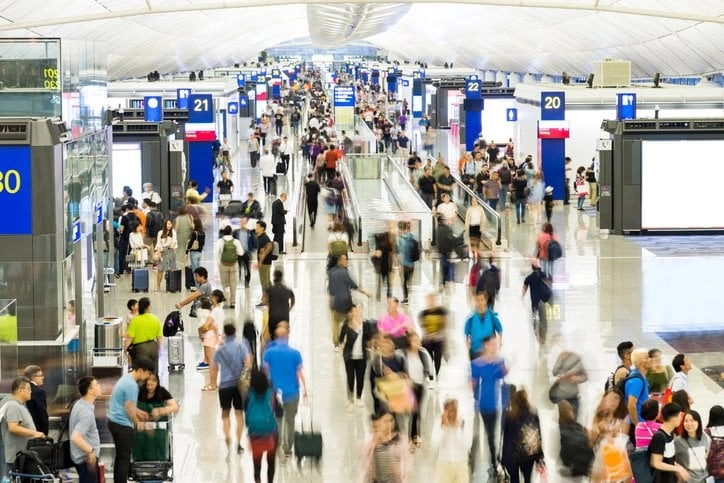 2025 Passenger Surge and Persistent Supply-Chain Strains">

Aircraft deliveries fell behind planned schedules throughout 2025, prompting airlines to keep older airframes in service longer, stretch maintenance windows and absorb an estimated >$11 billion in extra costs related to delayed engines, scarce maintenance slots and interrupted component supply.
Key 2025 traffic and capacity figures
The global market registered record load factors and strong passenger growth in 2025 even as capacity expansions lagged in some regions. Measured in revenue passenger kilometers (RPKs), total full-year demand climbed 5.3% versus 2024 while available seat kilometers (ASK) rose 5.2%, producing an industry-wide load factor of 83.6%—a full-year record.
- International traffic increased faster than domestic, with full-year international RPKs up 7.1% and capacity up 6.8%, yielding an international load factor of 83.5%.
- Domestic markets expanded more slowly: full-year domestic demand rose 2.4% against a 2.5% increase in domestic capacity, producing an average domestic load factor of 83.7%.
- December 2025 closed strongly: overall demand +5.6% year-on-year, capacity +5.9%, load factor 83.7%.
December 2025 by region
The December snapshot shows regional divergence: Africa and Europe recorded strong percentage gains, Asia-Pacific led growth and North America recorded the slowest expansion in both traffic and capacity.
| Region | World Share | RPK % YoY (Dec) | ASK % YoY (Dec) | PLF Level (Dec) |
|---|---|---|---|---|
| Total Market | 100% | 5.6% | 5.9% | 83.7% |
| Africa | 2.2% | 12.8% | 14.1% | 75.6% |
| Aasian ja Tyynenmeren alue | 34.5% | 6.3% | 6.1% | 83.6% |
| Europe | 26.6% | 7.6% | 7.3% | 86.7% |
| Latinalainen Amerikka & Karibia | 5.4% | 6.8% | 6.8% | 83.1% |
| Middle East | 9.5% | 9.6% | 8.3% | 81.5% |
| North America | 21.8% | -0.1% | 2.0% | 82.9% |
Full-year 2025 regional performance
Across the full year, the airline industry saw sustained international strength. Asia-Pacific posted the fastest full-year international growth and the highest regional load factors, while North America was the slowest-growing region in absolute terms.
| Region | World Share | RPK % YoY (Full year) | ASK % YoY (Full year) | PLF Level (Full year) |
|---|---|---|---|---|
| Total Market | 100% | 5.3% | 5.2% | 83.6% |
| Africa | 2.2% | 9.4% | 8.3% | 75.3% |
| Aasian ja Tyynenmeren alue | 34.5% | 7.8% | 6.5% | 84.2% |
| Europe | 26.6% | 5.3% | 5.2% | 84.8% |
| Latinalainen Amerikka & Karibia | 5.4% | 7.0% | 7.4% | 83.4% |
| Middle East | 9.5% | 6.8% | 5.9% | 81.5% |
| North America | 21.8% | 0.4% | 2.0% | 82.9% |
Domestic market highlights
Record full-year domestic passenger numbers and load factors were observed globally, though growth decelerated relative to the 2024 rebound. Notable domestic outcomes:
- Brazil led domestic growth with RPK up 11.1% for the year.
- United States domestic RPKs contracted slightly (-0.6%), with a load factor drop of -1.9 ppt.
- India retained the highest domestic load factor (approx. 85.2%) despite a small decline in load factor.
- Japan saw a significant rise in domestic load factor (+3.4 ppt).
Supply-chain bottlenecks and decarbonization pressure
While passenger demand returned to historical growth patterns, two constraints stood out: the need for accelerated decarbonization and persistent supply-chain disruptions. Governments and the energy sector were singled out as critical to scale up Sustainable Aviation Fuel (SAF) production; insufficient SAF supply threatens the pace at which fleets can decarbonize.
On the supply side, late aircraft and engine deliveries, limited heavy maintenance capacity and soaring spare-part lead times forced airlines into stop-gap measures: extended operating cycles for older aircraft, higher utilization to extract revenue from each seat and compressed maintenance windows. These actions improved short-term capacity utilization but increased operating risk and cost.
Operational and tourism implications
From a logistics and tourism perspective, constrained airlift capacity has downstream effects on destination access, seasonal capacity planning and the broader travel ecosystem. Coastal and island destinations that rely on scheduled international flights may face higher fares or reduced seat options during peak seasons—factors that can alter demand patterns for hotels, marinas and local activities.
Higher passenger numbers in regions such as Asia-Pacific and Europe can translate into increased throughput at marinas near busy airports and elevated demand for destination activities. Charter operators, yachting services and shore-side vendors should factor potential airline-induced surges and schedule variability into staffing, provisioning and berth allocation plans.
Brief historical context and outlook
The 2025 results sit on the trajectory of a post-pandemic recovery that peaked in 2024 with strong rebound growth, followed by a normalization toward historical industry expansion rates in 2025. Key historical drivers have included pent-up leisure demand, resumed business travel and rapidly evolving route networks as carriers rebalanced frequencies and fleet deployments.
Looking forward, the industry outlook hinges on two interlocked developments: the pace of aircraft deliveries and the speed of SAF scale-up. If delivery schedules normalize in 2026 and maintenance bottlenecks ease, capacity should expand and average load factors can moderate toward healthier margins. Conversely, continued supply-chain friction would sustain capacity tightness, pushing yields higher but eroding reliability and increasing costs for airlines and travelers alike.
Practical considerations for travel and service providers
- Airlines should prioritize maintenance planning, supply-chain diversification and contractual leverage with OEMs to reduce exposure to late deliveries.
- Destination managers, marinas and tour operators should monitor airline schedules and build flexible staffing and provisioning models to adapt to seat volatility.
- Policymakers must accelerate SAF incentives and infrastructure investment to support aviation’s decarbonization without constraining connectivity.
In summary, 2025 produced record load factors and robust passenger demand—RPKs grew overall by 5.3% with international travel rising 7.1%—yet the industry continued to grapple with significant supply-chain challenges that raised costs by an estimated $11 billion and constrained growth options. The combination of delayed aircraft deliveries, maintenance capacity limits and SAF supply shortfalls framed both the operational response in 2025 and the priorities for 2026.
GetBoat is always keeping an eye on the latest tourism news and how macro trends—like changes in air capacity, shifting demand at beaches and marinas, charter seasonality and broader yachting activity—affect destinations, boats and coastal services. The 2025 data underscores that transport logistics and capacity planning remain central to tourism outcomes across sea, lake and coastal gateways, influencing everything from captain scheduling to marina provisioning and on-water activities.