


 Español
  English (UK)
  Русский
  العربية
  日本語
日本語  한국어
한국어  Magyar
  Türkçe
  Čeština
  Svenska
  Português
  Ελληνικά
  Suomi
Suomi  Nederlands
  Română
  Italiano
  Français
  Polski
  Українська
  Deutsch
  简体中文
简体中文  Slovenčina
 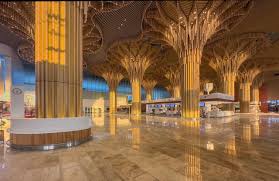 Guwahati’s New Airport Terminal Set to Transform Northeast India’s Aviation">

A New Horizon for Guwahati Airport
Guwahati Airport has recently welcomed a modern new terminal, marking a decisive leap forward in Northeast India’s aviation landscape. With an already impressive record of handling nearly 6.5 million passengers in the fiscal year 2024–25, this airport stands as one of the busiest in the country, functioning as a vital gateway connecting all eight Northeastern states to major Indian metros and select international flights.
The inauguration of this new facility, which is expected to be fully up and running by February 2026, underscores a rapid development pace—transforming the project from blueprint to reality in less than a year. This milestone aligns with India’s wider efforts to enhance regional air connectivity and infrastructure.
Architectural Inspiration and Operational Readiness
The terminal, known as “The Bamboo Orchids,” beautifully fuses contemporary design with local cultural elements. Drawing inspiration from Assam’s iconic kopou phool (foxtail orchid) and the region’s native bamboo species, the building incorporates around 140 metric tonnes of locally sourced bamboo throughout its interiors and façade. This approach not only celebrates the rich biodiversity of the Northeast but also demonstrates the growing trend of environmentally sensitive airport design in ecologically diverse regions.
Behind the scenes, a thorough Operational Readiness and Airport Transfer (ORAT) programme was completed with international collaboration, including expertise from Munich, Germany. This comprehensive program ensures smooth passenger flows, safety protocols, and staff readiness, setting the stage for seamless day-to-day operations as the terminal begins welcoming travelers.
Strategic Role in Regional and International Connectivity
Guwahati International Airport, operated by Adani Airport Holdings Limited, plays a strategic role within India’s Act East policy, which aims to boost accessibility between the Northeastern region and Southeast Asia. The new terminal is a keystone in this broader regional development initiative, positioning Guwahati as the essential air hub linking remote and diverse communities with larger economic centers.
With state-of-the-art features such as DigiYatra-enabled passenger processing, automated check-in facilities, and expanded spaces designed to alleviate congestion during peak times, the terminal is poised to double its passenger handling capacity, targeting 13.1 million travelers annually by 2032.
Investment in Infrastructure and Logistics
The project represents a significant investment of ₹5,000 crore, covering not only terminal construction but also future plans for Maintenance, Repair, and Overhaul (MRO) services and integrated cargo facilities. These enhancements are expected to stimulate regional employment and strengthen logistics capabilities, benefiting trade and tourism alike.
Historical Context: Aviation Growth in India’s Northeastern Region
India’s civil aviation sector has seen a transformational shift over the past two decades. Previously constrained by restrictive policies that limited air service competition and capacity, the industry has embraced liberalization, allowing private operators to develop and modernize airports. This transition has fueled expansion in air travel across the country, especially in regions previously underserved, like the Northeast.
Historically, the Northeastern states faced challenges due to difficult terrain and limited connectivity, making air travel critical for social and economic integration. The new terminal at Guwahati symbolizes this evolution from isolated access points to robust aviation hubs.
National Reforms Driving Regional Development
India initiated wide-reaching reforms to open skies, support private sector involvement, and improve airport infrastructure throughout the 2000s. These reforms led to the modernization of numerous regional airports and boosted domestic and international flight networks. Airport improvements have raised visitor capacity drastically—for example, domestic aircraft movements increased by over 30% in some years, reflecting growing demand and the success of these policy measures.
| Year | International Aircraft Movements (000) | Domestic Aircraft Movements (000) | Annual Growth Rate (%) Domestic |
|---|---|---|---|
| 2003-04 | 133 | 506 | 13.9% |
| 2005-06 | 191 | 647 | 10.3% |
| 2006-07 | 216 | 862 | 33.2% |
Forecasting the Future: Impact on Tourism and Travel
As infrastructure continues to improve at Guwahati and across the Northeastern corridor, there is a strong expectation that connectivity will foster not only greater domestic travel but also increased international tourism. Enhanced air links open the door to a richer exchange of cultural experiences, boosted trade opportunities, and the development of travel hubs that serve both business and leisure.
The Northeast’s unique natural landscapes and cultural heritage make it an emerging destination for adventurous tourists, where aviation facilitates easier access for domestic and overseas visitors. This growth could spur local economies and invite new recreational activities linked to the sea and lakeside retreats, further enhancing travel demand and services.
Enhancing the Gateway Experience
Future-oriented airport design, as exemplified by Guwahati’s new terminal, not only improves passenger comfort but also integrates advanced technologies to streamline operations. These improvements are essential for supporting the increasing numbers of both tourists and business travelers, ensuring that the gateway acts as a positive introduction to the region.
Table: Projected Passenger Growth at Guwahati Airport
| Year | Passenger Capacity (Million) |
|---|---|
| 2025 | 7.5 |
| 2032 | 13.1 |
Conclusión
The launch of Guwahati’s new airport terminal is a landmark development reaffirming Northeast India’s strategic role in the country’s aviation network. Designed with a perfect blend of modern engineering and regional cultural elements, the terminal supports enhanced air travel capacity and improved passenger experience. It marks a crucial link for the eight Northeastern states to domestic metros and international destinations.
The broad investment aims extend beyond passenger flights, touching on cargo, maintenance, and logistics, highlighting a multipronged development approach. This initiative dovetails with past reforms that have transformed India’s aviation landscape by opening up skies and encouraging private sector participation.
In the context of tourism and travel, this airport upgrade holds promise for unlocking new destinations and attracting visitors eager to explore the rich natural and cultural tapestry of the region. The improved connectivity also lays a foundation for expanding activities such as boating and fishing in nearby lakes and rivers, potentially posing new opportunities for yacht charter and sailing adventures along inland waterways.
For travelers and boating enthusiasts looking for seamless access to vibrant destinations connected by air and water, the evolving aviation infrastructure around Guwahati complements the potential for diverse marine and recreational experiences. Whether for work or leisure, these developments could significantly boost regional tourism dynamics and create fresh opportunities for yachting and boating activities.
For those interested in exploring destinations where sailing and boating intersect beautifully with regional travel, GetBoat.com stands out as a premier international marketplace for chartering sailing boats and yachts tailored to a variety of tastes and budgets.