


 Español
  English (UK)
  Русский
  العربية
  日本語
日本語  한국어
한국어  Magyar
  Türkçe
  Čeština
  Svenska
  Português
  Ελληνικά
  Suomi
Suomi  Nederlands
  Română
  Italiano
  Français
  Polski
  Українська
  Deutsch
  简体中文
简体中文  Slovenčina
 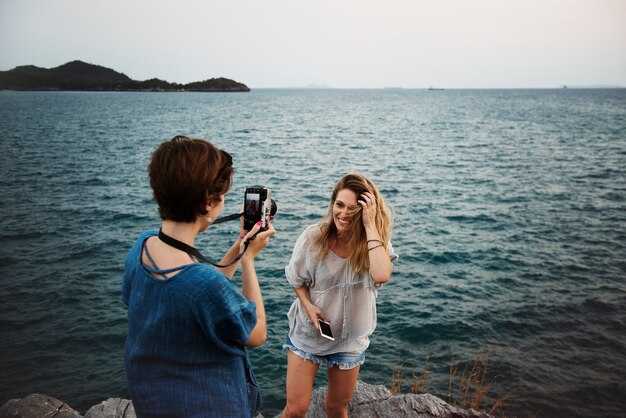 Cómo tomar una gran foto en un barco – Consejos profesionales para paisajes marinos impresionantes">

La estabilidad en cubierta es lo más importante.Plante sus pies a la altura de los hombros, doble sus rodillas y deje que sus codos descansen contra su torso. En condiciones difíciles, use un monopie o apóyese contra un barandal para mantener la cámara estable. Para la salpicadura y las salpicaduras de agua de mar, suba el obturador a 1/1000s or más rápido para capturar los rizos de onda más claros. Si la luz cae, ajusta a 1/500s pero apunta hacia más rápido velocidades cuando los movimientos se aceleran.
Técnicas para enfoque y encuadre: cambiar a modo manual o usar single-point AF, enfoque el foco en un borde de alto contraste, luego recomponer. En un barco, el movimiento del agua crea movimientos de la escena; anticipa dónde flotará el bote y realiza el seguimiento con tu enfoque. Si no puedes bloquear el enfoque, cambia a AF continua con luz brillante, pero vuelve a disparo único AF cuando notes un horizonte limpio y despejado para mantener la escena nítida. No te perderás el momento si practicas el seguimiento y el tiempo.
La composición importa en cada toma. Coloca un elemento de primer plano (cuerda, amarre o boya) para agregar profundidad y dirigir la mirada hacia el escena. Use contrast entre el casco oscuro y la ola blanca para resaltar el sujeto. Mantén los horizontes nivelados; una línea inclinada rompe el ritmo de la imagen en mar agitado y calma el fotográfico valor del marco. Si te enfrentas a tricky ángulo, balancea tu cuerpo con el balanceo del bote para enmarcar siluetas de alto contraste mientras el sol se pone y las nubes brillan, un momento que puedes capturar con práctica y crear algo inolvidable.
Iluminación y exposición: En brillo intenso, mediodía conditions, use a polarizer to cut reflections and darken skies; shoot in modo manual o prioridad de apertura para equilibrar el brillo del océano. Utilice una pequeña compensación de exposición (+/- 0.3 a +0.7) para mantener los detalles del agua y evitar quemar los puntos destacados. A medida que la luz va y viene, speed de tu reacción importa; mantener speed y contrast en mente mientras la luz del sol se desplaza. Si quieres un unforgettable escena, prepárense para presionar el obturador cuando el barco se deslice de la sombra al sol.
El tiempo por encima de la suerte en un barco. Rastrea la secuencia de movimientos de una ola rompiendo y disparar en ráfagas para capturar un momento cumbre. Utilice un modo ráfaga más rápido si su cámara lo ofrece; un fotográfico sequence puede producir un puñado de fotogramas donde el spray es nítido y la textura de la superficie muestra profundidad. En tricky iluminación, graba algunos fotogramas a exposición encuadrado para preservar el detalle tanto en los reflejos brillantes como en las sombras profundas.
Safety and gear: mantenga una bolsa impermeable para la cámara, seque la lente a menudo y considerar un parasol de lluvia en zonas de salpicaduras. Usa una campana para lentes para controlar el deslumbramiento y enjuaga el equipo después de cada sesión para evitar la acumulación de sal. Para sesiones largas, exhilarating sesiones, planifica tu conditions y lleva baterías adicionales para evitar una caída de energía a mitad de trayecto; las baterías se pueden agotar rápidamente. Un plan claro te ayuda a evitar perder tu mejor escena momentos y asegura que tus recuerdos permanezcan unforgettable.
Paso 2: Ajusta la configuración de tu cámara para obtener excelentes paisajes marinos con barcos
Establezca su exposición base en modo Manual y comience con 1/1000 s para congelar el movimiento en agua agitada. Si el rocío golpea la lente, aumente el ISO a 400–800 y mantenga f/8–f/11 para preservar los detalles; para agua sedosa, planee disparar desde una superficie estable a 1/4–1/8 s, usando un monópodo o barandilla como apoyo mientras sigue el movimiento a través de una sucesión de fotogramas. Este enfoque mejora sus imágenes y le ayuda a comparar opciones más adelante.
- Seleccionar la exposición y el ISO: En sol brillante, usa una apertura alrededor de f/8–f/11 y un ISO de 100–400; dispara en formato RAW para preservar los detalles; si estás usando un teléfono inteligente, habilita el modo Pro y captura DNG siempre que sea posible; para luz mixta, el balance de blancos automático es aceptable y se puede ajustar más tarde en la postproducción; esto aquí ayuda a mantener la consistencia del color en diferentes escenas.
- Motion and focus: Use AF-C (continuous) with a tracking focus area; employ back-button focus to lock on the subject and recompose; for spray, use 1/1000–1/2000 s to freeze motion; for a trace of motion, try 1/250–1/500 s and pan slightly to show movement through the frame.
- Stability and grip: Everyone should tuck elbows down toward your torso and keep the camera close; brace against the boat rail or use a monopod; on smartphones, two-handed grip and chest support helps; waterproof housing protects gear from spray.
- Perspective and space: Explore different perspective angles to emphasize space and depth; shoot from knee height or lower to exaggerate waves; plan a quick succession of frames to capture the subject under changing light and waves.
- Equipment and protection: If you have rugged cameras or a waterproof housing, you’re better prepared for rough conditions; having a spare battery and memory card helps; smartphone users should enable Pro mode and keep the lens clean and dry.
- Post-process and workflow: Import images as RAW, check the histogram, and adjust white balance and highlights to keep water color natural; batch process similar frames for a cohesive look; store images with consistent metadata to simplify selection later.
White Balance on a Boat: Presets and Custom WB for Blues and Sunlit Water
Set the white balance to 5500K manually for most coastal, sunlit days to keep blues accurate and sunlit water balanced; shoot RAW to refine WB later and preserve multiple frames from the start, so you can compare options without losing detail.
On a boat, presets help you respond to changing light quickly. Use Auto WB as a baseline, then switch to Daylight (about 5200–5500K) when the sky is clear and the blue water reads true; Cloudy adds warmth for calmer days and more natural skin tones; Shade pushes more warmth for late afternoon light. For night scenes or the glow after sunset, Tungsten can cool the scene, but expect a cooler water cast. Work to stabilize WB across a sequence so colors stay harmonious as the deck moves and there are movements in the frame.
From the start, a custom WB method gives you the most control. Place a neutral gray card (or a clean white shirt) in open shade on deck and shoot a reference frame. In RAW, set WB to a target around 5500–6000K to keep blue water true while preserving the sunlit warmth. If a card isn’t available, use a bright gray area in the scene, then adjust WB in post to prevent casts on the water. This approach helps stabilize exposure and WB, especially when you switch between still life moments and sweeping seascapes.
To minimize shifts when the boat rocks, lock WB and exposure and shoot in a burst with a steady shutter, then pick the frames where the water and sky share a similar cast. A polarizing filter helps reduce glare and gives you more distinct blue tones, while keeping the sun’s shine on the surface. If you must shoot with limited reference, shoot a short sequence and fix WB in post; that saves space in editing and keeps the sequence coherent for a coastal shoot.
During sunset, temperatures swing and blues can look richer or cooler. Try WB around 6000K for a crisper, cooler water tone, or push toward 5200–5600K to enhance warmer skies while preserving blue water. For night, Auto WB with careful post adjustments works, but always keep a reference shot for continuity. Here, WB is a tool to shape the vastness of the sea and sky, not a fixed rule–the right preset or custom value lets you photograph them in calm, expansive moments, from ordinary to spontaneous, and then the shine appears.
Metering Modes: Evaluative vs Spot for Balanced Sky and Sea
Recommendation: Use Evaluative metering as your default on a boat for balanced sky and sea. Depending on the scene, this mode analyzes the frame and offers a reliable exposure for the blue water and the sunny sky, providing a solid photographic taking that serves their interests. The advantage is it adapts to dynamic light across the frame, so you can enjoy the moment without constant tweaks. If the sky becomes very bright or highlights on water look small and blown, switch to Spot metering to lock exposure on a precise area. Once you lock it, shoot a quick bracket or check the histogram to verify results.
On a moving vessel, stay prepared. Keep your gear handy, plant your feet securely, and stabilize against a rail or the deck. Always monitor the horizon and know your vantage: Evaluative handles a broad scene, Spot helps when a small bright area dominates. If you want to emphasize texture in the water or cloud patterns, use Spot on a small area and then return to Evaluative to resume balance. During shooting, shoot in RAW to preserve latitude, and check the histogram frequently to avoid clipping. If exposure pushes too far, the sky wont recover in post, so use exposure compensation as needed and keep your shots aligned with the light direction to make the best use of their photographic potential.
Practical scenarios and tips: In sunny conditions with very bright sky, start with Evaluative and apply -0.3 to -1 EV if the sky clips; in ordinary daylight you can stay near 0 to -1. For high-contrast moments, bracket across 2-3 frames to capture both sky detail and water texture. In blue-water scenes where interest lies in reflections, Spot metering on the sky can control glare while Evaluative preserves water tones. In scenes with limited dynamic range, Evaluative often balances tones, but bracketing remains a smart move to ensure you capture the full spectrum. Once you establish a reliable workflow, you’ll enjoy quick, repeatable results and a clean transition from sky to water across your sequence of shots.
Shutter Speed Tactics: Freezing Waves vs. Capturing Long Exposure Motion
Set your shutter speed to 1/1000s to freeze the most dynamic waves when the boat rocks. If light is limited by overcast weather, raise ISO to 1600–3200 and still preserve detail in spray, then adjust exposure to keep the depth in your photograph intact. Do this carefully to avoid blowing highlights and to maintain color; avoid taking careless frames and focus on the core motion. This approach yields crisp edges along foam and salt, enhancing the scene in a single frame.
For motion, switch to long exposure to capture smooth water and trailing spray. Start at 1/4s and move to 2s if the light permits; use a stable rail or a compact gimbal, and keep your feet planted to limit body rocking. A mindful technique helps avoid blur and yields a unique texture in the waves. If renting gear, be mindful about weight and balance.
Before you pick mode, check weather and scene: overcast can flatten contrast; bright sun may create glare; beware problems such as reflections off railings or a moving sail; then decide which approach will most enhance the scene and your photograph. In this article, you’ll find practical steps to apply at sea.
Gear note: renting a lightweight setup with minimal gear often pays off on a boat. Use a remote trigger for long exposures, secure your drinks and other items, and maintain a mindful stance to protect your body and your shot. Have a spare battery and a small memory card on hand to stay ready for changing conditions.
| Mode | Scenario | Shutter Speed | Tips |
|---|---|---|---|
| Freezing Waves | Rocking boat, spray visible | 1/1000s – 1/2000s | Plant feet, brace body; keep horizon level; shoot in bursts to lock crisp edges |
| Moderate Motion | Waves breaking softly, foam detail | 1/250s – 1/500s | Pan with movements; use a longer lens to compress depth; avoid rolling framing |
| Long Exposure | Silky water, light trails | 1s – 2s | ND filter optional; tripod or solid rail; remote shutter for stable capture |
Aperture Choices: Depth of Field for Horizon Details
Set aperture to f/11 as your default for horizon details; this high DOF keeps near white foam and the distant horizon sharp, offering a great sense of depth. Use hyperfocal distance at your focal length so youre not chasing focus on a moving boat, and the frame may move. If youre shooting wide and want more water texture, stop down to f/16; if light is tight, open to f/8 and compensate with ISO or shutter speed.
On overcast days, contrast drops; maintain edge-to-edge sharpness with f/11–f/16. To freeze spray and keep the horizon crisp, use shutter speeds in the range of 1/500–1/2000s depending on wind and wave height. If you want smoother water in the foreground, you can dip to 1/60s, pero necesitarás una plataforma estable o una cubierta impermeable y una strap para evitar que la cámara se mueva. Experimenta con múltiples velocidades para equilibrar la acción y la nitidez del horizonte. Al tomar fotos here en momentos más tranquilos, aún puedes aspirar a un horizonte más claro.
Técnicas: open la lente a un marco más amplio si quieres enfatizar el horizonte; enfoque manual usando vista en vivo, haga zoom en el horizonte para fijar una línea limpia, luego establezca la distancia hiperfocal para su longitud focal. Estas técnicas ayudan a planificar la toma y mantener la consistencia de los detalles del horizonte. Tome multiple toques con ligeras variaciones en la apertura y la ISO para abarcar el momento. En editing, puedes equilibrar white y tonos azules para un aspecto natural.
Notas del equipo: strap asegure la cámara de forma segura a su cuerpo o riel; use waterproof housing o una cubierta para la lluvia cuando el spray se levanta; mantenga un paño de microfibra a mano para limpiar la sal y el agua de la lente; ajuste setting para el viento y el resplandor, y lleva una batería de repuesto.
Próximos pasos: practicar durante spontaneous momentos; este artículo here ofrece más consejos; prueba un unique look by bracketing at f/11 with different speeds, luego compara en editing. Estás listo para transformar un horizonte simple en algo memorable.
ISO y Ruido: Gestión de la ISO en un Buque en Movimiento
Establece Auto ISO con un límite de 1600 y comienza con un obturador de 1/1000s, una apertura alrededor de f/8 para mantener el sujeto nítido mientras congela la pulverización. En la hora azul, aumenta a 3200 y ajusta para mantener el control de los reflejos. Este equilibrio preserva los detalles y minimiza el ruido mientras te da una ventaja limpia sobre el sujeto a medida que el buque se inclina.
Estabiliza sujetando los codos, utilizando una correa y manteniendo la cámara cerca de tu cuerpo. Párate con una postura firme para absorber el movimiento constante y sincroniza tu presión para el momento en que la embarcación se incline hacia un oleaje. Una ligera inclinación en dirección al movimiento reduce al mínimo el tiempo de inactividad; obtendrás un mejor control y más espacio para capturar color y textura limpios.
Los puntos importan: El manual te da control; la prioridad de obturador funciona cuando la luz cambia. Si usas ISO automático, ten en cuenta un límite y ajusta la exposición con la compensación de exposición para que el cielo no se queme. Para una amplia vista, prueba una apertura más amplia con un obturador más corto; para un aspecto pictórico, realiza un paneo con el bote usando una longitud focal más larga.
Post-procesado: dispara en formato RAW, compara fotogramas a ISO 400–800 y 1600–3200; elige la mejor captura y aplica reducción de ruido solo donde sea necesario para preservar la textura en el spray y la tela del sujeto. No suavices en exceso; mejora el detalle en las crestas de espuma y las velas. Mantén un ojo en la hora de la luz; si te la pierdes, la siguiente hora ofrece otra oportunidad para mejorar el color y el estado de ánimo.