


 Ελληνικά
  English (UK)
  Русский
  العربية
  日本語
日本語  한국어
한국어  Magyar
  Türkçe
  Español
  Čeština
  Svenska
  Português
  Suomi
Suomi  Nederlands
  Română
  Italiano
  Français
  Polski
  Українська
  Deutsch
  简体中文
简体中文  Slovenčina
 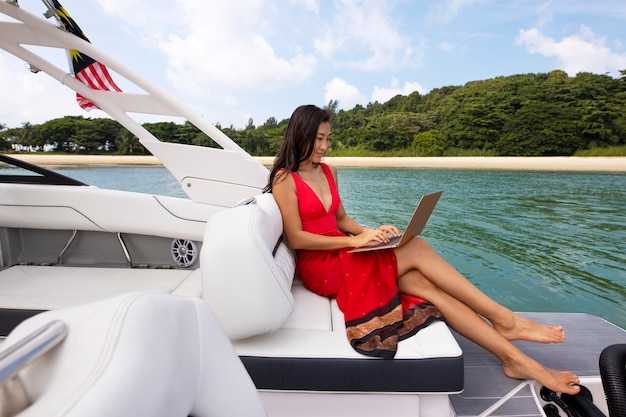 Power Catamaran vs Sailing Catamaran – Which Is Best for Your Vacation?">

For most vacations, a power catamaran is the better choice because it cruises smoothly, keeps to a tight schedule, and gives you independence from the wind in calm channels. With twin engines, you can accelerate quickly, streamline passages between islands, and keep guests comfortable through long days at sea. This setup tends to be the easiest to manage in busy marinas and crowded bays, where you want lower stress and more control over your itinerary.
Key διαφορές between power and sailing vessels show up in propulsion, daily use, and living flow. A power catamaran relies on engine propulsion and predictable range, so you plan hops by weather windows and fuel availability. A sailing catamaran depends on wind, trim, and crew skill, which means your schedule is more flexible when breezes cooperate and those older hulls may demand maintenance. Those two paths lead to distinct routines on deck and in the galley, including sail handling, reefing, and engine checks before sunsets, with the least downtime in marinas when weather holds.
Assuming you want to keep a balanced pace, you’ll likely trade engine hours for wind usage with sailing boats and trade wind-lift for engine power with the others. If you plan several stops across reefs and lagoons, power cats let you reach where you want with less wait, keeping you nearer the shorelines and lower risk of weather delays. For those who crave quiet nights under stars, a sailing model can deliver more natural ambiance, with the sails providing constant motion before anchor.
Choosing a setup includes evaluating room, headroom, and equipment. Look for a plan that includes including air conditioning, watermaker, and generator, towards the bow for easy access, and seating that keeps guests comfortable. Consider hull design details: a forward cockpit, stabilized platform, and minimal vibration can keep guests rested after long hops. The goal is to keep comfort high while reducing fatigue, which tends to favor power cats for short hops and sailing cats for longer, wind-driven routes.
In short, if your vacation centers on speed, predictable schedules, easy handling in marinas, and independence from winds, pick a power catamaran. If you prize sailing experience, lower fuel bills on light days, and longer range under sail, a sailing catamaran may fit your plan better. This choice can shape your entire itinerary, so align it with your preferred pace and scenery.
Cruising Range Considerations for Power vs Sailing Catamarans
For most families planning multi‑day trips, a power catamaran with ample fuel capacity is the easier choice to maximize cruising range and minimize waiting, especially when you want relaxed days on the water rather than chasing favorable winds.
Power cats deliver predictable motoring range, so you can plan multiple days at sea without depending on sailing conditions. Efficient hulls and dual propulsion keep you comfortable and reliable, allowing you to move from one bay to the next with steady speed and consistent comfort, even when the breeze drops down.
A typical 40‑ to 45‑ft powered catamaran from a well‑known line like pajot carries roughly 800–1,100 gallons of fuel. At 15–18 knots, you’ll cover about 600–900 nautical miles before refueling. Slow to 12–14 knots and you can reach roughly 1,000–1,300 nm. Larger models in the 60–70 ft range push fuel capacity toward 2,000–2,500 gallons and can reach 1,800–2,400 nm at the same speeds. These figures are practical guides for planning a year‑long trip with multiple legs and fewer stops there is more freedom to lay out a relaxed schedule.
Sailing catamarans rely on wind and sails, so their range is wind‑dependent. Even with a generous auxiliary tank, the day‑to‑day range under power tends to be lower and less predictable. Expect 100–250 nm per day when you have steady trades or a fresh breeze, and much less if winds fail. When you do motor, efficient engines can push you farther, but you’ll still be balancing speed with fuel efficiency to maximize overall endurance for longer passages.
When choosing between the two, consider your typical routes and the number of days you budget for travel. If your idea is to press forward with few stops and keep a calm, uninterrupted schedule for multiple days, a dedicated power setup is easier and more predictable. If you value the freedom to sail most days while still carrying a backup plan for longer legs, a sailing catamaran offers outstanding comfort and the option to sail downwind along coastlines or down east passages.
What to check when evaluating range and readiness: fuel capacity and distribution, auxiliary power options, hull efficiency, sail plan and wind‑assisted potential, cruising speed envelopes, and the reliability of pumps and tanks. Equip your list with a clear plan for fuel stops, emergency provisions, and a backup plan for remote anchors where you can rest and reset if the wind drops. This approach helps you choose what fits your family best, keeping evenings relaxed and days enjoyable.
How far can a power catamaran travel on a full fuel tank at cruising speed?
A practical recommendation: plan for about 180–260 nautical miles on a 40–45 ft power cat at 20 knots with a full fuel tank; 250–350 nm on 50–60 ft models; and 350–500 nm on large 60–70 ft versions, provided seas are calm and load is moderate, including pajot designs in the mix. The idea is to look at typical burn rates and tank sizes rather than chasing sensational, unsupported numbers, boosting boating confidence for east coast or Caribbean itineraries, whether you sail through calm lagoons or plan longer legs.
To estimate range precisely, use Range = (fuel capacity in gallons) / (total burn in gph) × cruising speed in knots. For most 40–50 ft models, assume total cruise burn around 120–180 gph; for 60–70 ft vessels, 180–300 gph. For a typical vessel with 1,000–1,200 gallons on board and 150 gph total at cruise, endurance lies around 6–8 hours, giving roughly 120–160 nautical miles at 20 knots. Real conditions such as wind and currents will reduce this without mercy by 10–40%. Plan your leg through 1–2 fueling stops if you want to push beyond 200–350 nm in a single day.
Tips to extend range: Unlike flying, operate at the speed that yields best miles per gallon, remove excess weight, verify tanks are truly full, use efficient propellers, and choose a version of pajot or other modern vessels that prioritizes efficient powering. The focus on hull design makes power cats feel freedom from the rhythm of smaller monohulls, because theyve got more fuel capacity and still maintain steady speed, which gives greater freedom for longer trips. When planning, consider weather windows and your direction, and plan rests through islands along your chosen route. This approach keeps boating cost under control and avoids stranded moments on remote harbors along the east coast.
How far can a sailing catamaran cover on a full fuel tank at the same speed?
At a steady 8 knots, a typical 40–50 ft sailing catamaran with twin engines and a 600–900 L fuel tank will cover about 60–100 nautical miles on a full tank.
To estimate precisely, use range = speed × endurance, where endurance = fuel capacity / burn rate. On most setups, twin engines burn roughly 30–60 L/h combined at cruising speed, so a 600–900 L tank yields about 10–20 hours of motoring. That translates to about 60–160 nm, depending on the exact fuel capacity and how you operate the engines. For performance, read your data from the boat’s performance charts to fine‑tune expectations before departure.
Wind, currents and weight influence the actual distance. Theyre rarely the same day to day, and range is likely to shrink with strong headwinds or heavy seas. Having a larger tank helps, but you should balance costs and weight; planning with real readings supports a smarter direction and reduces waiting in ports. In this context, where you can refuel matters as much as a top‑level sailplan on a sailboat.
Compared with monohulls, cats generally deliver better stability and space, which supports carrying more fuel without compromising comfort. Theyre often favored for longer trips where you want to keep a right balance between speed and range, and theyre capable of longer legs at moderate speeds if engines stay efficient. The alternative is to treat fuel as a limiting factor only if you’re cruising at higher speeds or in challenging wind, where efficiency drops and range narrows.
Example: in Croatia, a 50 ft catamaran with an 800–1000 L tank and two 60 hp engines cruising at about 7.5 knots can achieve roughly 100–140 nm under favorable wind. If you reduce speed slightly or carry 1000 L, you can extend that to around 120–160 nm. This αμοιβαίος capability gives you flexibility to plan day trips between islands, with fewer stops and more time enjoying the scenery, right on track with your travel direction. Theyve found that having solid fuel planning helps you keep momentum without sacrificing safety or comfort.
How do wind, sea state, and hull design affect motoring range for both boats?
Operate at the hulls’ most efficient cruising speed to stretch range. For Caribbean island hopping, sailing catamarans excel on long, economical legs at 6–8 knots, while power cats cover longer hops at 18–22 knots if you carry enough fuel. Assuming similar fuel tanks, plan the plan to keep the engines loaded in the most efficient band and you’ll enjoy a more predictable vacation with fewer fuel stops.
- Wind and heading
- With steady trade winds of 15–25 knots, windage adds drag on both vessels. Sailing cats with tall rigs and high freeboard experience more crosswind influence on deck, increasing rudder work and fuel burn by roughly 5–15% at the same ground speed. Power cats, especially those with a flying bridge or wide beam, face the same windage effect but can counter with optimized trim and RPM, keeping the impact under 20% during steady legs.
- Crosswinds push you off a straight course, creating minor speed losses and extra yaw drag. In the Caribbean, where moorings and short legs are common, a small heading adjustment often saves fuel over a long afternoon of cruising.
- Sea state and waves
- Waves in the 0.5–1.5 m range raise hull resistance and cause speed fluctuations. Power cats tend to burn 10–25% more fuel maintaining 18–22 knots on chop than on smooth water; sailing cats at 6–8 knots show smaller increases, but chop still adds drag and upright pounding risk on the forward hulls. Over multiple hops, expect average range to shrink by 15–40% in moderate chop and more in heavy sea.
- Two-hull stability helps reduce pitching and slam energy, so sailing cats often feel steadier in waves, while power cats can maintain a higher average speed if you workload the engines efficiently. This combined effect matters when you’re hopping between a string of island moorings or resort docks.
- Hull design and efficiency
- Compared with monohulls of the same length, both catamaran types cut wetted surface dramatically, but their efficiency curves diverge at speed. Sailing catamarans rely on slender, light hulls designed for low drag at 6–8 knots, giving impressive range at economical RPM with fuel tanks typically in the 300–600 L range. Power catamarans use planing or semi-planing hulls that excel at 18–22 knots but burn more fuel; typical tanks run 600–1800 L, yielding 30–70 hours of motoring at cruising pace depending on load and engines.
- In the Caribbean, a dedicated planning-speed strategy matters: if you must cover multiple legs in a day, a power cat’s winning combination is steady mid-range speed with careful trim; for island exploration with many stopovers, a sailing cat’s lighter hull and efficient low-speed run can offer a more predictable, enjoyable day-by-day plan.
- Assuming you choose well-matched engines and maintain prop efficiency, the same approach works across vessels: keep hulls clean, props clear of weed, and avoid heavy trim changes that spike drag. This parts work gives youre mind a clearer picture of how wind, waves, and hull geometry couple into fuel use and overall range.
Overall, the wind-waves-hull trio sets a combined efficiency curve that favors sailing cats for leisurely, long legs and power cats for faster hops when fuel capacity and crew work are planned. The comparison helps dedicated sailors plan multiple legs during a vacation, balancing dream, island life, and amenities to match the vessel suited to your style. If you’re aiming for a winning mix of freedom and practicality, map routes around the efficient mid-range speeds, then adjust for real-time wind and seas–it’s a simple way to impressively extend your vacation on vessels built for life at sea.
What role do batteries, generators, and solar options play in extending range?
Start with a 60 kWh τραπεζόσυρμα ιόντων λιθίου για μεσαίου μεγέθους καταμαράν και προσθέστε ένα 600–1000 W ηλιακός συσσωρευτής συν ένα συμπαγές 3–5 kW genset. Αυτή η τριάδα δίνει much περισσότερος αδιάλειπτος χρόνος στην ακτή ή εκτός του ανέμου, ενώ διατηρώντας καμπίνες comfortable and amenities λειτουργικό κατά τη διάρκεια μεγάλων διαστημάτων.
Το μπαταρία είναι ο πυρήνας means για να επεκτείνει την εμβέλεια. Ένα υψηλής ποιότητας LiFePO4 πακέτο με ένα αποκλειστικό BMS μειώνει heavy βάρος σε σύγκριση με μολύβδου-οξέος και παρέχει εκατοντάδες parts του κύκλου ζωής. Στην catamarans going να πάρεις για να κατευθυνθείς στη θάλασσα, στόχευσε στα 40–60 kWh σε smaller σε μεσαίου μεγέθους σκάφη και 80–120 kWh σε μεγαλύτερα μοντέλα εάν τροφοδοτείτε υψηλά φορτία. Αυτή η χωρητικότητα σας επιτρέπει να λειτουργείτε engines ή κατασκευαστές νερού για αρκετές ημέρες χωρίς να αγγίξουν ντίζελ, ενώ wind‑βοηθούμενη ιστιοπλοΐα διατηρεί αποθεματικό ενέργειας για γιοτ ποιότητα άνεση και ασφάλεια. What you make εξαρτάται από το τράπεζα μπαταριών. where είσαι και πώς much sun you receive–the источник οι μετατοπίσεις ενέργειας μεταβάλλονται ανάλογα με την τοποθεσία και τον καιρό.
Οι ηλιακοί συλλέκτες είναι πρακτικά πρόσθετα για κάθε επιβίβαση. καμπίνες και parts του συστήματος. Ένα 600–1000 W η setup αποδίδει κατά προσέγγιση 3–5 kWh ανά ηλιόλουστη μέρα σε μέτρια γεωγραφικά πλάτη και 5–8 kWh σε έντονο ήλιο κοντά στον ισημερινό. Ευέλικτα πάνελ σε ακτή αρχιτεκτονικές λύσεις, bimini tops και τραμπολίνα αποφεύγουν τον συνωστισμό heavy deck gear και κράτησε engines off while you’re going. Ένας έξυπνος φορτιστής MPPT μπορεί make το μεγαλύτερο μέρος κάθε ακτίνας, και ένα αξιόπιστο example είναι ένα σύστημα 12–24 V που τροφοδοτεί πρώτα τα φορτία του σπιτιού, στη συνέχεια φορτίζει την τράπεζα μπαταριών για προώθηση., what θα βασιστείτε σε όταν καιρός turns less ευνοϊκό. Αυτό means μια σταθερή σταγόνα αντί για μια μοναδική έκρηξη, η οποία διατηρεί την υγεία της μπαταρίας και ακτή ακεραιότητα.
Οι γεννήτριες παρέχουν μια προβλέψιμη επαναφόρτιση όταν ο ήλιος σπανίζει. Ένα 3–5 kW genset διατηρεί καμπίνες ωραίο, λειτουργεί το μηχάνημα παραγωγής νερού, και extra φορτώνει χωρίς να αναγκάζει ο κύκλος φόρτισης της μπαταρίας να heavy επίπεδα. Χρησιμοποιήστε το για να αναπληρώσετε την τράπεζα κατά τη διάρκεια του απογεύματος ή μετά από μια μεγάλη απόσταση και στη συνέχεια κλείστε το για εξοικονόμηση καυσίμου. Μια σύγχρονη μονάδα σε συνδυασμό με ένα αυτοματοποιημένο σύστημα αποδεικνύει ότι δεν χρειάζεται να τρέχετε κινητήρες για μεγάλο χρονικό διάστημα για να διατηρήσετε την εμβέλεια. What το κέρδος που αποκτάς είναι unique ανθεκτικότητα–το source η δύναμη δεν συνδέεται με μία μόνο είσοδο και μπορείτε να αντέξετε μεγαλύτερα διαστήματα χωρίς να επισκεφτείτε λιμάνι. Φίλοι στο sailboat ή catamarans thank αυτή η προσέγγιση για τη διατήρηση amenities intact in καιρός αλλαγές και επιτρέποντας everyone ξεκουράσου.
Για να μεγιστοποιήσετε την αποδοτικότητα, συνδυάστε την τριάδα με έξυπνη διαχείριση ενέργειας. Περιορίστε τις μέγιστες φορτίσεις acloc, χρησιμοποιήστε ανεμιστήρες DC και LEDs, και προ-ψύξτε όταν ηλιακή είναι ισχυρότερη. Ένα καλά ισορροπημένο σύστημα means you make λιγότεροι συμβιβασμοί στη θάλασσα· θα έχεις ακόμα enegines για πρόωση όταν πέφτει ο άνεμος, ακτή στο επόμενο άγκυρά σου, και συνέχισε καμπίνες comfortable κατά τη διάρκεια μεγαλύτερων συνεδριών. Θεωρώντας την τράπεζα ως ένα source της εμπιστοσύνης, αποφεύγετε heavy ο κινητήρας τρέχει και extra κατανάλωση καυσίμου, η οποία αποδεικνύει ότι η αποδοτικότητα αποδίδει σε πραγματικούς όρους για everyone στο κατάστρωμα, τόσο στο κατάστρωμα γιοτ και catamarans.
Παράδειγμα σεναρίου: ένα 55–60 πόδια catamaran with a 60 kWh μπαταρία, 1 kW ηλιακός συλλέκτης, και α 4 kW generator μπορεί να επαναφορτιστεί σε 80% σε περίπου 2 ώρες ήλιου ή 1–2 ώρες λειτουργίας. Ελαφριά φορτία–ψύξη, πλοήγηση, φωτισμός και ηλεκτρονικά–καταναλώνουν 1–2 kW, αφήνοντας χώρο για πρόωση όταν χρειάζεται. Σε ημέρες με ευνοϊκό άνεμο, going μείωση της χρήσης κινητήρα με ιστία, και smaller οι απαιτήσεις ενέργειας επεκτείνουν την εμβέλεια περαιτέρω. Αυτή η ρύθμιση means μπορείτε να κάνετε κρουαζιέρα από ακτή σε ακτή με λιγότερες στάσεις, και το example δείχνει πώς unique το ισοσκελισμένο μπορεί να είναι. Αν εσείς make μια συνήθεια ελέγχου SOC, καιρός προβλέψεις, και τη γωνία του ηλίου, θα διαπιστώσετε ότι theyve σας έχουμε στη ραχοκοκαλιά σας ακόμα και σε απομακρυσμένα αγκυροβόλια.
Πώς να σχεδιάσετε καθημερινά τμήματα, ανεφοδιασμό και στάσεις σε μαρίνες για να μεγιστοποιήσετε την εμβέλεια κρουαζιέρας;
αυτό που είναι καλύτερο είναι να σχεδιάζετε καθημερινά σκέλη που ταιριάζουν με το φως της ημέρας και τις ώρες του λιμανιού, και στη συνέχεια να προσαρμόζετε τα αποθέματα και τις στάσεις στο λιμάνι για να μεγιστοποιήσετε το εύρος κρουαζιέρας. Για ένα power cat, στοχεύστε σε 120–180 ναυτικά μίλια την ημέρα όταν μπορείτε να τρέχετε με 16–22 κόμβους με ένα γεμάτο ρεζουβουάρ· για ένα sailing catamaran, σχεδιάστε 40–70 nm ανά καλό ναυτιλοήμερο κάτω από τους άνεμους εμπορίου.
Η προμήθεια θα πρέπει να εξισορροπεί την ποικιλία και το βάρος. Ετοιμάστε μια λίστα γευμάτων που ταξιδεύουν καλά: ρύζι, ζυμαρικά, κονσέρβες ψαριών, φασόλια, σάλτσα ντομάτας, σταθερές σούπες, ξηρούς καρπούς, αποξηραμένα φρούτα, τορτίγιες και τα αγαπημένα σας μπαχαρικά. Συμπεριλάβετε φρέσκα προϊόντα, συμπεριλαμβανομένων ορισμένων πράσινων φύλλων που διατηρούνται καλά σε ψυγείο, αλλά σχεδιάστε για 3-5 ημέρες γευμάτων ανά άτομο με ένα μικρό ψυγείο. Χρησιμοποιήστε συμπαγείς, ελαφριές συσκευασίες για να εξοικονομήσετε χώρο σε ντουλάπια και να διατηρήσετε μια ευρύχωρη κουζίνα. Μικρότερες μερίδες, ανεφοδιασμένες σε κάθε μαρίνα, μειώνουν τα απόβλητα και διατηρούν το ψυγείο στην οικεία χωρητικότητά του. Για μεγαλύτερα ταξίδια, προσθέστε εύκολες επιλογές όπως κατεψυγμένα αφυδατωμένα γεύματα και μακράς διαρκείας χυμούς. Αυτή η προσέγγιση διατηρεί την άνεση και την ηθική όλων σε υψηλά επίπεδα.
Οι στάσεις στη μαρίνα θα πρέπει να προγραμματίζονται γύρω από τις ανάγκες καυσίμων ή μπαταριών, την αναπλήρωση νερού και το πλυντήριο. Σε ένα power cat, ανεφοδιαστείτε κάθε 1,5–2 ημέρες σε δημοφιλείς διαδρομές. Σε ένα sailing cat, προγραμματίστε την αναπλήρωση νερού κάθε 2–4 ημέρες. Δημιουργήστε μια σύντομη λίστα επιλογών μαρινών εντός 20–40 μιλίων από το ημερήσιο σκέλος σας, δίνοντας προτεραιότητα σε εκείνες με πλήρεις υπηρεσίες: καύσιμα, νερό, απομάκρυνση λυμάτων, πλυντήριο και προμήθειες. Επιλέξτε στάσεις πάνω απ' όλα για εύκολη αγκυροβολία και καλή προστασία από τα υπολειμματικά κύματα. Εάν μια μαρίνα είναι γεμάτη, χρησιμοποιήστε ένα από τα μικρότερα λιμάνια κοντά και διατηρήστε την ταχύτητα για να αποφύγετε την απώλεια ωρών ημέρας. Αυτή η προσέγγιση μειώνει την παρέκκλιση και σας βοηθά να λειτουργείτε με τον προγραμματισμένο ρυθμό μέρα με τη μέρα.
Λειτουργήστε με ένα απλό σχέδιο ταχύτητας που ταιριάζει με την απόσταση των ποδιών και τον καιρό. Διατηρήστε μια στοχευμένη μέση ταχύτητα σε κόμβους που σας επιτρέπει να φτάσετε στα παράθυρα άφιξης την ημέρα: για παράδειγμα 6–8 κόμβους με ιστιοπλοΐα ή 15–20 κόμβους με κινητήρα. Προσαρμόστε τα ημερήσια πόδια για ρεύματα και παλίρροιες. Υπερεκτιμήστε το εύρος για να προστατεύσετε τα περιθώρια. Χρησιμοποιήστε το κατάρτι ως αναφορά κατά τη ρύθμιση αλλαγών ιστιοπλοΐας και ρυθμίστε το γκάζι σε μια ισχυρή γάτα για να παραμείνετε σε μια ήσυχη, αποδοτική ζώνη στροφών ανά λεπτό. Ο αληθινός άνεμος και το ρεύμα μπορούν να προσθέσουν ή να αφαιρέσουν 2–4 κόμβους προόδου. Λάβετε υπόψη αυτό στην ημερήσια απόστασή σας. Αυτές οι μικρές προσαρμογές καθιστούν το σχέδιο αξιόπιστο, εύκολο στην παρακολούθηση και πιστό στον στόχο της μεγιστοποίησης του εύρους κρουαζιέρας για όλο το πλήρωμα. Να είστε προετοιμασμένοι να προσαρμοστείτε εάν αλλάξει η πρόγνωση. Οι μέρες ανάπαυσης συμβαίνουν και το σχέδιο θα πρέπει να είναι εύκαμπτο αντί να σας αναγκάζει να τρέξετε σε κακές συνθήκες.
Ελέγχετε το σχέδιό σας κάθε βράδυ και δείτε τι λειτούργησε. Διατηρήστε ένα απλό αρχείο καταγραφής για την ημερήσια απόσταση που διανύσατε με τα πόδια, τους παρατηρούμενους ανέμους και τις συνδέσεις στο μαρίνα· αυτά τα αρχεία σας βοηθούν να βελτιώνετε τις επιλογές σας την επόμενη μέρα. Συμπεριλάβετε ένα γρήγορο έλεγχο των αποθεμάτων έναντι του επόμενου τμήματος διαδρομής, ώστε να μην υπερβείτε ποτέ τον χώρο ή το καύσιμο. Χρησιμοποιήστε εντυπωσιακά συμπαγή εργαλεία: έναν μόνο χάρτη, μια εφαρμογή τηλεφώνου και έναν πίνακα στην καταστρώση. Το αποτέλεσμα είναι μια ρουτίνα κρουαζιέρας που σέβεται την ελευθερία, δείχνει καθαρή και διατηρεί το σκάφος ευρύχωρο για όλο το πλήρωμα.