


 Ελληνικά
  English (UK)
  Русский
  العربية
  日本語
日本語  한국어
한국어  Magyar
  Türkçe
  Español
  Čeština
  Svenska
  Português
  Suomi
Suomi  Nederlands
  Română
  Italiano
  Français
  Polski
  Українська
  Deutsch
  简体中文
简体中文  Slovenčina
  Εξερεύνηση της Ιστορίας και της Φύσης του Whistler μέσω Ερμηνευτικών Πινάκων">

Unlocking Whistler’s Stories with Interpretive Panels
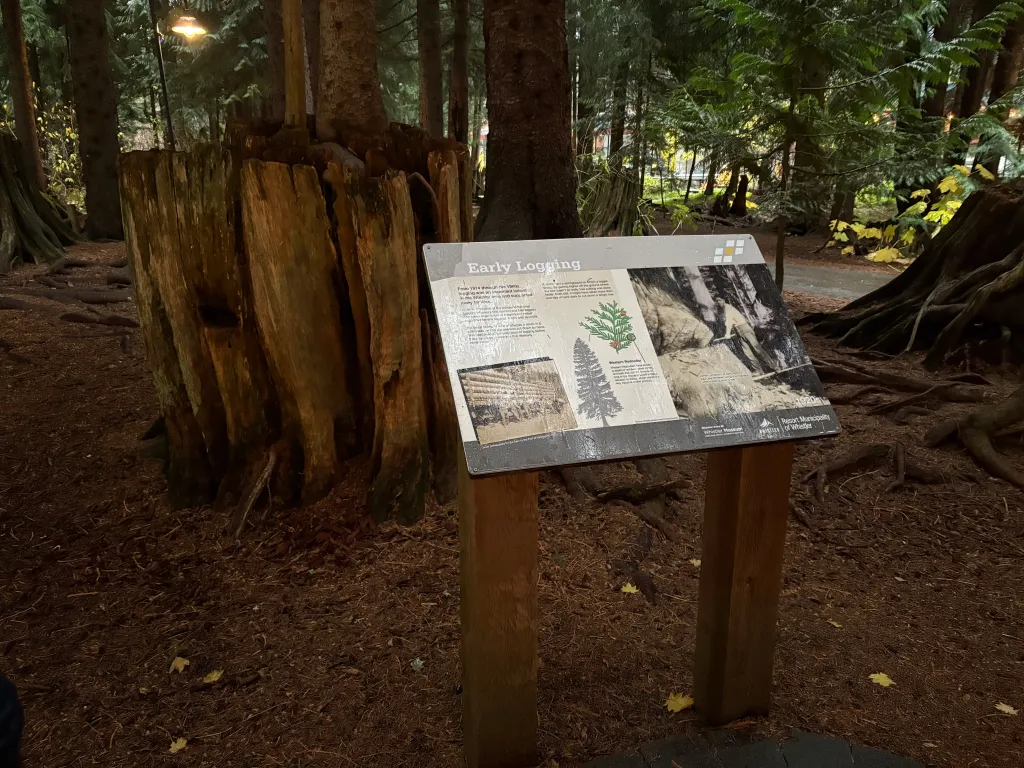
When visiting a new place or even strolling through a familiar one, interpretive panels offer a unique window into the local history, wildlife, and landscape. Serving as snapshots of information, these panels guide visitors in understanding the stories and environment that shape a destination. In Whistler, a renowned mountain resort and outdoor playground, such panels have been thoughtfully integrated to bring its fascinating past and vibrant ecosystem to life.
The Whistler Museum has played a significant role in developing interpretive signage across the Whistler Valley, particularly since 2018 alongside the Resort Municipality of Whistler. These informative displays are strategically placed along popular spots such as the Valley Trail network and the Village, offering insights exactly where the history and nature stories happened, like those found in Rainbow Park.
From Traditional Signage to High-Tech Storytelling
Interpretation in Whistler goes beyond simple panels. Cutting-edge technologies now enrich the experience, such as the Squamish Lil’wat Cultural Centre’s Cultural Journey. This innovative self-guided audio tour and kiosk series along the Sea to Sky Highway melds breathtaking views with the oral histories and cultural wisdom of the Líl̓wat Nation and Sk̲wx̲wú7mesh Nation. Since its launch in 2010, this journey turns a plain drive from Squamish to Whistler into an immersive cultural exploration, blending natural beauty with indigenous narratives.
A Glimpse into the Roots of Interpretive Panels in Whistler
The tradition of interpretive panels in Whistler dates back to 1987 when artist Isobel MacLaurin designed early panels depicting the region’s landscapes, flora, and fauna. These panels laid the groundwork for Whistler’s ongoing commitment to environmental storytelling, adopting a simple yet educational approach focusing mostly on local species identification.
Isobel and her husband, Don MacLaurin, were foundational figures in this movement. Moving to Whistler in 1961, Don, a forester and educator, was pivotal in preserving cherished recreational spaces such as Lost Lake Park. As timber licenses neared expiration and development threatened this natural area, Don successfully advocated for its protection through BC Parks, ensuring public access and conservation that endures today.
The Whistler Interpretive Forest and Continued Legacy
During the late 1980s and 1990s, Don also helped establish the Whistler Interpretive Forest (WIF) in the Cheakamus area. Alongside Isobel’s distinctive artwork, they crafted and installed hand-painted interpretive panels along forest trails like the Riparian Trail. Many of these original panels remain, having been refreshed and expanded with community support in recent years, underlining Whistler’s dedication to thoughtful environmental education.
The Whistler Museum continues to engage deeply with these interpretive initiatives, enhancing public understanding of Whistler’s rich ecosystem and cultural heritage through carefully curated informational displays. These panels do more than educate — they foster a connection between visitors, residents, and the stories that shape this remarkable region.
Table: Key Milestones in Whistler’s Interpretive Panel Development
| Year | Event | Contribution |
|---|---|---|
| 1961 | MacLaurins relocate to Whistler | Initiated conservation & education efforts |
| 1987 | First interpretive panels installed | Isobel MacLaurin’s artwork on local flora & fauna |
| Late 1980s-1990s | Whistler Interpretive Forest established | Hand-painted signage along forest trails |
| 2010 | Cultural Journey launch | Self-guided audio tour blending culture & nature |
| 2018 | New valley-wide panel initiative | Collaboration with Resort Municipality of Whistler |
The Broader Significance for Travelers and Tourism
Interpretive panels are more than just educational stops; they provide a narrative thread that weaves together natural wonders, cultural heritage, and community identity. For tourists, this enriched contextual knowledge transforms a simple walk or bike ride through Whistler’s trails and villages into a deeper, more meaningful adventure.
From the perspective of tourism development, such initiatives foster a sustainable tourism model. By encouraging awareness and respect for the environment and indigenous cultures, interpretive panels contribute to preserving the very qualities that make destinations like Whistler attractive.
Looking Ahead: Interpretation and Tourism Trends
With rising global interest in experiential and eco-friendly tourism, storytelling tools—especially when bolstered by technology—are set to play an even larger role. Regions that successfully intertwine outdoor activities like hiking, skiing, and boating with their local stories gain a competitive edge in attracting curious and conscientious travelers.
Interpretive Panels and the Sailing & Boating Connection
While Whistler is famed primarily for its mountain adventures and winter sports, it is also nestled near scenic lakes and waterways that invite boating and sailing activities. Enhanced interpretation along trails and natural areas complements these water-based pastimes by fostering greater appreciation for the surrounding environment.
Understanding the local ecosystem and cultural traditions enriches every outing on a sailboat or yacht around nearby lakes. The same philosophy of immersive storytelling—whether on land or water—encourages responsible exploration and a heartfelt connection to place.
Συμπέρασμα
Whistler’s dedication to interpretive panels reveals a vibrant tapestry of natural history, cultural heritage, and environmental stewardship. Thanks to the foundational efforts of the MacLaurins and the ongoing collaboration of local organizations and the community, visitors can deepen their experience by learning about the valley’s stories right where they unfolded. These panels and programs serve as a bridge between past and present, guiding new generations toward sustainable and meaningful travel.
For those dreaming of exploring Whistler’s stunning lakes and coastal surroundings by boat or yacht, the interplay of history and nature enhances every charter experience. An international marketplace like GetBoat.com offers an excellent gateway to rent sailing boats and yachts, tailored to all tastes and budgets, inviting travelers to discover the Whistler region from the water with new eyes, informed by its rich stories.