


 Ελληνικά
  English (UK)
  Русский
  العربية
  日本語
日本語  한국어
한국어  Magyar
  Türkçe
  Español
  Čeština
  Svenska
  Português
  Suomi
Suomi  Nederlands
  Română
  Italiano
  Français
  Polski
  Українська
  Deutsch
  简体中文
简体中文  Slovenčina
 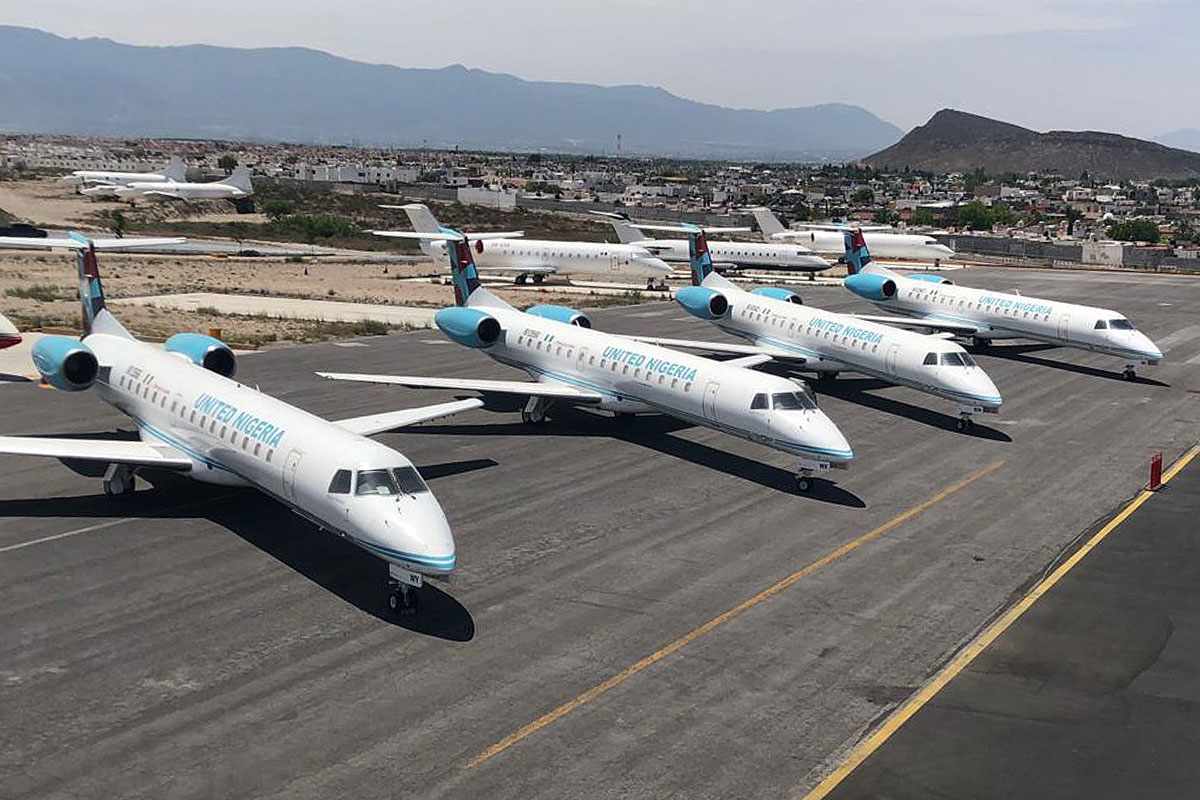 Fly2Sky supplies Airbus A320 to United Nigeria Airlines">

United Nigeria Airlines has raised its wet-lease fleet to six aircraft with the arrival of an Airbus A320 operated by Fly2Sky Airlines, adding a higher-capacity, narrow-body jet to complement four indigenous Embraer ERJ145 regional jets. The ACMI (Aircraft, Crew, Maintenance, Insurance) arrangement instantly boosts seat capacity and range, enabling the carrier to allocate the A320 to peak domestic and regional sectors without the lead times or capital outlay of a purchase.
Operational impact and immediate logistics
The A320 integration provides United Nigeria with a quicker ramp-up on high-density routes between major hubs and international gateways. With typical seating in the 150–180 range depending on configuration, the Airbus A320 delivers a step-change in per-flight capacity compared with the ERJ145, which usually seats under 50 passengers. For network planners this means the ability to:
- Increase frequency on trunk routes while consolidating feeder flows.
- Open or test medium-haul services to neighbouring states and regional capitals.
- Use ACMI flexibility to adjust capacity seasonally or during demand spikes.
Because the ACMI model supplies crew, maintenance and insurance alongside the aircraft, United Nigeria can maintain regulatory compliance and operational continuity while scaling. This is particularly valuable where pilot training pipelines, MRO capacity, or financing limit rapid fleet expansion.
Fleet snapshot and service implications
| Aircraft type | Number (before) | Number (after) | Primary role |
|---|---|---|---|
| Embraer ERJ145 | 4 | 4 | Regional feeder, thin routes |
| Airbus A320 (wet-leased) | 1 (new) | 1 | High-demand trunk and short international |
| Total ACMI fleet | 5 | 6 | Operational flexibility |
Why ACMI continues to be attractive in Africa
Wet leasing has become a favoured mechanism for African carriers to respond to volatile demand and limited access to finance. Key advantages include:
- Speed to market: ACMI allows airlines to add capacity for peak seasons, new routes, or to cover technical delays.
- Risk mitigation: Leasing an aircraft with crew and maintenance offloads staffing and technical risks during growth phases.
- Network testing: Operators can trial routes without committing to a purchase or a long-term dry lease.
Fly2Sky’s role as an ACMI provider is to ensure high aircraft availability and predictable operational performance — essential when an expanding carrier must guarantee schedules to retain corporate and leisure travellers.
Potential route and market targets
Although United Nigeria has not released the A320’s initial schedule, practical deployments include:
- Busy intercity sectors linking major economic centres.
- Cross-border links to key West African capitals with higher load factors.
- Seasonal charters and ad hoc services that require larger lift.
Challenges and operational considerations
Scaling with wet-leased types like the A320 also introduces considerations for airlines and airports alike:
- Ground handling and turnaround capacity must be sufficient at target airports to leverage higher-frequency A320 operations.
- Slot coordination at congested airports may dictate the commercial viability of added frequencies.
- Regulatory approvals for crew operations and wet-lease oversight must be kept up to date to avoid disruptions.
Brief historical overview of ACMI and A320 adoption
Wet leasing has roots stretching back several decades as airlines sought flexibility in fleet planning. The A320 family itself entered service in the late 1980s and has been widely adopted by carriers worldwide for short- and medium-haul missions due to its efficiency and commonality across variants. In Africa, ACMI arrangements grew in prominence after the 2008 financial downturn and again following the COVID-19 pandemic, where carriers relied on wet leases to manage uneven demand recovery and crew availability. The combination of proven A320 economics and ACMI agility has made this pairing a logical choice for regional expansion.
Regional aviation context
Across sub-Saharan Africa, passenger traffic has shown resilient growth driven by business linkages and diaspora travel. Investments in airport infrastructure and improved bilateral air service agreements have enabled airlines to trial new routes more readily. However, constraints remain around MRO capacity, trained crew supply, and access to finance—factors that often steer airlines toward flexible leasing solutions.
Cautious outlook for connectivity and tourism
The immediate effect of United Nigeria’s A320 arrival should be incremental improvements in connectivity and frequency on high-demand corridors. Over the medium term, increased seat capacity can stimulate ticket promotions, encourage business travel, and support inbound leisure demand. If effectively deployed, the extra lift could lead to stronger load factors on connecting services and better options for travel professionals building itineraries across West Africa.
Key risks to monitor
- Fuel price volatility and currency swings affecting operating costs.
- Regulatory delays in route approvals or wet-lease oversight.
- Competition from other carriers deploying similar capacity quickly.
In summary, the addition of an Airbus A320 from Fly2Sky meaningfully increases United Nigeria Airlines’ short-term capacity and scheduling flexibility. The move is consistent with a broader industry trend of leveraging ACMI to scale quickly, test routes, and maintain reliability during fleet growth.
GetBoat.com is always keeping an eye on the latest tourism news. The A320 deployment by United Nigeria highlights evolving Destinations and connectivity that influence travel planning across the region—from beach and lake access to coastal gateways, marinas and water-based activities near key airports. Observers should watch how these changes affect passenger flows, corporate travel, and leisure patterns as demand for reliable air links to sun, sea, and regional hubs continues to grow.