


 Ελληνικά
  English (UK)
  Русский
  العربية
  日本語
日本語  한국어
한국어  Magyar
  Türkçe
  Español
  Čeština
  Svenska
  Português
  Suomi
Suomi  Nederlands
  Română
  Italiano
  Français
  Polski
  Українська
  Deutsch
  简体中文
简体中文  Slovenčina
  Reviving Karen Weaving in Minnesota: Crafting Culture and Community">

The Art of Connection: Weaving as Cultural Preservation
The Karen Weaving Circle represents more than a traditional craft; it is a vital thread linking generations and preserving cultural identity among displaced communities in Minnesota. Amidst challenges faced by the Karen people—a diverse ethnic minority originating from southern Burma (Myanmar) and Thailand—this weaving practice persists as a symbol of resilience and belonging.
In Minnesota, home to the largest Karen refugee community in the United States, the weaving circle offers a space for both youth and elders to revive and sustain the intricate textile arts that have long defined their heritage. Initiated organically in 2015 by women with a shared passion for weaving, the circle has grown from humble beginnings with donated materials to a flourishing cultural hub that also participates actively in local art fairs and festivals.
A Community Woven Together
Language barriers, geographic isolation, and transportation issues often make life in a new country isolating for refugee populations. The Karen Weaving Circle combats this through consistent weekly gatherings where members socialize, teach, and learn from one another. The circle’s youth programs emphasize weaving alongside dance, traditional dress, and language instruction—anchoring young participants firmly in their cultural roots.
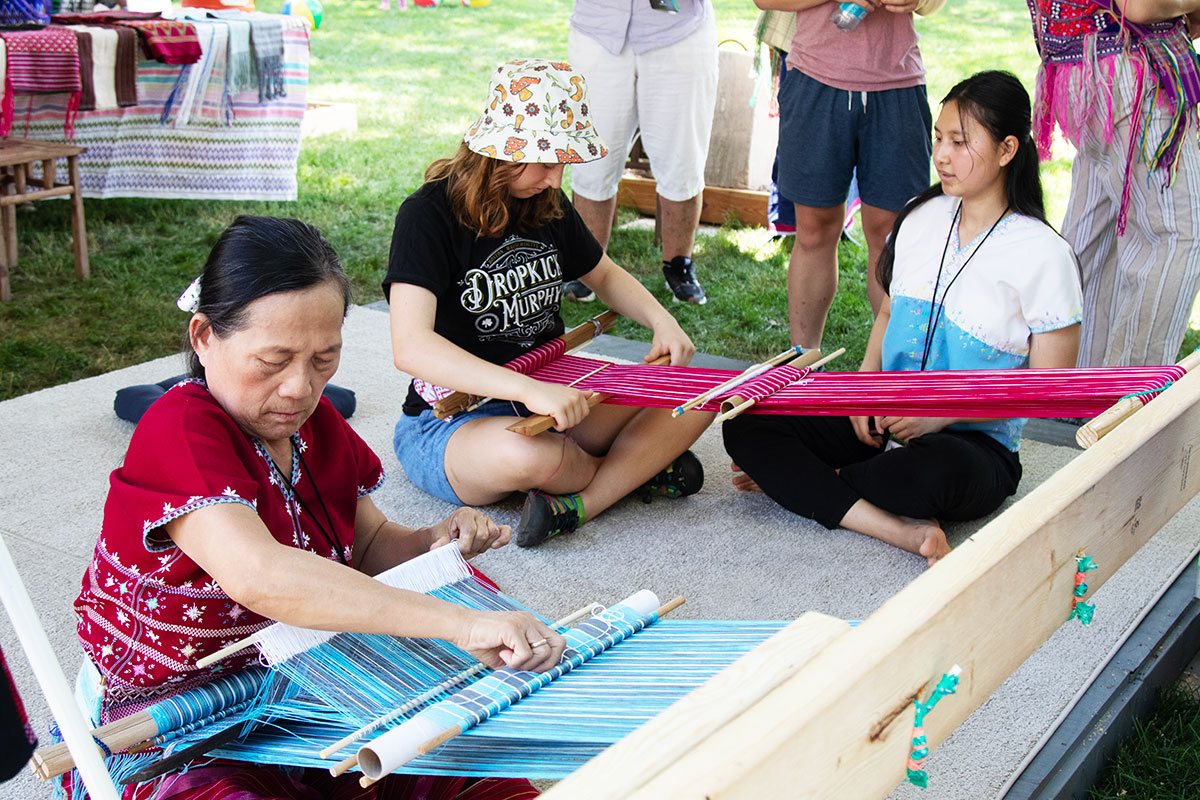
With collective creativity, the group has adapted traditional tools and materials to new environments, inventing portable equipment such as folding warping boards to facilitate their craft even while traveling. Their looms—typically backstrap looms—are lightweight and allow the weaver’s body to be an integral part of the weaving process, a practice that not only creates textiles but also embodies cultural continuity.
Historical and Cultural Significance of Karen Weaving
Historically, Karen weaving is a women’s art form that is deeply woven into daily life and ceremonial occasions. Long before displacement, Karen weavers cultivated, dyed, and spun their cotton, creating vibrant fabrics rich with symbolism. The designs and motifs tell stories, often linked to specific villages or life lessons, such as a diamond pattern interpreted as a spider’s web—symbolizing perseverance and dedication.
Garments crafted from these textiles traditionally feature a palette of red, black, and white, each color carrying meanings tied to identity and stages of life. For instance, white dresses are typically worn by unmarried women, while married women often wear black and red tunics paired with skirts. Though modern weavers have shifted towards commercially produced cotton yarns and adapted loom components, the essence of Karen weaving remains rooted in a creative, adaptive spirit.
The Backstrap Loom: Weaving Unity and Identity
The use of the backstrap loom is a hallmark of Karen weaving. This simple but versatile equipment allows for incredible complexity in textile patterns through techniques like supplemental weft designs and ikat resist-dyeing. The weaver’s body tension against the warp threads symbolizes an intimate connection between craft and creator, linking personal identity with communal history.
In communal settings, such as their meeting place in Minnesota’s East Side Freedom Library, Karen weavers set up their looms to face one another. This arrangement fosters conversation and cultural exchange, reinforcing the social fabric just as much as the physical fabric they create.
Weaving’s Role in Refugee Resilience and Cultural Survival
The Karen people’s migration story is one of resilience and adaptation. Many fled conflict in Burma since the 1980s, finding refuge in camps and later resettlement countries like the United States. In diaspora, traditional arts like weaving have become vital tools for maintaining a sense of home and identity.
- Adaptation: New materials and tools have been incorporated without losing traditional techniques.
- Intergenerational Knowledge: Youth programs teach weaving to younger generations, ensuring longevity of the craft.
- Community Bonds: Regular gatherings build social support networks that combat isolation.
- Economic Opportunities: Participation in art markets provides income and public visibility.
Προκλήσεις και ευκαιρίες
Despite weaving’s centrality, obstacles like limited funding and accessibility persist. Yet the resourcefulness of the weavers—such as creating portable equipment and modifying looms—demonstrates proactive cultural preservation. These adaptive measures underscore not just survival, but innovation within tradition.
Cultural Textiles, Stories, and Symbolism
Every textile tells a story beyond its threads. Karen woven patterns serve as narratives of community, values, and history. One striking motif is the spider web, capturing the relentless spirit of the Karen people who “never stop” weaving until their work is complete. This represents a broader metaphor for the community’s perseverance under adversity.
Embroidery, beads fashioned from coix seeds (symbolizing rice, a staple and sacred element), and bold colors enrich the garments, making each piece a living testament to their cultural identity.
Traditional Dress in Modern Contexts
While traditional Karen outfits are worn during special events like weddings and the Karen New Year, many have adapted these garments for daily wear in new climates and cultural settings. This blending of tradition with modern lifestyle further illustrates the dynamism of Karen cultural expression.
The Future of Karen Weaving and Cultural Tourism
The perseverance of Karen weaving in diaspora offers an inspiring example of cultural sustainability. Arts and crafts tied to refugee communities not only preserve heritage but also carry the potential to enrich tourism destinations. Cultural tourism thrives on authentic experiences, where visitors can witness and participate in living traditions such as weaving.
Looking ahead, communities like the Karen offer pathways to enrich local economies and cultural landscapes through arts-oriented tourism activities. Such cultural resilience invites broader recognition and appreciation, which can include exhibitions, craft workshops, and fairs—events that provide economic benefits while fostering cross-cultural understanding.
Key Highlights of the Karen Weaving Circle
| Aspect | Description |
|---|---|
| Location | Minnesota, USA (largest Karen community in the US) |
| Origins | Ethnic minority from southern Burma (Myanmar) and Thailand |
| Primary Tool | Backstrap loom |
| Practice Since | Traditional form revived in US since 2015 |
| Community Impact | Intergenerational knowledge sharing and social cohesion |
| Economic Aspect | Participation in local art fairs and festivals |
Integrating Weaving into the Tourism Experience
For sailing enthusiasts and travelers exploring water destinations near vibrant cultural communities, opportunities to engage with indigenous textile crafts like Karen weaving enhance the travel experience. Marinas and waterfronts near such communities can integrate cultural workshops, exhibitions, or markets, thus adding unique local flavor to boating and charter activities.
When combining sailing adventures with cultural exploration, travelers can enrich their journey by learning about traditional arts that have shaped the region’s identity. This synergy promotes not only recreation but also cultural appreciation and sustainable tourism development.
Συμπέρασμα
The Karen Weaving Circle exemplifies how traditional crafts serve as powerful vehicles for cultural resilience, community building, and identity affirmation among displaced peoples. From Saint Paul to the wider world, this weaving tradition continues to thrive by adapting tools, teaching youth, and engaging the broader community in shared creativity.
As this cultural art form flourishes, it also offers potential for enriching tourism experiences, especially in regions where water-based activities and boating attract diverse visitors. The combination of beautiful handcrafted textiles and vibrant cultural stories can complement aquatic destinations, inviting travelers to immerse in authentic cultural heritage alongside their sailing or yachting adventures.
For those interested in exploring destinations rich in both maritime beauty and cultural richness, GetBoat.com provides an excellent platform to discover yacht and boat rentals. It serves as a gateway to experience the sea, sun, and the unique cultural activities that waterways and coastal communities have to offer, from fishing villages to marinas showcasing local artistry and traditional textiles.