


 Ελληνικά
  English (UK)
  Русский
  العربية
  日本語
日本語  한국어
한국어  Magyar
  Türkçe
  Español
  Čeština
  Svenska
  Português
  Suomi
Suomi  Nederlands
  Română
  Italiano
  Français
  Polski
  Українська
  Deutsch
  简体中文
简体中文  Slovenčina
 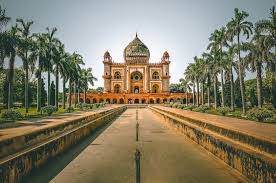 Ξεκλείδωμα της Ανάπτυξης του Τουρισμού στην Ινδία Μέσω Βασικών Μεταρρυθμίσεων Πολιτικής και Επέκτασης Προορισμών">

Charting the Path Forward for India’s Tourism Sector
India stands at a pivotal moment in its tourism journey, aiming to transform its vast potential into tangible economic growth through focused policy reforms and strategic development.
Rebounding from Global Disruptions
The aftermath of the global Covid-19 pandemic highlighted a mixed recovery for international travel, with India showing a notable bounce back in its hospitality sector, exceeding pre-pandemic levels in several metrics. However, foreign tourist arrivals have yet to exceed previous benchmarks. This recovery has largely been propelled by a surge in domestic tourism, projected to grow dramatically from 25 million to 15 billion by 2047. Optimism remains high, supported by forecasts from the World Travel & Tourism Council that predict India will climb from the eighth to the fourth largest tourism economy globally within the next decade, contributing an estimated $231.6 billion by 2025.
Policy Landscape and Vision for 2047
Though India’s tourism policy has not seen a major overhaul since 2002, clear objectives have been outlined by the Ministry of Tourism. The ambitious goal is to host 100 million foreign tourists by 2047, contributing $3 trillion to the economy and accounting for 10% of the nation’s GDP. Achieving these targets requires a mission-mode approach, where public and private sectors collaborate closely. Central to this vision is the development of 50 iconic destinations with strong community participation, aiming to distribute tourist traffic more evenly across the country and reduce pressure on frequently visited states.
Concentration Challenges and Sustainability
Currently, just five or six states attract around 60% of all tourists, posing risks of over-tourism and environmental degradation. The challenge lies in expanding and nurturing alternative destinations to achieve sustainability—recognized internationally as a non-negotiable component of post-pandemic tourism strategies worldwide.
Infrastructure and Regulatory Hurdles
One of the primary barriers to tourism growth is accommodation capacity. With only 180,000 branded hotel rooms available against a demand of 400,000, and 1.65 million unbranded rooms versus a demand of 2.8 million, significant expansion is required to accommodate the projected influx of visitors.
| Accommodation Type | Current Rooms Available | Estimated Demand |
|---|---|---|
| Branded Hotel Rooms | 180,000 | 400,000 |
| Unbranded Rooms | 1,650,000 | 2,800,000 |
This growth in accommodation will not only serve tourism but also create approximately 150,000 direct and indirect jobs, highlighting hospitality as a significant employment driver. However, complexities in regulations prevailing across different states—such as the requirement of numerous pre-construction and pre-opening approvals—stall investments. Streamlining these licensing procedures and unifying policies across regions remain critical to unlocking industry potential.
Connectivity: The Lifeline of Tourism
Efficient transportation is the backbone of any thriving tourist economy. Currently, about 80% of domestic travelers in India rely on road travel to reach destinations, while 83% of international tourists arrive by air. Expanding and modernizing air connectivity is vital. The development of 30 non-metro airports aims to broaden accessibility and ease travel demands.
With ongoing reforms to liberalize airspace and encourage private sector participation in airport management, the aviation industry is set for expansion. However, the projected demand will require substantial increases in aircraft availability as well as integrated transport infrastructure to support surging passenger flows.
A Historical View: India’s Tourism Evolution and Challenges
India’s cultural and natural diversity, marked by 26 UNESCO World Heritage sites and thousands of protected monuments, presents a treasure trove for tourism. Despite this, the country struggled to attract inbound tourists comparable to neighboring nations. The total foreign arrivals barely touched 5 million in 2007, far below its potential.
The country’s unique cultural heritage, coupled with varied landscapes—from majestic mountains to vast coastlines—positions India as an ideal travel destination. Yet, infrastructural deficits, bureaucratic hurdles, and limited international tourist facilitation tempered growth.
During the pre-liberalization period, restrictive policies curtailed both outbound and inbound tourism growth. The sweeping economic reforms initiated in the early 1990s ignited significant changes. Economic growth accelerated, creating a burgeoning middle class with enhanced disposable incomes and aspirations for travel, domestically and internationally. Simultaneously, improvements in passport issuance, visa policies, foreign exchange availability, and aviation infrastructure have begun to unlock new opportunities.
Demographic Dividend and Economic Growth
India’s youthful population and rapid urbanization promise a robust travel market expansion. Estimates forecast the workforce to grow significantly by 2025, with increases in literacy and English proficiency facilitating global engagement. Concurrently, rising foreign direct investment and corporate connectivity boost business and leisure travel markets alike, supported culturally by the global influence of Indian cinema and media.
Outlook and Implications for Marine and Leisure Tourism
India’s comprehensive tourism vision paints a promising future but hinges heavily on implementation, regulatory reforms, and infrastructure expansion. As popular destinations become saturated, alternative sites equipped with proper amenities could attract visitors seeking diverse experiences, including coastal and lake tourism—areas increasingly attractive for sailing and boating activities.
Investment in transport infrastructure and hospitality could positively impact the demand for marinas, yacht charters, and related leisure activities across India’s extensive coastline and inland water bodies. Expanding community-based destination development aligns well with sustainable tourism principles, ensuring that environmental and social impacts are balanced amid growing visitor numbers.
Key Recommendations to Unlock Tourism Growth
- Simplify licensing and approvals to encourage faster hotel and infrastructure development.
- Enhance public-private partnerships to leverage investment and expertise.
- Accelerate transport modernization—especially in air and road connectivity—to improve accessibility.
- Diversify destinations to reduce pressure on currently popular states and maintain sustainability.
- Promote community participation to ensure inclusive growth and cultural preservation.
Συμπερασματικά
India holds an immense opportunity to transform its tourism sector into a globally competitive powerhouse by 2047, supported by policy reforms, infrastructure growth, and strategic destination development. The projected boom in domestic and international tourists underscores the urgency for coordinated government action and industry readiness. With thoughtful implementation, the tourism economy can generate significant employment, foster regional development, and lay the foundation for sustainable, culturally rich travel experiences.
For those interested in exploring India’s sun-dappled beaches, serene lakes, and vibrant coastal marinas, sailing and yachting offer exceptional ways to discover this vast nation’s hidden treasures. The synergy between tourism expansion and maritime activities is expected to grow, opening new avenues for yacht charters, boating adventures, and water-based leisure.
To navigate these exciting travel opportunities, GetBoat.com stands out as a leading international marketplace offering a broad range of yacht and sailing boat rentals tailored to every taste and budget, letting visitors experience India’s waters in style and comfort.