


 Ελληνικά
  English (UK)
  Русский
  العربية
  日本語
日本語  한국어
한국어  Magyar
  Türkçe
  Español
  Čeština
  Svenska
  Português
  Suomi
Suomi  Nederlands
  Română
  Italiano
  Français
  Polski
  Українська
  Deutsch
  简体中文
简体中文  Slovenčina
 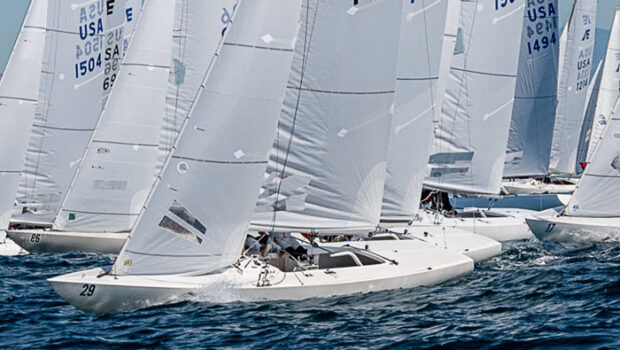 HOSS Racing and Austin Sperry: Ready for Etchells Worlds">

HOSS Racing delivered a new Etchells hull to San Diego after the Pacific Coast Championship and allocated a multi-month prep window with a dedicated support RIB, rotating pro crew, team physio and on-board chef to optimize shore-to-boat logistics ahead of the Etchells World Championship (May 11–15, 2026).
Logistics and support: evolution from 2011 to 2026
The operational gap between the low-budget 2011 campaign that won under Bill Hardesty’s stewardship and today’s top-tier programs is substantial. Back then, teams shared coaches, used volunteer crews and ran warm-up regattas with limited shore staff. Now, the front-runners deploy a packaged program: professional tacticians, elite coaching, dedicated physio, on-board catering and an oversized RIB for shore support and quick sail changes. Those additions change the tempo of prep and the types of resources a team must secure—berth agreements, equipment freight, fuel logistics and coach scheduling all become critical path items.
Concrete differences in program setup
| 2011 Low-Budget Setup | 2026 Pro Program Setup |
|---|---|
| Volunteer crew; family support | Paid professional sailors and rotating pros |
| Shared coach boat | Exclusive or large support RIB; dedicated coach |
| Minimal shore crew | Physio, chef, shore partners and logistics team |
| Warm-up regattas for practice | Targeted regattas, programed training with top teams |
Team architecture and roles
Modern championship campaigns look more like small businesses than pickup crews. For example, the HOSS Racing roster around Austin Sperry includes:
- Helm/Skipper: Austin Sperry
- Tactical/Coach: John Kostecki (program consultant)
- Υπέρ Crew/Coaches: Rodney Hagebols, Morgan Resser
- Support staff: team physio Chris Herrera, on-board chef Jesse
- Senior advisors: Nitro (Noel Drennan) and other champions for mentoring
That constellation reduces downtime during regatta weeks and allows rapid iteration on sail trim, weight placement and crew drills. It’s all about minimizing variability — fewer surprises, faster corrections.
What the supply chain looks like for a World Championship campaign
Key logistical nodes include: secure marina berths, customs and freight for hull and rig parts, fuel and maintenance for support RIBs, local vendor agreements for catering and physio, and contingency plans for crew rotations. Teams increasingly sign short-term charters for coach boats and rent specialized RIBs rather than owning them—Charter options allow flexibility and lower capital outlay while preserving responsiveness. In short: ownership vs. rental decisions matter.
Checklist for teams preparing for San Diego
- Confirm berth and trailer parking near the event marina
- Book support RIB or charter a coach boat with experienced captain
- Schedule physio and shore catering for the regatta window
- Plan freight for sails and spare parts; allow customs buffer time
- Arrange warm-up regattas and joint training sessions with other top teams
How the competitive landscape affects sailing rentals and charters
With programs like HOSS Racing showcasing pro-level logistics, demand for short-term boat charters and coach RIB rentals spikes around major events. For boat owners and marinas this is an opportunity: offer turnkey packages—berth + RIB + captain + shore services—and you’ll fill gaps that pros used to fill themselves. For renters and captains, being part of a regatta-ready supply chain becomes a repeat business channel.
And hey, let’s be honest: when a team shows up with a big support RIB and a physio on the dock, it turns heads. It’s like bringing a small army to the beach—no joke. That visual can influence sponsor interest and ultimately the sale or charter market for high-end boats and equipment.
Training partnerships and talent pipeline
Modern campaigns emphasize training partners. HOSS Racing’s collaboration with Magpie (Australia) and defending world champions illustrates how cross-hemisphere practice raises baseline performance for everyone involved. Such alliances create opportunities for shared charters, exchange of captains, and even coordinated logistics to reduce per-team freight costs.
Wrap-up takeaway: the formula that won in 2011—smart sailing but low overhead—still has value, yet the podium in 2026 demands a fuller logistical program. Teams must weigh capital investments against flexible charter solutions to remain competitive.
Summary: HOSS Racing and Austin Sperry are executing a modern, logistics-forward campaign for the May 11–15, 2026 Etchells Worlds in San Diego that blends professional crew, elite coaching from John Kostecki, dedicated support services (physio Chris Herrera, chef Jesse), and a large support RIB. The shift from volunteer-run efforts to packaged, commercially-minded programs affects marina bookings, coach-boat charters, freight and shore support. For anyone in the yacht, charter or boat market—whether you rent a RIB, hire a captain, book marinas for clearwater sailing, or list a superyacht for sale—this trend matters. Destinations with robust marinas and charter infrastructure will attract activity across yachting, boating and fishing calendars; so whether it’s a gulf regatta, an ocean race, a lake cruise or a beachside charter, plan logistics early and leave no stone unturned.