


 Ελληνικά
  English (UK)
  Русский
  العربية
  日本語
日本語  한국어
한국어  Magyar
  Türkçe
  Español
  Čeština
  Svenska
  Português
  Suomi
Suomi  Nederlands
  Română
  Italiano
  Français
  Polski
  Українська
  Deutsch
  简体中文
简体中文  Slovenčina
 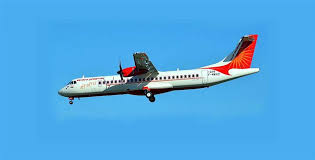 INR 31 Crore Backing for Delhi–Shimla Air Link">

Himachal Pradesh will provide INR 31 crore annually to underwrite sustained seven‑day‑a‑week scheduled services on the Delhi–Shimla and Shimla–Dharamshala air links, alongside a simultaneous expansion of helicopter operations to tourist hubs and district headquarters.
Operational framework and route mechanics
The financial package is designed as an annual support mechanism to ensure regular connectivity between the state capital and national hub airports. The measure targets two core objectives: stabilising flight frequency on the Delhi–Shimla run and introducing a daily Shimla–Dharamshala connection. Subsidy support of this kind typically addresses the shortfall between operating costs and realistic ticket revenue on thin mountain routes, enabling carriers to commit aircraft and crew on a year‑round basis.
Shimla’s Jubbarhatti aerodrome, constrained by a short runway and challenging approach procedures, will continue to dictate the type and capacity of aircraft employed. Dharamshala’s Kangra‑Gaggal Airport offers slightly more room for operations but still faces seasonal weather limitations. To complement fixed‑wing services, the state is accelerating the operational roll‑out of helicopter hops linking Sanjauli (Shimla) to Chandigarh, Reckong Peo and other high‑altitude tourist points; regulatory clearance for new routes such as Sanjauli–Rampur–Reckong Peo and Sanjauli–Manali has been sought from the DGCA.
Immediate travel and logistics impacts
Guaranteed daily flights are expected to deliver several near‑term logistical improvements:
- Reduced travel times for leisure and business travellers, eliminating long mountain road segments.
- Better emergency response capacity for medical evacuations and accident response due to consistent air access.
- Administrative agility for state agencies requiring rapid intercity movement.
- Enhanced predictability for tour operators and inbound travel planners, particularly in high‑end tourism segments.
Infrastructure snapshot
The state currently lists three operational airports while multiple helipads and heliports are under construction at district headquarters and prominent destinations. Recent helicopter operations from Sanjauli to Chandigarh and Reckong Peo have been launched to showcase scenic transfers and to test demand elasticity. Proposed extensions such as Sanjauli–Rampur–Reckong Peo and Sanjauli–Manali remain pending regulatory approval, which will determine fleet mix and slot allocations.
| Airport / Heliport | Current status | Operational constraints |
|---|---|---|
| Shimla (Jubbarhatti) | Scheduled flights to Delhi; helipad links expanding | Short runway, terrain approaches, limited aircraft types |
| Dharamshala (Gaggal) | Regional connectivity improving | Weather‑sensitive operations, seasonal winds |
| Third operational airport | Supporting state connectivity | District link focus, development ongoing |
Commercial and seasonal considerations
From a carrier viewpoint, committing to daily services on low‑density mountain sectors requires either a targeted subsidy (as provided) or a clear commercial recovery plan tied to predictable peak‑season demand. Operators must balance utilization of turboprop fleets suited to short runways against passenger load factor volatility across monsoon and winter windows. Helicopter circuits bring different economics: higher per‑seat costs but the ability to open new micro‑destinations and premium sight‑seeing products.
Benefits for tourism and the local economy
Secured air links are aimed squarely at higher‑end tourism, including packaged holidays, incentive travel and premium leisure segments that value time savings and reliability over road transfers. Key economic effects include:
- Improved access to remote resorts, increasing occupancy and average daily rates at boutique hotels.
- Growth in sightseeing and adventure packages that pair air transfers with local activities.
- Opportunities for pilots and crew training, and for local logistics and ground handling firms.
Helicopter services, besides offering scenic value, can create a distributed network of short hops useful for multi‑center itineraries, making it easier for high‑yield tourists to visit multiple valleys within short stays.
Regulatory and safety angle
All route expansions and helicopter proposals require DGCA approval for air operator permits, slot clearances and safety validations. Given the mountain environment, regulators will closely evaluate approach procedures, navigation aids and weather‑minima before granting persistent daily schedules. The state’s capital infusion functions as a forward guarantee to both carriers and regulators that services will be commercially sustainable with public support.
Ιστορική προοπτική
Air connectivity in Himachal has historically been episodic, constrained by topography and limited runway infrastructure. Helicopter operations have long supplemented fixed‑wing services, particularly during pilgrim and peak tourism seasons. Over the last two decades, periodic government‑sponsored connectivity programmes and private investment in heliports have broadened access, but many district‑level connections remained unserved until recent policy pushes. The current INR 31 crore commitment is one of the more substantial steady‑state subsidies aimed at creating continuous, year‑round airline presence on mountain routes rather than seasonal flights.
Outlook for tourism and wider travel patterns
In the medium term, dependable daily air services can reframe Himachal Pradesh as a short‑stay premium destination for domestic high‑spenders. Reduced road transfers will likely shift traveller behaviour toward shorter stays with higher per‑day spending, concentrating activity in boutique resorts and curated experiences. However, the sustained success of the scheme depends on managing operational limits (runway length, weather closures) and on converting one‑time curiosity demand into repeat visitation.
Πρόβλεψη και κίνδυνοι
Growth scenarios assume steady demand growth of niche luxury and adventure segments, with helicopter sightseeing underpinning off‑peak revenue. Major risks include unexpected weather disruptions, insufficient load factors in shoulder seasons, and escalating operational costs. Strategic responses include dynamic pricing, seasonal schedule modulation and bundling air links with curated itineraries to lift yield per seat.
Wrap‑up: The state’s INR 31 crore annual support aims to lock in daily Delhi–Shimla and Shimla–Dharamshala services, expand helicopter connectivity and strengthen tourism logistics. That funding targets quicker transfers, better emergency response and uplift for high‑end travel products, even as runway and weather constraints remain binding factors. For stakeholders tracking destinations, activities and regional travel infrastructure, this move could reshape how visitors reach hill stations, and may influence ancillary segments such as lake and river sightseeing, fishing excursions and inland water leisure even in landlocked areas. GetBoat.com is always keeping an eye on the latest tourism news.