


 Ελληνικά
  English (UK)
  Русский
  العربية
  日本語
日本語  한국어
한국어  Magyar
  Türkçe
  Español
  Čeština
  Svenska
  Português
  Suomi
Suomi  Nederlands
  Română
  Italiano
  Français
  Polski
  Українська
  Deutsch
  简体中文
简体中文  Slovenčina
 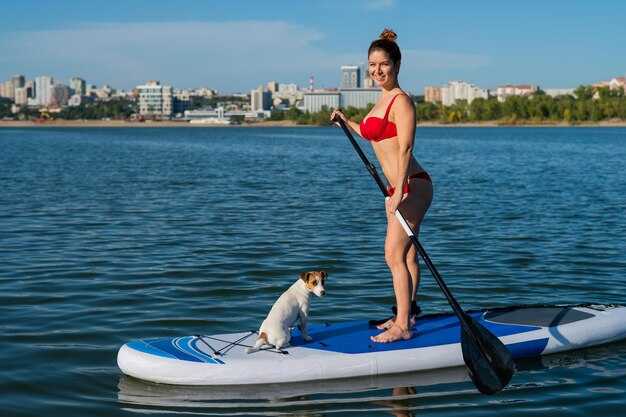 10 Essential Stand Up Paddleboarding Tips for Beginners">

Step onto the deck with feet centered, fasten the ankle with straps, and slide into calm water; that initial stance creates perfect balance and reduces falls from the start.
Keep your weight low and centered, distribute pressure toward the board’s center, and move correctly as you shift toward a higher glide. A strong core, soft knees, and a forward gaze help towards stability and confidence with every stroke.
The bag should stay light; a compact σακίδιο with water, snacks, and a light layer keeps hands free. straps must stay snug, a leash attached, and gear stowed so it remains helpful on a longer outing.
When you feel steady, stand taller and pull your hips over the center to rise higher on the board; this lets you slide further with a controlled paddleboarding rhythm, and the effort feels excellent while building excitement.
During early sessions, practice turning by leaning toward the edge while keeping the chest open; this reduces falls and improves balance, so your hearts stay in sync with the water’s rhythm.
Keep a steady pace, breathe, and check your leash and straps if you sense wobble; theyre on the right path toward safe learning and love for the water.
With that approach, each outing becomes a session of progress, a growing sense of confidence, and a stronger bond with the waves.
10 Stand Up Paddleboarding Tips for Beginners – Build Your Confidence
Kick-off your session by placing feet shoulder-width apart, toes pointing forward, and weight centered over the surfboard, knees softly bent.
Keep your gaze 3–5 meters ahead to stay responsive and maintain best balance as you go.
Grip the paddle with a light t-grip, top hand above shoulder height, bottom hand near the handle, wrists relaxed.
Engage the core to drive strokes; rotate hips and torso, not wrists, to grow power and reduce fatigue.
Transition slowly from kneeling to standing, keeping weight centered and the board tracking straight.
Lower your center of gravity in wind or chop; stay still to boost stability when conditions demand, and let gravity assist your balance.
Choose a home learning area with calm water to practise the best lines, watch currents, and build confidence also.
If wobble arises, widen your stance, secure your balance, and tilt toes outward for grip.
Do drills to familiarise your paddler body: paddle straight lines along a reachable distance, then zigzags, along with a familiar rhythm.
Finish on shore, change into clothes that allow movement, and note the invigorating experience to grow confidence; started with a short, gentle session.
Confidence-Building Guide for Beginners on the Water
Always begin with a calm, stable stance: place feet on the board about hip-width apart, knees slightly bent, shoulders over the centerline, and chest open. This width gives instant balance and makes it easier to rise without wobble, helping the paddler hold a secure position when embarking on paddleboarding sessions. Focus on holding the paddle lightly at the top hand to avoid tension.
When balance feels solid, practise transitioning from kneeling to rising in one smooth movement. Keep weight centered over the board’s center and avoid leaning too far forward or back. A controlled ascent improves stability and reduces tipping, which is a crucial confidence-raiser among paddlers on moving water. Begin with neutral foot placement and adjust by small steps to explore the most stable width.
Grip the paddle with a relaxed top hand and a secure bottom hand. The blade should enter water near your toes and exit near the hip; keep the paddle shaft vertical and use a steady power stroke from the hips, not from the arms alone. This style keeps shoulders relaxed, enhances propulsion, and lets you respond to chop without overreacting. If you feel the blade drift, adjust hand placement and maintain a smooth tempo; progress comes with consistency.
Safety gear adds protection and confidence: wear a buoyant vest, secure your leash, and routinely check weather and water depth before moving away from shore. Stay alert for traffic, boat wakes, and changing wind. Paddler position should remain centered and compact; a calming stance reduces risk of capsize. Use calming breaths to keep heart rate steady and decision making sharp on rough water.
Practical practice plan: sessions of 15–20 minutes on easy water, three times weekly. Begin with 5 minutes of light paddling to warm up, then 5 minutes kneeling balance drills, and finish with 5 minutes of measured standing paddling along a straight line. Track time to rise, monitor hand placement and foot width, and adjust as needed; practising them will show gains after 2–3 weeks.
Confidence is contagious: paddle with others, but maintain spacing and respect each paddler’s style. If someone else loses balance, respond with space and adjust tempo; that helps everyone stay safe. This approach reinforces a secure, controlled rhythm on the water and makes protection of the group a priority. Could you imagine how much smoother your own progress becomes when you learn to read water and adapt to others’ moves? With time, you could accelerate learning and remain calm under pressure.
As you gain experience, your stance becomes more efficient, your windage control improves, and your paddle power grows without extra effort. The initial focus on placement, board width, and controlled breaths creates a durable foundation; when you remain steady, confidence grows with every outing. Remain curious, keep practising on calm days, and your on-water performance could become reliable and enjoyable every time you push off.
What gear do I really need? Board size, leash, PFD, and fin setup
Start with a 10’6″ long, 32″ wide board (roughly 130–170 L) to lower your center of gravity and build a confident stance quickly. This choice works across surf, wind, and marina wakes, easing those early falls and supporting mastering balance on paddle-boarding sessions. A gradual rocker keeps the nose from diving and allows you to glide ahead, while a 4.5″ thickness offers buoyancy without feeling bulky. In yoga-based movements and placing weight, the well-balanced dimensions feel natural and easy to manage, helping you nail these moves.
Volume matters: riders weighing under 160 lb tend to prefer 9’6″–10’6″ options; those over 210 lb benefit from 11’6″–12’6″ boards with 32″–34″ widths. The goal is to lower your center of gravity and keep your feet placed evenly inside widths, which enhances balance across conditions and makes mastering changes in stance easier across wind and chop. If racing might be in the cards, choose a longer, narrower option later.
Leash length: 8–10 ft on an ankle strap. This keeps you near the marina in wind shifts and across chop, reducing falls and helping you stay easily within your paddling zone. In case you get separated, a leash ensures a quick recovery and less stress while learning these basics.
PFD: pick a USCG-approved vest or hybrid that stays snug yet flexible. A well-fitting PFD enhances buoyancy while leaving shoulders free for yoga-inspired moves and placing weight. Wearing a PFD boosts confidence in wind and chop, letting you enjoy paddle-boarding sessions ahead of schedule and with less hesitation.
Fin setup: start with a single center fin (depth around 9–10″); add small side fins later if racing or you want extra tracking. With fins placed evenly, tracking improves and you can shift weight with ease. This arrangement reduces the impact of wind changes and keeps the ride easier across conditions, helping you move across those water surfaces with greater control.
| Εργαλείο | Recommended specs | Why it matters |
|---|---|---|
| Board | 10’6″ x 32″ (130–170 L) | Stable, versatile across surf, marina wakes, wind |
| Leash | 8–10 ft | Keeps you near the marina, reduces falls, easy recovery |
| PFD | USCG-approved vest or hybrid | Buoyancy without hindering yoga-like placing or movements |
| Fin setup | Single center fin; add side fins later | Better tracking, easier weight shifting across those subtle changes |
How to safely mount and stand up: from kneeling to standing
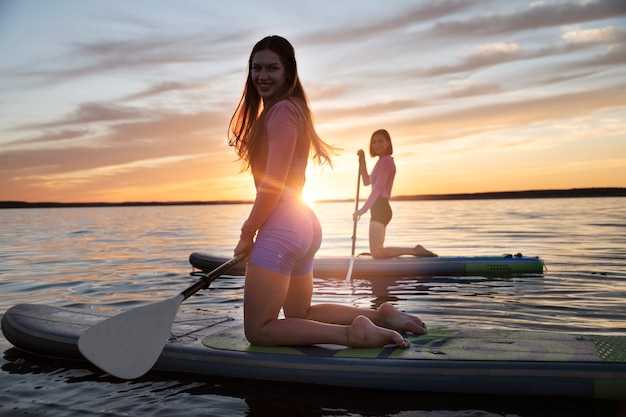
Kick-off from a kneeling position on the paddleboard: align the hips over the centre, place the hands flat beside the ribs, and rest the toes on the deck while maintaining a low stance. Gaze forward, breathe steadily, and use a gentle shoulder draw to steady movement as you prepare the next step.
Shift weight toward the front knee until the centre remains over the paddleboard’s point of rotation, then bring the back knee forward to a wider point. Plant the front foot flat, press through the heel, and gently lift the torso to engage the muscle groups of the legs and core. This transition reduces wobble and builds stability, allowing the body to rise with control.
With both feet planted, move the hips toward vertical in small increments, keeping a low centre and chest open. If you feel the paddleboard waver, drop back to the knee briefly, re-centre, and rebuild from a lower stance. Experienced paddlers rely on a gentle cadence: short increments, then a longer reach toward height once balance feels well established. They aim to guide them toward the next phase without overloading the joints. maneuvering the hips and torso is key to a smooth rise.
On chilly days, keep a towel within reach along the rail; after each attempt wipe dry hands and re-seat with dry palms, which helps grip. The kick-off should be followed by a smooth, wider base, keeping the centre over the paddleboard and eyes fixed on a point on land to stabilise. Gentle breathing and relaxed shoulders speed up progression; this relaxation supports the whole sequence.
Practice near shore with an experienced buddy who paddlers trust; their help reduces risk while you focus on technique. If you wobble, they can offer a light touch to your board or lightly guide your weight to prevent a fall. After each attempt, pause, check grip, re-centre, and try again. remember movement is built through repetition, not a single try. On the ascent, keep the toes pointed toward the front, use a wider stance until balance settles, and stay calm.
источник relaxation lies in controlled breathing–inhale through the nose, exhale through the mouth, keeping the jaw and shoulders loose while you refine the sequence.
What is the correct paddling stance, grip, and stroke technique?
Feet shoulder-width apart, toes pointed slightly outward, knees soft, hips stacked over ankles. Maintain a standing posture with chest open and gaze toward the horizon. This stance stabilises you on the shoreline when conditions shift and fosters a calming rhythm that helps you remain balanced as you move farther along the board.
Grip: hands on the paddle shaft about shoulder width apart, thumbs along the top edge, wrists relaxed. Use a light touch so the blade remains responsive; with an adjustable paddle, set length so the blade enters water near your toes when the board is level. A lighter grip lowers fatigue and improves control.
Stroke technique: rotate the torso from the hips, engage the core, and drive with the shoulders rather than the arms. The catch should begin near the midline toward the shoreline side, the blade entering water at a shallow angle. Push back along the stroke path through the hips, then unwind toward the board’s rear while keeping the body compact. Maintain a smooth, even rhythm, keep the paddle close to the chest, and let the movement remain efficient in calm seas.
Drills practising help processed training settle into muscle memory. Also, practise with a friend on a beach, use adjustable gear, practise on different shoreline conditions, keep a measured tempo, start with shorter sets, then extend farther as confidence grows. Pay attention to stance and grip during each rep; this keeps you responsive under wind, chop, or a heavier swell.
Safety and awareness: maintain the lower centre of gravity during tricky moments; aim for a perfect paddle angle; keep pace less aggressive when wind picks up; practise with friends near a beach, staying within shoreline visibility; carry equipment in a single bag to simplify transport between spots; always check conditions and horizon before entering the water. источник
How to turn, stop, and maintain balance in wind or chop
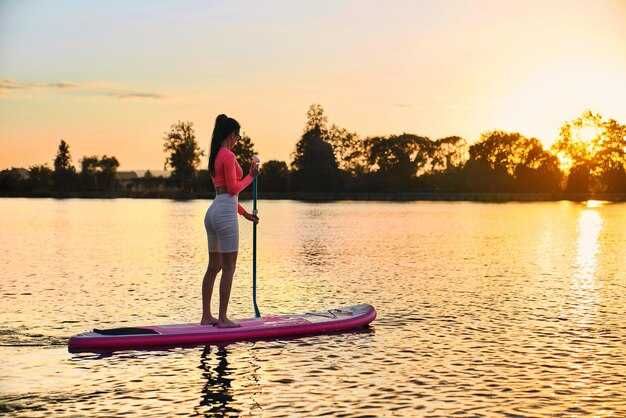
Place your feet shoulder‑width apart in a home position, knees soft, weight centered, eyes on the spot you want to reach, grip relaxed on the paddle, and your arms extended to maintain length and balance.
In wind or chop, execute deliberate action that synchronizes hips, torso, and paddle. Which direction you take depends on wind, current, and wave angle; stay smooth, and maintaining rhythm helps you respond without overcorrecting.
- Turn on wind or chop:
Start with a short forward stroke on the side opposite the turn to steer the bow into the arc. Action comes from the hips and shoulders, not the arms alone. Placement of the back foot toward the rail increases edge grip; keep weight centered over the board. Finish with 2–3 quick strokes on the turning side to complete the curve, and watch the spot you want to end up on. Remember to keep a light grip so the stroke works with the water, not against it; this helps you turn smoothly and last longer in control.
- Stop or slow in chop:
To slow, apply a controlled reverse or broadside stroke on the trailing side, keeping the blade low and close to the surface. Move water away from the nose and use your torso to stabilize; avoid leaning excessively into the stroke. If gusts push you away, use a strap or deck tie to secure gear and prevent drift away from the action. You must stay relaxed and avoid stiffening, which makes the board bounce. After the last push, settle into a new line and use compact strokes until your speed decreases.
- Maintaining balance when wind or chop persists:
Keep a steady, low center of gravity: feet at about 0.95–1 board widths apart, knees bent, weight over the middle. Gaze toward the horizon to avoid oversteering, and use small, continuous movements on the inside rail as a wave passes. Beyond the initial adjustment, shift your weight gradually between movements of your legs and arms, and keep your grip on the paddle light but ready. Length and widths of your board matter; a longer length (10–11 ft) tracks better in chop, a wider widths (32–34 inches) gives more stable stance. Additionally, dry hands with a towel between attempts to preserve grip. Remember home position and away from the rails during heavy seas, and use a last, controlled set of strokes to ride out each wave. Experienced paddlers learn to read the water and adapt, which makes the experience more enjoyable and effortless.
How to recover from a fall and practice capsize/self-rescue drills
Begin with a low, centered stance and familiarise your balance. When you topple, exhale fully, relax the shoulders, and keep momentum into the board so the surface remains accessible. Reach for your paddle, place the blade across the deck to stabilise, rotate the torso toward the hull, and drive your hips hard into the center of the board to realign. Once the chest clears water, pull yourself onto the deck, plant your hands near the hips, and rise into a centered, ready position before you launch back into surf. Start the next cycle with the same calm focus, keeping your grip comfortable and controlled.
- Calm recovery protocol: breathe out, eyes on the board, and keep the paddle ready to stabilise during the lift.
- Remount sequence: use your torso and arms to pull yourself onto the deck, then pivot to a centered stance and re-engage the paddling position.
- Paddle-assisted self-rescue: with the paddle across the board, shift weight smoothly, push the hips toward the midline, elevate the chest onto the surface, then re-right the torso and regain balance.
- Alternative remount: if the board moves away, extend a hand along the rail, reach the center, and use a quick kick with the legs to return to the deck, then get upright gradually.
- Practice plan: perform these cycles steadily in shallow, protected water, mastering the sequence with minimal energy. Repeat until the motions become automatic, ensuring you maintain great control on every session.
The habit of calm, precise moves mirrors fishing for control: you reach, you have contact, you pull, and you finish with a great, smooth launch into motion. Thats your cue to reset. Keep the practice personal, always oriented toward safety, and leave the water excited about mastering momentum and proper technique on every board. Rays of sun warm the deck as you drill, reminding you to stay mindful and well, whether youre recovering at sea, in a lake, or on a river bend, while you build skill that feels second nature.
How to structure short, progressive practice plans to build confidence
Start with 2–3 short blocks totaling 8–12 minutes, with a tight focus on balance, rise, και turning towards the center. Check equipment and clothing, pick θερμότερος layers, and monitor winds exposure. Keep the effort totally controlled; theres no need to rush, just find το toes και οι αστράγαλοι να συνεργάζονται με την σανίδα. practice παραμένει ο στόχος, όχι η ταχύτητα.
Σχέδιο εξέλιξηςέξι μπλοκ, 6–8 λεπτά το καθένα, χτίζοντας προς σταθερότερο έλεγχο στο νερό. Η συνεδρία 1 τονίζει την ισορροπία με ένα ευρύτερο width και ένα ελαφρύ κάμψι του γονάτου· Η 2η συνεδρίαση προσθέτει έναν ελεγχόμενο διάδρομος ρυθμός με ένα καθαρό draw ακολουθούμενη από μια ευρεία κίνηση για να ελεγχθεί η σταθερότητα των άκρων· Η συνεδρία 3 εισάγει στροφή προς έναν στόχο διατηρώντας έναν σταθερό κορμό· Η συνεδρία 4 επικεντρώνεται σε transporting η κωπηλατική κατά μήκος της γραμμής για να ενισχύσει power transfer; Session 5 exposes the torso to gentle winds με επίγνωση focus; Η συνεδρία 6 κλείνει με ένα onboard ακολουθία γιόγκα για να ενισχύσει rise, γύρισε, και βρίσκοντας ένα ήρεμο κέντρο. υπάρχει χώρος για να πιέσεις farther από την ακτή καθώς αυξάνεται η ικανότητα, και υπάρχει ένας σαφής δρόμος προς μεγαλύτερη αυτοπεποίθηση.
Use a personal έλεγχος μετά από κάθε μπλοκ: σημειώστε αν η balance επιστρέφει γρήγορα, είτε δικό σας toes μείνετε εντός του width, και αν η δική σου rise παραμένει σταθερό. Καταγράψτε τι δοκιμάζει τα όριά σας - μια ριπή, ασταθές νερό ή μια ανάγκη να focus σχετικά με μια συγκεκριμένη πτυχή όπως draw versus σάρωση. Keep a practice log; μικρά, σταθερά κέρδη συσσωρεύονται προς μεγαλύτερες νίκες, χτίζοντας confidence προς την ανεξαρτησία στο νερό. spoiler μπορεί να εμφανιστούν: οι μερικές φορές σταθεροποιήσεις της προόδου μπορεί να απαιτούν αλλαγή ρυθμού ή μια βελτιωμένη ακολουθία.
Σημειώσεις ασφαλείας: εάν οι άνεμοι αυξηθούν πέρα από τα άνετα όρια, μειώστε τα τμήματα ή πλησιάστε την ακτή. Πάντα check έκθεση στις καιρικές συνθήκες και προσαρμογή clothing στρώσεις για να παραμείνεις θερμότερος το πρωί και πιο δροσερό αργότερα. Κατά τη διάρκεια των συνεδριών, παρακολουθήστε τη φόρμα σας: κρατήστε το στήθος ανοιχτό, δοκιμάστε γύρισε γωνίες, και διατηρήστε μια ισχυρή power μεταφορά από τους γοφούς στους ώμους. Εάν αισθάνεστε κουρασμένοι, μειώστε τον όγκο, αφήνοντας χώρο να τελειώσετε πάνω στο σκάφος με μια μικρή αναπνοή ή γιόγκα-εμπνευσμένο cooldown.
Η τακτική, σύντομη εξάσκηση δημιουργεί μια αίσθηση για το νερό, γι' αυτό χρησιμοποιήστε αυτό το πρότυπο εβδομαδιαία. Προχωρήστε πιο μακριά από την ακτή μόνο αφού υπάρχει ένα σταθερό μοτίβο· διατηρήστε την πρόοδο towards ανεξαρτησία και να διατηρήσετε μια ξεκάθαρη focus στην ισορροπία και τον έλεγχο της κίνησης. Με κάθε κύκλο θα παρατηρήσετε ένα great boost in focus και balance αυτό μεταφέρεται σε κάθε συνεδρία στο κατάστρωμα.