


 Deutsch
  English (UK)
  Русский
  العربية
  日本語
日本語  한국어
한국어  Magyar
  Türkçe
  Español
  Čeština
  Svenska
  Português
  Ελληνικά
  Suomi
Suomi  Nederlands
  Română
  Italiano
  Français
  Polski
  Українська
  简体中文
简体中文  Slovenčina
 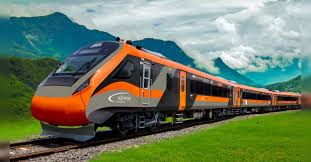 Vande Bharat expandiert und bedient Millionen in ganz Indien">

Rapid Growth of Vande Bharat Train Services
The Vande Bharat trains have transformed rail travel in India, marking a significant milestone by transporting over 7.5 crore (75 million) passengers since their introduction in 2019. Currently, the network boasts 164 services linking major cities and cultural hubs across the country, providing fast and comfortable journeys with modern features.
Features and Reach of Vande Bharat Trains
Developed under the Make in India initiative, these trains offer a blend of speed, safety, and passenger comfort. Noteworthy amenities include automatic plug doors, rotating seatsund bio-vacuum toilets. Passengers also benefit from GPS-based information systems and comprehensive CCTV coverage throughout the train.
With operations covering 274 districts, the trains are successfully connecting economic centers, spiritual destinations, and regional markets, thereby boosting tourism and commerce across the nation.
Key Routes Enhancing Connectivity
Several routes stand out for their particular importance:
- Delhi to Varanasi: Linking the national capital with one of India’s most spiritual cities, this route caters to pilgrims and tourists seeking reliable and swift travel options.
- Srinagar to Shri Mata Vaishno Devi Katra: Established recently in June 2025, this line facilitates easier access to a revered pilgrimage site, strengthening religious tourism.
- Bengaluru to Hyderabad: Serving as a vital corridor between two major tech hubs, it is favored by IT professionals and business travelers for its efficiency.
A Brief History of Indian Rail Innovations
India’s railway system has a rich history rooted in the colonial era, gradually evolving to become one of the world’s largest networks. The journey from steam engines to today’s high-tech trains is a story of modernization, with successive leaps in speed, technology, and passenger service quality. The Vande Bharat train represents the latest stride, combining advanced engineering with indigenous innovation.
Prior to Vande Bharat, India’s railways relied mainly on conventional trains, which served millions but often lacked modern comforts and speed. The launch of Vande Bharat introduced semi-high-speed trains, designed to compete with air and road travel by offering a compelling alternative for intercity journeys.
Impact on Regional Development and Tourism
The spread of these trains across numerous districts has facilitated smoother travel, opening up new avenues for domestic tourism. Faster, safer trains mean more accessible beaches, heritage sites, and cultural centers across India, encouraging economic uplift through increased visitor numbers.
Looking Ahead: The Future of Vande Bharat Travel
With the Vande Bharat fleet growing from just one train in 2019 to a robust network of 164 services, there is a clear indication of increasing public demand for high-quality rail travel. The trains carry hundreds of thousands of passengers monthly, offering improved productivity for business travelers, comfortable experiences for families, and dignified travel for pilgrims.
Environmental benefits are also noteworthy, as these trains contribute to lower carbon emissions compared to road and air travel, aligning with global sustainability goals.
Upcoming Innovations
The introduction of the Vande Bharat Sleeper will further revolutionize overnight travel in India. Promising a blend of speed and modern amenities, this addition will provide long-distance passengers with comfort and convenience never seen before on Indian rails.
How This Railway Progress Relates to Sailing and Boat Rentals
Though this development is firmly rooted in terrestrial travel, the expansion and modernization of transportation networks such as Vande Bharat could indirectly impact marine tourism. Improved rail connectivity enables easier access to coastal cities, riverine towns, and lakeside destinations, potentially increasing demand for Yachtcharter, boat rentals, and other water-based activities.
For instance, faster train connections to areas near major water bodies may encourage travelers to combine land and water travel in their itineraries, seeking seamless experiences that include sailing, fishing, or leisurely cruises along scenic shores and marinas.
Table: Comparing Vande Bharat’s Benefits with Marine Travel Alternatives
| Aspect | Vande Bharat Trains | Marine Travel (Yachts/Boats) |
|---|---|---|
| Geschwindigkeit | High-speed intercity travel | Leisurely pace, scenic |
| Komfort | Modern amenities, climate control | Varies by vessel; often luxurious |
| Umweltauswirkungen | Lower emissions than flights/cars | Depends on engine type; sailing has minimal emissions |
| Accessibility | Connects many inland cities | Access to coastal and lake destinations |
| Ideal For | Business travelers, pilgrims, families | Leisure travelers, fishing, water sports enthusiasts |
Schlussfolgerung
The Vande Bharat Express represents a leap forward in India’s rail infrastructure, connecting vast regions with speed and modern comfort. Its success signals growing public desire for advanced travel options and supports enhanced regional tourism by linking cultural and economic centers.
Looking forward, innovations like the Vande Bharat Sleeper promise to elevate travel experiences further. While the focus remains on rail, this improved accessibility compliments the broader travel ecosystem, including water-based activities.
For travelers inspired to explore coastal and lakeside destinations reachable via the expanding rail network, services like GetBoat.de offer a great way to rent sailing boats, yachts, and enjoy a rich variety of marine activities. This international marketplace caters to all tastes and budgets, enhancing the travel experience from land to sea with unmatched options in yachting, boating, and water adventures.