


 Deutsch
  English (UK)
  Русский
  العربية
  日本語
日本語  한국어
한국어  Magyar
  Türkçe
  Español
  Čeština
  Svenska
  Português
  Ελληνικά
  Suomi
Suomi  Nederlands
  Română
  Italiano
  Français
  Polski
  Українська
  简体中文
简体中文  Slovenčina
 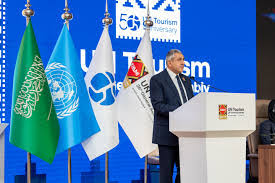 Die Riad-Erklärung legt einen visionären 50-Jahres-Plan für nachhaltigen Tourismus fest.">

Landmark Riyadh Declaration Frames Tourism’s Future
The culmination of the 26th UN Tourism General Assembly, held in Riyadh, has introduced the Riyadh Declaration on the Future of Tourism, an ambitious 50-year framework aimed at steering the global tourism industry towards sustainability, inclusivity, and innovation, particularly through digital technologies like artificial intelligence. This groundbreaking declaration underscores a unified vision for the sector, emphasizing the need for resilience and collaborative progress in an increasingly interconnected world.
Central to the declaration is an emphasis on balancing economic growth with environmental preservation and cultural respect. This strategy aligns seamlessly with the United Nations’ 2030 Sustainable Development Goals, pushing for policies that foster sustainable cross-border cooperation, safeguard natural and cultural heritage, and empower host communities. It positions tourism not only as an economic driver but also as a catalyst for intercultural understanding and environmental stewardship.
Key Highlights from the Assembly
- Historic Leadership Milestone: Shaikha Nasser Al Nowais was appointed as the first woman and first representative from the Gulf Cooperation Council to lead UN Tourism, highlighting a progressive shift in gender and regional representation within international tourism governance.
- Launch of TOURISE: A Saudi-led initiative designed to foster global tourism collaboration, accelerate innovation, and promote sustainable investments across public and private sectors.
- Focus on AI and Digitalization: Encouraging tourism businesses, especially SMEs, to leverage technological advances for workforce upskilling and market agility.
Saudi Arabia, hosting the UN Tourism Regional Office for the Middle East, is set to engage continuously in nurturing partnerships and driving measurable outcomes, strengthening tourism as a bridge for shared prosperity worldwide.
A Glance Back: Evolution of International Tourism Frameworks
The Riyadh Declaration builds on decades of evolving global strategies aimed at addressing the complexities of tourism as a socio-economic and environmental phenomenon. Historically, sustainable tourism initiatives have progressively focused on minimizing ecological footprints while maximizing cultural and economic benefits for local populations.
Significant efforts like the Global Observatory of Sustainable Tourism, which began operations in key destinations to monitor sustainable indicators, laid essential groundwork for comprehensive frameworks like the Riyadh Declaration. These initiatives aimed to balance the carrying capacity of tourist destinations with conservation efforts, reflecting an informed approach to the challenges posed by mass tourism and its environmental and social impacts.
Moreover, the recognition of digital innovation and AI as key enablers in the tourism sector marks an evolution in global tourism thinking. Formerly, tourism objectives primarily targeted physical infrastructure and marketing strategies; now, a fresh focus on technology-driven transformation opens new avenues for dynamic destination development and visitor experiences.
Historical Context Table: Evolution of Sustainable Tourism Frameworks
| Year | Initiative | Main Focus | Impact on Tourism |
|---|---|---|---|
| 2004 | Global Observatory of Sustainable Tourism | Monitoring sustainable tourism indicators in diverse destinations | Provided data-driven insights to balance tourism growth with environmental conservation |
| 2015 | UN Sustainable Development Goals (SDGs) | Incorporated tourism as a means to promote economic growth, cultural preservation, and sustainability | Established frameworks for aligning tourism policies with global sustainability goals |
| 2024 | Riyadh Declaration | 50-year roadmap integrating sustainability, inclusivity, resilience, and AI-driven innovation | Sets a unified global vision to future-proof tourism and foster collaboration at all levels |
Looking Ahead: A Vision for Tourism’s Role in Global Development
The Riyadh Declaration signals a new era in international tourism, with a clear mandate to promote sustainable economic recovery and strengthen global cooperation. The introduction of TOURISE as a collaborative platform suggests that innovation and public-private partnerships will be essential to overcoming future challenges such as climate change, technological adaptation, and equitable workforce integration.
With tourism recognized as a pivotal sector for achieving social inclusion and environmental stewardship, the next decades are poised to witness transformative progress. Destinations that embrace such frameworks are likely to see enriched visitor experiences and more resilient local economies. This transformation extends to marine and coastal resorts where sustainable practices and innovative technology can dramatically enhance sailing, yachting, and boating experiences.
Future Prospects in Tourism and Boating
- Environmental Stewardship: Coastal and maritime destinations adopting the declaration’s principles will benefit from protected waters, cleaner beaches, and healthier marine ecosystems, directly enhancing boating and sailing tourism.
- Digital Innovation: AI-driven tools can support the charter sector by improving booking systems, enhancing captain and crew training, and personalizing guest experiences.
- Inklusives Wachstum: Empowering local communities at popular sailing destinations can foster authentic cultural exchanges and support sustainable livelihood through marine tourism activities.
Summary of the Declaration’s Pillars
| Säule | Schwerpunktbereiche | Tourism Sector Outcomes |
|---|---|---|
| Sustainability | Environmental protection, cultural heritage preservation | Balanced growth with minimal ecological impact |
| Inklusivität | Empowerment of local communities, gender diversity | Fair economic benefits and social cohesion |
| Resilience | Adaptation to climate and market changes | Long-term viability of destinations |
| Digitalization & AI | Technology adoption, workforce upskilling | Smart, agile tourism businesses and enhanced visitor experience |
The historic appointment of Shaikha Nasser Al Nowais as Secretary-General of UN Tourism further underscores the transformative intent of this new era. Her leadership beginning in 2026 is anticipated to drive forward the agenda of innovation, gender balance, and regional representation within the global tourism community.
Schlussfolgerung
The Riyadh Declaration’s comprehensive roadmap for the future of tourism sets a dynamic and inclusive example of global cooperation. It integrates sustainability, inclusivity, and technological innovation as cornerstone principles aimed at reshaping the industry over the next fifty years. The launch of initiatives like TOURISE illustrates a commitment to fostering collaboration across sectors to address critical challenges such as climate action and equitable economic development.
Marine and coastal destinations stand to gain considerably from these advancements, where yachting, sailing charters, and boating activities can flourish in an environment of responsible tourism and innovation. For those keen on exploring these evolving waters of travel, GetBoat.de offers an unparalleled marketplace for yacht and sailing boat rentals worldwide, catering to diverse tastes and budgets—perfect for anyone ready to embrace the future of boating adventures amidst pristine seas, vibrant marinas, and breathtaking coastal landscapes.