Omega 42 build: stern-to-bow progress update
Alexandra
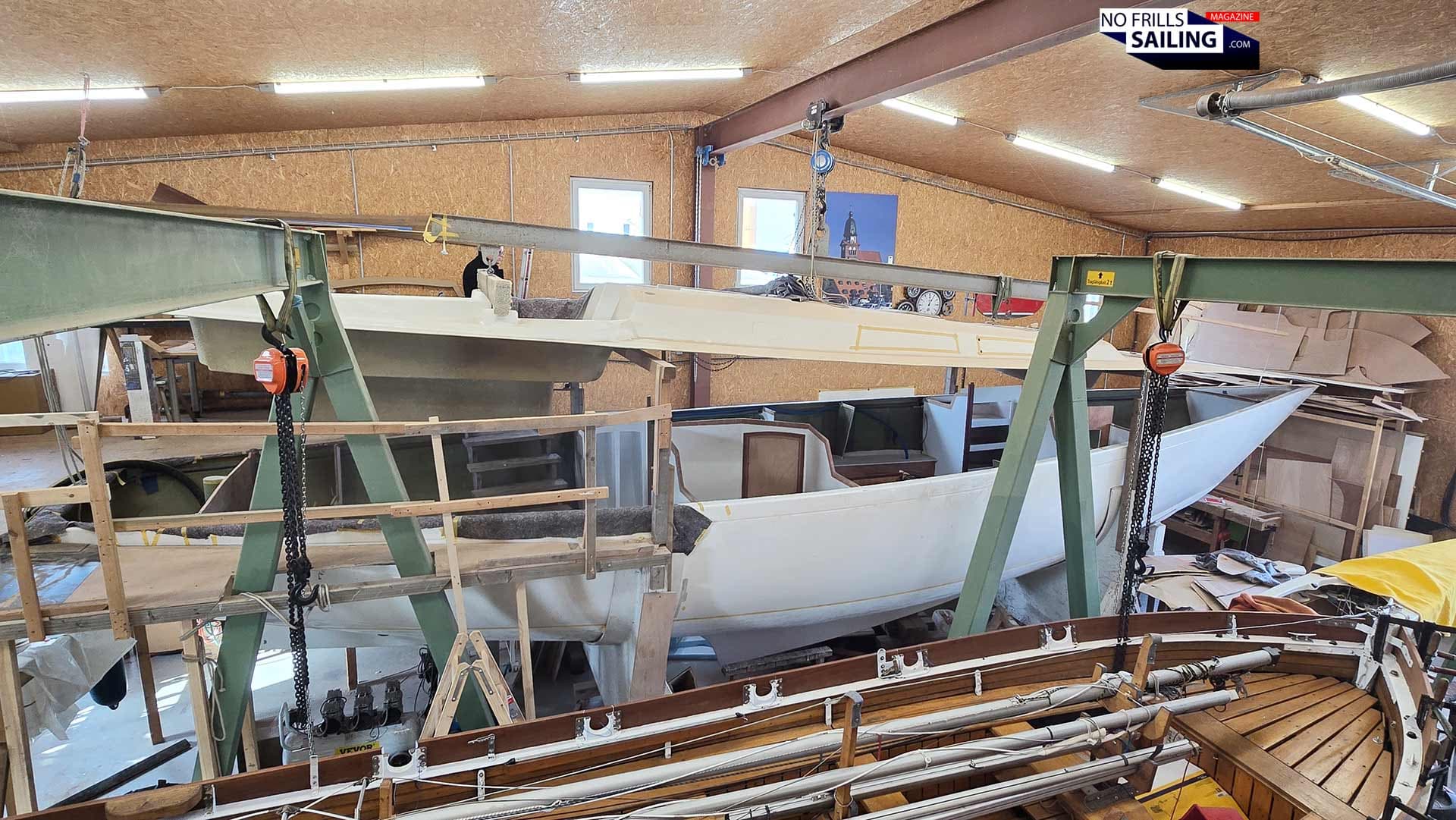
Deck mating is booked for the end of March, the heavy-duty transport truck and berth are already reserved for post-launch, and the lead keel fairing plus epoxy encapsulation are scheduled immediately after mast stepping — concrete logistics that define the next six weeks of the Omega 42 build. Chain plates and deck laminate sequencing require exact timing: once the deck is mated to the hull, many interior joinery parts will be laminated into place and only then receive their final paint and varnish.
Progress snapshot: stern moving forward
The aft section now hosts the mounted diesel with saildrive, complete with exhaust and cooling runs partially installed and insulation underway. A compact staircase gives access down to the port pilot berth, which has been specified as a single berth rather than a double to save volume. The aft cabinet joinery is largely installed and lacquered, though the final clear top coats are pending the deck-hull lamination.
| Compartment | Current status | Next action |
|---|---|---|
| Engine bay | Engine & saildrive fitted; auxiliary piping in progress | Throttle lever finalized; insulation completed |
| Electrical bay | Wiring run; Mastervolt lithium batteries ordered | Battery installation & shore-power integration |
| Galley / Joinery | Gauge models validated; Bamboo worktop made | Final fitting after deck lamination |
| Head | Fixtures in place; manual foot pumps installed | Mirror, hooks and felt finishing |
| Salon / Flooring | Original EVA floor removed; new Sika Sikafloor chosen | New floor production and fitment |
Why semi-custom equals time
Semi-custom production means almost every panel, shelf and worktop is made to order. Carpentry starts with a gauge model, followed by iterative shaping, sanding, degreasing, priming and top-coating. That process multiplies labor and feedback loops compared to series-production yachts where interiors are module-built offsite. In plain terms: bespoke choices = extra decisions = extra time. No mystery, just reality.
📚 Das könnte Sie auch interessieren
Time sinks and examples
- Galley layout — sink location and Bamboo worktop required multiple mock-ups.
- Cooking system — gas was rejected; an alcohol stove was chosen and then the Jetboil + Seascape-gimbal integration was iterated until a safe mount was found.
- Flooring redo — custom EVA boards showed alignment offsets; the decision was made to rip and remake using Sikafloor Marine 590 in a semi-dark grey matching the interior palette.
Electrics, nav station and practical systems
The wiring harness runs from mast foot to the proposed Philippi panel location; mounts for the Gamin Cortex VHF, Orca nav tablet and a Garmin secondary display are planned based on sightline preferences. Power will come from two Mastervolt LiFePO4 house batteries and an AGM starter, with shore-power and charger systems prepped for installation. The approach favors simplicity: manual foot pumps replace electric water pumps, and there is no initial hot-water boiler to save weight and reduce plumbing complexity.
Bathroom and storage choices
The head uses a Bamboo worktop and push-cabinet access to the manual pump and piping. A no-mix toilet with soft wood chips was chosen in lieu of a conventional marine toilet, removing the need for complex wastewater tanks and seacocks. Custom gratings are installed as a visual highlight, and felt-lined hull panels are waiting to be finished.
Critical upcoming milestones
Work now focuses on a tight milestone chain. After deck mating:
- Shelving and bulkhead lamination to the deck underside
- Final chain plate reinforcement and Seldén rigging measurements
- Mast production and Quantum sails ordering
- Rudder stock fabrication and autopilot preparation
- Side window cutting, PVC deck fitment by Rosch-Yachts, and pulpit installation
- Keel fairing, epoxy encapsulation, antifouling, then heavy transport to the slip
| Month | Key tasks |
|---|---|
| End of March | Deck mating; bulkhead lamination begins |
| April | Rigging measurements (Seldén); mast & sail production |
| May | Windows cut; PVC deck, pulpit, keel encapsulation |
| June | Antifouling, sea trials and transport to berth |
Implications for charter and rental markets
Build decisions — from a single pilot berth to manual pumps and simplified electrics — shape later suitability for charter or private sale. Lighter systems, open-plan interiors and fewer fixed cabins favor private owners and bareboat sailors; operators in the charter market may request additional fittings (hot water, cabin doors, full galley) which change timelines and cost. For GetBoat.com users looking at future rental or sale, these specs affect appeal in marinas, gulf destinations, and blue-water cruising itineraries.
Wrap-up: the Omega 42 project is moving through a dense logistics sequence — deck mating, keel encapsulation, rigging and outfitting are imminent — with bespoke joinery, electrical decisions and material choices driving the timeline. The balance between a lightweight, simple sailing yacht and the inevitable iterations of a semi-custom build explains why bespoke projects take longer than series builds. In short: this yacht will be a lean, open-plan boat with Bamboo accents, Mastervolt electrics, Seldén rigging and Quantum sails — designed with a captain’s practicality in mind and with an eye toward charter potential, beach-friendly cruising, and enjoyable days on the sea, ocean or lake. Whether you’re thinking sale, rent or a future charter destination, the result should fit marinas and clearwater anchorages alike — smooth sailing ahead, as they say.


