Four Seasons George V secures global sustainability accolade
Alexandra
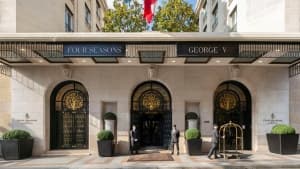
Four Seasons Hotel George V, Paris now reports that 81% of its supplies and packaging are eco-certified and that 100% of wood-based products are sourced from FSC- or PEFC-certified origins after rolling out a comprehensive responsible purchasing charter across 14 product categories.
A global award for a supply-chain overhaul
The hotel was named World’s Leading Sustainable Supply Chain Programme 2025 at the World Sustainable Travel & Hospitality Awards held at Terra, Expo City Dubai. The recognition was presented to an audience of global tourism leaders and industry stakeholders attending the Awards’ gala ceremony, which aims to highlight projects that accelerate a net positive future for tourism.
The accolade acknowledged a set of concrete measures implemented across procurement, supplier engagement and waste management, and the program’s measurable outcomes in supplier certification uptake and material traceability. The hotel’s management characterized the recognition as the result of multi-year efforts to embed environmental and social criteria into purchasing decisions.
📚 Das könnte Sie auch interessieren
Key components of the supply-chain programme
The responsible purchasing charter introduced by the hotel integrates stringent selection criteria for vendors and covers a broad spectrum of goods and services. Core elements include:
- Certification requirements: Preference for Ecolabel, FSC, GOTS and other recognised standards.
- Local sourcing: Prioritising regional suppliers to reduce transport emissions and support local economies.
- Waste reduction: Minimising packaging and promoting reusable or recyclable materials.
- Circular economy principles: Extending product lifecycles and encouraging refurbishment and resale.
- Supplier engagement: Training and collaboration to help vendors meet environmental and social benchmarks.
Operational metrics at a glance
| Indicator | Value | Notes |
|---|---|---|
| Supplier adoption of charter | 66% | Since charter launch |
| Eco-certified supplies & packaging | 81% | Includes GOTS, Ecolabel certifications |
| Wood-based products certified | 100% | FSC or PEFC origin |
Stakeholder recognition and industry context
The Awards operate in partnership with the World Sustainable Hospitality Alliance, an organisation representing thousands of hotels and millions of rooms worldwide, as well as numerous supply-chain partners. Officials noted that the prize celebrates innovation, collaboration and leadership in sustainable hospitality and singled out the hotel for its measurable procurement changes and supplier mobilisation.
Senior figures from the Awards emphasised the broader objective: to showcase models that demonstrate how responsible procurement practices can be mainstreamed without compromising guest experience or operational excellence. The Paris programme was described as a replicable template that large-scale luxury properties can adapt to their procurement ecosystems.
How the programme was implemented
Implementation combined policy, incentives and verification. Practical steps included:
- Developing a detailed charter with category-specific criteria for 14 product and service classes.
- Auditing current supplier portfolios to identify compliance gaps and opportunities for substitution.
- Rolling out supplier workshops and capacity-building sessions to raise standards across the network.
- Partnering with certification bodies to prioritise recognised ecolabels and chain-of-custody documentation.
- Tracking procurement metrics to feed continuous improvement cycles and public reporting.
Historical perspective: sustainability’s rise in luxury hospitality
Sustainability in hospitality has evolved from isolated green initiatives in the 1990s to integrated corporate strategies in the 2010s and beyond. Early efforts focused on energy and water efficiency; over the last decade attention shifted to supply-chain transparency, ethical sourcing and circularity. Luxury hotels, once seen as slow adopters due to complex procurement needs and high service expectations, have increasingly embraced responsible sourcing to match shifting guest preferences and corporate responsibility mandates.
Notable inflection points include the proliferation of third-party certifications, the emergence of global alliances coordinating hotel commitments, and advances in supplier traceability systems. These changes have enabled hotels to set measurable targets for materials, waste and social impact and to communicate progress to increasingly discerning travellers.
Implications for international tourism and suppliers
Adoption of robust supply-chain policies in flagship properties signals a market expectation shift that will likely ripple through hospitality-related sectors. Suppliers seeking long-term contracts with leading hotels may face higher entry thresholds — including certification, social compliance and traceability — which will raise the baseline for product sustainability across regions. For international tourism, this means the guest experience will increasingly reflect ethical and environmental criteria, and destinations will be assessed not only by amenities but also by the provenance of services and goods.
Forecast: what comes next
Over the next five years, similar procurement frameworks are likely to spread across larger hotel groups and into adjacent travel sectors. Expected trends include greater supplier consolidation around certified producers, broader adoption of circular procurement practices, and collaboration between hospitality players and logistics partners to reduce emissions across distribution networks. For consumers, the result should be clearer sustainability claims, improved product quality and more transparent supply chains driving purchasing decisions at point of stay.
In summary, Four Seasons Hotel George V, Paris has set a measurable benchmark by integrating certification standards, local sourcing and circular-economy practices into its procurement model and by securing recognition at the World Sustainable Travel & Hospitality Awards. The programme’s quantifiable outcomes — supplier buy-in, high levels of eco-certified materials and complete certification of wood products — make it a practical reference for peers seeking to reconcile luxury operations with environmental and social responsibility.
GetBoat (always keeping an eye on the latest tourism news) monitors developments like these closely because shifts in hospitality procurement and sustainability standards influence demand and expectations across many travel Destinations. From how hotels stock kitchens and marinas to how suppliers serve boats and superyacht provisioning, changes in procurement policy can affect charter logistics, boating activities, marinas and broader yachting services — including supply chains for yacht captains and crews. This recognition in Paris underlines a wider movement toward cleaner, certified supplies across the travel industry and offers insights for operators, suppliers and travellers planning trips, beach visits, fishing excursions or marinas stops in search of greener, more transparent experiences. For more updates and the latest industry movements, visit GetBoat.com.


