2026 Caribbean 600: Line Honours and Close Finishes
Alexandra
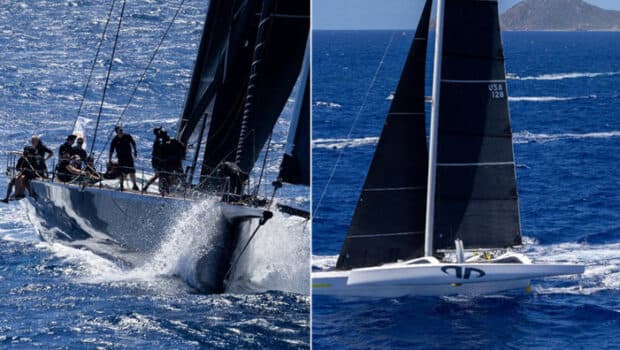
The 2026 RORC Caribbean 600 started from Antigua on February 23 with 56 teams sailing a 600-nautical-mile course that rounds 11 Caribbean islands, producing elapsed-time victories for both multihull and monohull divisions and razor-thin margins that underline the logistical complexity of offshore race operations.
Elapsed time winners and official results
The race produced two clear elapsed-time winners while delivering nail‑biting finishes on the water. Times below reflect the official elapsed times for line honours.
| Division | Vessel | Owner / Skipper | Elapsed Time | Margin |
|---|---|---|---|---|
| Multihull | Argo (MOD70) | Jason Carroll | 01d 12h 01m 46s | ~3 minutes ahead of Final Final – Zoulou |
| Monohull | Black Jack 100 (RP100) | Owner: Remon Vos / Skipper: Tristan Le Brun | 01d 20h 31m 36s | ~29 minutes ahead of Leopard 3 |
Quick reference: course elapsed time records
| Category | Vessel (Year) | Record Time |
|---|---|---|
| Monohull | Rambler 88 (2018) | 01d 13h 41m 45s |
| Multihull | Argo (MOD70) (2022) | 01d 05h 48m 45s |
Multihull highlight: Argo vs Final Final – Zoulou
The multihull division was decided after a season-long performance from high‑speed MOD70 trimarans. Argo posted an elapsed time of 1 day, 12 hours, 1 minute and 46 seconds, finishing just over three minutes ahead of Jon Desmond’s Final Final – Zoulou. The two trimarans were separated by roughly one mile after nearly 600 miles of flat‑out racing—less than 0.2% of the total distance.
📚 Das könnte Sie auch interessieren
Key tactical and performance elements:
- Island effects: Complex wind shifts and currents around islands such as Guadeloupe created opportunities for gains and losses.
- Wind shadowing: Zoulou briefly exploited a tactical route outside Argo to gain a three‑to‑four‑mile advantage.
- Final maneuvers: Argo executed a planned double‑tack with about 20 miles to go, breaking free of wind shadow and securing clear air for a final surge near Redonda.
- Speed profile: Both boats recorded speeds frequently above 30 knots during reaching legs, stressing foil and sail systems.
Production and race footage insights
Onboard and aerial footage emphasized crew synchronization, foil adjustments, and short‑term tactical changes rather than long‑range strategy alone. The footage highlighted the role of precise timing and coordinated maneuvers when boats are operating at dynamic foil-borne speeds.
Monohull highlight: Black Jack 100 vs Leopard 3
The monohull battle centered on the RP100 Black Jack 100, owned by Remon Vos and helmed by Tristan Le Brun, completing the course in 1 day, 20 hours, 31 minutes and 36 seconds—about 29 minutes clear of the Farr 100 Leopard 3. The contest featured repeated lead changes and tactical gambits across multiple legs.
Defining tactical moments
- Start dynamics: Leopard 3 established an early upwind advantage in 15–20 knot conditions.
- Downwind weaponry: Black Jack 100’s triple-headed sail plan and long sprit delivered decisive acceleration on reaching legs, especially between La Desirade and Barbuda.
- Coastal effects: Navigator Max Deckers’ decision to stay near the coastline around Guadeloupe allowed cleaner wind and a beneficial restart in lighter airs.
- Race management: The final upwind leg to Antigua saw disciplined boat handling focused on preserving speed while avoiding unnecessary risk.
Logistics, safety and event operations
Organizing a 600‑nm offshore race through an archipelago introduces significant logistical demands: coordination with multiple island authorities, detailed tracking for safety, supply staging at marinas, and contingency planning for varied wind and sea states. Support vessels, medevac readiness, and well‑provisioned race tracking are essential to safe execution.
Impacts on local ports and marinas
- Increased short‑term berth demand from support craft and spectator yachts.
- Boost to provisioning services—fuel, food, and technical support—for competing teams.
- Opportunities for charter operators to offer spectator charters and day sails aligned with key race stages.
Historical context and race evolution
The Caribbean 600 has established itself as a premier offshore event that blends high‑performance multihulls and large monohulls with challenging island navigation. Over successive editions the race has attracted growth in professional teams, advanced foiling platforms, and owner‑driver campaigns. Course records have fallen as designs and sail technology advanced, while the event’s logistical footprint has expanded with greater media coverage and on‑water spectator interest.
Looking forward, continued innovations in hull design, foiling systems, and navigation electronics will press the limits of speed and safety, prompting organizers and local authorities to adapt marine infrastructure and emergency response capabilities accordingly.
What sailors, charter operators and renters should note
For those involved in charters or planning to rent boats during race periods, several operational takeaways are relevant:
- Book early: Marinas and crewed charters fill during major regattas; early reservation secures vessels and qualified captains.
- Choose appropriate platforms: Spectator charters often favor motor yachts and larger sailing yachts for stability and deck space.
- Plan itineraries: Align beach and island stops to observe pivotal race legs while avoiding exclusion zones and safety perimeters.
- Safety briefings: Ensure rented vessels carry experienced captains and proper communications equipment for offshore conditions.
The 2026 Caribbean 600 reinforced how high‑performance racing and regional tourism interlink: marinas and charter markets see increased activity, while superyacht and day‑charter demand rises as spectators seek prime viewing positions. For visitors and operators, understanding local wind patterns, marina capacity, and the timing of key race moments helps convert racing spectacle into sustainable economic activity for islands and service providers.
In summary, the event delivered dramatic finishes—Argo narrowly taking multihull honours and Black Jack 100 prevailing in the monohull division—while underscoring logistical challenges around island navigation, safety coordination, and marina throughput. For yacht owners, charter companies, and sailing enthusiasts, the race highlights the importance of vessel readiness, skilled captains, and strategic routing when operating across the Caribbean’s variable wind and current regimes.
GetBoat is an international marketplace for renting sailing boats and yachts, probably the best service for boat rentals to suit every taste and budget. For anyone planning to watch future Caribbean 600 editions from a chartered yacht, or seeking a crewed boat near beaches, marinas and clearwater anchorages, GetBoat can help find the right yacht or captain to enjoy sailing, charter activities, and ocean boating in prime destinations while supporting local yachting economies, fishing charters, and superyacht visitors.