


 Deutsch
  English (UK)
  Русский
  العربية
  日本語
日本語  한국어
한국어  Magyar
  Türkçe
  Español
  Čeština
  Svenska
  Português
  Ελληνικά
  Suomi
Suomi  Nederlands
  Română
  Italiano
  Français
  Polski
  Українська
  简体中文
简体中文  Slovenčina
 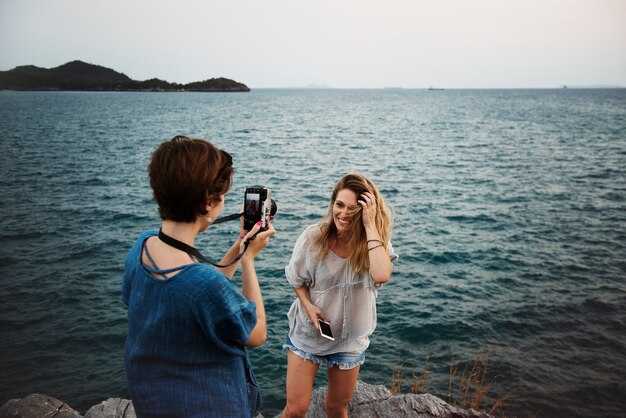 How to Take a Great Photo on a Boat – Pro Tips for Stunning Seascapes">

Stabilität auf dem Deck ist am wichtigsten.Platzieren Sie Ihre Füße schulterbreit auseinander, beugen Sie Ihre Knie und lassen Sie Ihre Ellbogen auf Ihrem Oberkörper ruhen. Bei rauen Bedingungen verwenden Sie ein Einbeinstativ oder lehnen Sie sich an eine Schiene, um die Kamera ruhig zu halten. Heben Sie bei Gischt und Spritzwasser den Auslöser. 1/1000s oder schneller, um die deutlichsten Wellenmuster einzufangen. Wenn das Licht fällt, anpassen an 1/500s aber zielen Sie toward faster Geschwindigkeiten, wenn Bewegungen beschleunigen.
Techniken für Fokus und Rahmen: umschalten auf manueller Modus oder verwenden Sie single-point AF, Fokus auf einen hochkontrastreichen Rand einstellen, dann neu kompositionieren. Auf einem Boot erzeugt Wasserrückverlauf Bewegungen der Szene; antizipieren Sie, wohin das Boot treiben wird, und verfolgen Sie es mit Ihrem Fokus. Wenn Sie nicht einrasten können, wechseln Sie bei hellem Licht in den kontinuierlichen AF-Modus, aber kehren Sie zu single-shot AF wenn Sie ein klares, offenes Meer entdecken, um die Szene scharf zu halten. Sie werden den Moment nicht verpassen, wenn Sie das Verfolgen und Timing üben.
Komposition ist wichtig. in jedem Bild. Platzieren Sie ein Vordergrundelement (Seil, Klemme oder Boje), um Tiefe zu verleihen und das Auge in die Szene. Use Kontrast zwischen dunklem Rumpf und weißer Welle, um das Motiv hervorzuheben. Halten Sie den Horizont waagerecht; eine geneigte Linie unterbricht den Rhythmus des Bildes in rauem Meer und beruhigt das photografisch Wert des Rahmens. Wenn Sie einer tricky winkel, schwinge deinen Körper mit der Rollbewegung des Bootes, um hochkontrastige Silhouetten einzurahmen, während die Sonne untergeht und die Wolken leuchten – ein Moment, den du mit Übung einfangen und etwas Unvergessliches schaffen kannst.
Beleuchtung und BelichtungIn glare-rich, midday conditions, verwenden Sie einen Polarisationsfilter, um Reflexionen zu reduzieren und den Himmel abenddunkler wirken zu lassen; fotografieren Sie in manueller Modus oder Blendenpriorität um die Meeresoberflächenhelligkeit auszugleichen. Verwenden Sie eine geringe Belichtungskorrektur (+/- 0,3 bis +0,7), um Wasserdetaills zu erhalten und ein Ausbrennen der Highlights zu vermeiden. Da das Licht kommt und geht, speed Ihre Reaktion ist von Bedeutung; behalten Sie speed und Kontrast in Betracht zu ziehen, wenn sich das Sonnenlicht verschiebt. Wenn Sie einen wollen unforgettable Szene, sei bereit, den Auslöser zu drücken, wenn das Boot aus dem Schatten in die Sonne gleitet.
Timing schlägt Glück auf einem Boot. Verfolge die Reihenfolge von Bewegungen von einer brechenden Welle und schießen in kurzen Stößen, um einen Scheitelmoment einzufangen. Verwenden Sie, falls Ihre Kamera dies ermöglicht, einen schnelleren Serienbildmodus; a photografisch sequence can yield a handful of frames where spray is crisp and the surface texture shows depth. In tricky Beleuchtung, filme ein paar Frames bei Belichtung eingeklammert, um Details sowohl in hellen Lichtern als auch in schattigen Tälern zu bewahren.
Safety and gearbehalten Sie eine wasserdichte Tasche für die Kamera, trocknen Sie Ihr Objektiv oft und consider ein Regenschild in Spritzzonen. Verwenden Sie eine Blendenkapuze, um Blendung zu reduzieren, und spülen Sie die Ausrüstung nach einer Sitzung aus, um Salzablagerungen zu verhindern. Für lange, exhilarating sessions, plan your conditions und bringen Sie zusätzliche Batterien mit, um einen Stromausfall während der Fahrt zu vermeiden; Batterien können schnell leer werden. Ein klarer Plan hilft Ihnen, Ihre beste Szene Momente und sorgt dafür, dass Ihre Erinnerungen erhalten bleiben. unforgettable.
Schritt 2: Passen Sie Ihre Kameraeinstellungen für großartige Boots-Meeresblicke an
Setzen Sie Ihre Grundbelichtung im manuellen Modus und beginnen Sie mit 1/1000 s, um Bewegungen auf rauem Wasser einzufrieren. Wenn Spritzwasser auf das Objektiv trifft, erhöhen Sie den ISO-Wert auf 400–800 und halten Sie f/8–f/11, um Details zu erhalten; für seidenweiches Wasser planen Sie, von einer stabilen Oberfläche bei 1/4–1/8 s zu fotografieren, wobei Sie ein Einbein oder eine Reling als Stütze verwenden, während Sie die Bewegung durch eine Reihe von Bildern verfolgen. Dieser Ansatz verbessert Ihre Bilder und hilft Ihnen, Optionen später zu vergleichen.
- Selecting exposure and ISO: In bright sun, use aperture around f/8–f/11 and ISO 100–400; shoot RAW to preserve detail; if you’re using a smartphone, enable Pro mode and capture DNG when possible; for mixed light, auto white balance is acceptable and can be tweaked later in post; this here helps keep color consistent across different scenes.
- Motion and focus: Use AF-C (continuous) with a tracking focus area; employ back-button focus to lock on the subject and recompose; for spray, use 1/1000–1/2000 s to freeze motion; for a trace of motion, try 1/250–1/500 s and pan slightly to show movement through the frame.
- Stability and grip: Everyone should tuck elbows down toward your torso and keep the camera close; brace against the boat rail or use a monopod; on smartphones, two-handed grip and chest support helps; waterproof housing protects gear from spray.
- Perspective and space: Explore different perspective angles to emphasize space and depth; shoot from knee height or lower to exaggerate waves; plan a quick succession of frames to capture the subject under changing light and waves.
- Equipment and protection: If you have rugged cameras or a waterproof housing, you’re better prepared for rough conditions; having a spare battery and memory card helps; smartphone users should enable Pro mode and keep the lens clean and dry.
- Post-process and workflow: Import images as RAW, check the histogram, and adjust white balance and highlights to keep water color natural; batch process similar frames for a cohesive look; store images with consistent metadata to simplify selection later.
White Balance on a Boat: Presets and Custom WB for Blues and Sunlit Water
Set the white balance to 5500K manually for most coastal, sunlit days to keep blues accurate and sunlit water balanced; shoot RAW to refine WB later and preserve multiple frames from the start, so you can compare options without losing detail.
On a boat, presets help you respond to changing light quickly. Use Auto WB as a baseline, then switch to Daylight (about 5200–5500K) when the sky is clear and the blue water reads true; Cloudy adds warmth for calmer days and more natural skin tones; Shade pushes more warmth for late afternoon light. For night scenes or the glow after sunset, Tungsten can cool the scene, but expect a cooler water cast. Work to stabilize WB across a sequence so colors stay harmonious as the deck moves and there are movements in the frame.
From the start, a custom WB method gives you the most control. Place a neutral gray card (or a clean white shirt) in open shade on deck and shoot a reference frame. In RAW, set WB to a target around 5500–6000K to keep blue water true while preserving the sunlit warmth. If a card isn’t available, use a bright gray area in the scene, then adjust WB in post to prevent casts on the water. This approach helps stabilize exposure and WB, especially when you switch between still life moments and sweeping seascapes.
To minimize shifts when the boat rocks, lock WB and exposure and shoot in a burst with a steady shutter, then pick the frames where the water and sky share a similar cast. A polarizing filter helps reduce glare and gives you more distinct blue tones, while keeping the sun’s shine on the surface. If you must shoot with limited reference, shoot a short sequence and fix WB in post; that saves space in editing and keeps the sequence coherent for a coastal shoot.
During sunset, temperatures swing and blues can look richer or cooler. Try WB around 6000K for a crisper, cooler water tone, or push toward 5200–5600K to enhance warmer skies while preserving blue water. For night, Auto WB with careful post adjustments works, but always keep a reference shot for continuity. Here, WB is a tool to shape the vastness of the sea and sky, not a fixed rule–the right preset or custom value lets you photograph them in calm, expansive moments, from ordinary to spontaneous, and then the shine appears.
Metering Modes: Evaluative vs Spot for Balanced Sky and Sea
Recommendation: Use Evaluative metering as your default on a boat for balanced sky and sea. Depending on the scene, this mode analyzes the frame and offers a reliable exposure for the blue water and the sunny sky, providing a solid photographic taking that serves their interests. The advantage is it adapts to dynamic light across the frame, so you can enjoy the moment without constant tweaks. If the sky becomes very bright or highlights on water look small and blown, switch to Spot metering to lock exposure on a precise area. Once you lock it, shoot a quick bracket or check the histogram to verify results.
On a moving vessel, stay prepared. Keep your gear handy, plant your feet securely, and stabilize against a rail or the deck. Always monitor the horizon and know your vantage: Evaluative handles a broad scene, Spot helps when a small bright area dominates. If you want to emphasize texture in the water or cloud patterns, use Spot on a small area and then return to Evaluative to resume balance. During shooting, shoot in RAW to preserve latitude, and check the histogram frequently to avoid clipping. If exposure pushes too far, the sky wont recover in post, so use exposure compensation as needed and keep your shots aligned with the light direction to make the best use of their photographic potential.
Practical scenarios and tips: In sunny conditions with very bright sky, start with Evaluative and apply -0.3 to -1 EV if the sky clips; in ordinary daylight you can stay near 0 to -1. For high-contrast moments, bracket across 2-3 frames to capture both sky detail and water texture. In blue-water scenes where interest lies in reflections, Spot metering on the sky can control glare while Evaluative preserves water tones. In scenes with limited dynamic range, Evaluative often balances tones, but bracketing remains a smart move to ensure you capture the full spectrum. Once you establish a reliable workflow, you’ll enjoy quick, repeatable results and a clean transition from sky to water across your sequence of shots.
Shutter Speed Tactics: Freezing Waves vs. Capturing Long Exposure Motion
Set your shutter speed to 1/1000s to freeze the most dynamic waves when the boat rocks. If light is limited by overcast weather, raise ISO to 1600–3200 and still preserve detail in spray, then adjust exposure to keep the depth in your photograph intact. Do this carefully to avoid blowing highlights and to maintain color; avoid taking careless frames and focus on the core motion. This approach yields crisp edges along foam and salt, enhancing the scene in a single frame.
For motion, switch to long exposure to capture smooth water and trailing spray. Start at 1/4s and move to 2s if the light permits; use a stable rail or a compact gimbal, and keep your feet planted to limit body rocking. A mindful technique helps avoid blur and yields a unique texture in the waves. If renting gear, be mindful about weight and balance.
Before you pick mode, check weather and scene: overcast can flatten contrast; bright sun may create glare; beware problems such as reflections off railings or a moving sail; then decide which approach will most enhance the scene and your photograph. In this article, you’ll find practical steps to apply at sea.
Gear note: renting a lightweight setup with minimal gear often pays off on a boat. Use a remote trigger for long exposures, secure your drinks and other items, and maintain a mindful stance to protect your body and your shot. Have a spare battery and a small memory card on hand to stay ready for changing conditions.
| Mode | Scenario | Shutter Speed | Tips |
|---|---|---|---|
| Freezing Waves | Rocking boat, spray visible | 1/1000s – 1/2000s | Plant feet, brace body; keep horizon level; shoot in bursts to lock crisp edges |
| Moderate Motion | Waves breaking softly, foam detail | 1/250s – 1/500s | Pan with movements; use a longer lens to compress depth; avoid rolling framing |
| Long Exposure | Silky water, light trails | 1s – 2s | ND filter optional; tripod or solid rail; remote shutter for stable capture |
Aperture Choices: Depth of Field for Horizon Details
Set aperture to f/11 as your default for horizon details; this high DOF keeps near white foam and the distant horizon sharp, offering a great sense of depth. Use hyperfocal distance at your focal length so youre not chasing focus on a moving boat, and the frame may move. If youre shooting wide and want more water texture, stop down to f/16; if light is tight, open to f/8 and compensate with ISO or shutter speed.
On overcast days, contrast drops; maintain edge-to-edge sharpness with f/11–f/16. To freeze spray and keep the horizon crisp, use shutter speeds in the range of 1/500–1/2000s abhängig von Wind und Wellenhöhe. Wenn Sie ruhigeres Wasser im Vordergrund wünschen, können Sie eintauchen zu 1/60s, aber Sie benötigen eine stabile Plattform oder eine wasserdichte Abdeckung und eine strap um zu verhindern, dass die Kamera sich bewegt. Experimentieren Sie mit mehrere Geschwindigkeiten um Aktion und Schärfe des Horizonts auszugleichen. Beim Aufnehmen von Aufnahmen here In ruhigeren Momenten kannst du dennoch auf einen klareren Horizont zielen.
Techniken: open die Linse in einen größeren Rahmen, wenn Sie den Horizont betonen möchten; manueller Fokus unter Verwendung live Ansicht, zoomen Sie am Horizont, um eine saubere Linie zu finden, und stellen Sie dann die Hyperfokusschärfentiefe für Ihre Brennweite ein. Diese Techniken helfen Ihnen, den Aufnahmeschnappschuss zu planen und die Detailtreue des Horizonts konsistent zu halten. Machen Sie multiple Aufnahmen mit leichten Variationen in Blende und ISO, um den Moment abzudecken. In editing, Sie können ausgleichen white und Blautöne für ein natürliches Aussehen.
Getriebe Hinweise: strap Befestigen Sie die Kamera sicher an Ihrem Körper oder einer Schiene; verwenden Sie waterproof ein Gehäuse oder eine Regenhaube, wenn der Sprühnebel zunimmt; halten Sie ein Mikrofasertuch bereit, um Salz und Wasser von der Linse abzuwischen; anpassen setting für Wind und Blendung, und bringen Sie eine Ersatzbatterie mit.
Nächste Schritte: üben während spontaneous Momente; dieser Artikel here bietet weitere Tipps; versuche einen unique durch Klammern hervorheben f/11 with different Geschwindigkeiten, dann vergleichen Sie editing. Sie sind bereit, einen schlichten Horizont in etwas zu verwandeln. memorable.
ISO und Rauschen: ISO-Management auf einem fahrenden Schiff
Setze Auto ISO mit einer Obergrenze von 1600 und beginne mit einer Verschlusszeit von 1/1000 s, einer Blende von etwa f/8, um das Motiv scharf zu halten und Spritzwasser einzufrieren. In der blauen Stunde auf 3200 erhöhen und anpassen, um die Kontrolle über die Lichter zu wahren. Dieses Gleichgewicht bewahrt Details und minimiert Rauschen und gibt Ihnen gleichzeitig eine klare Führung über das Motiv, während sich das Schiff dreht.
Stabilisieren Sie sich, indem Sie Ihre Ellbogen einklemmen, einen Riemen verwenden und die Kamera eng am Körper halten. Stehen Sie mit einer stabilen Haltung, um die ständige Bewegung zu absorbieren, und timen Sie Ihren Druck für den Moment, in dem das Boot sich zu einer Welle neigt. Eine leichte Neigung in Richtung der Fahrt reduziert die Ausfallzeit auf ein Minimum; Sie gewinnen bessere Kontrolle und mehr Spielraum, um saubere Farben und Texturen einzufangen.
Punkte sind wichtig: Manuelle Einstellungen geben Ihnen die Kontrolle; die Priorität auf Blende funktioniert, wenn sich das Licht verändert. Wenn Sie Auto ISO verwenden, behalten Sie eine Belastung im Hinterkopf und passen Sie die Belichtung mit der Belichtungskorrektur an, damit der Himmel nicht ausgewaschen wird. Für eine weite Aussicht versuchen Sie eine größere Blende mit einer kürzeren Belichtungszeit; für einen malerischen Look schwenken Sie mit dem Boot bei einer längeren Brennweite.
Nachbearbeitung: RAW aufnehmen, Frames bei ISO 400–800 und 1600–3200 vergleichen; den besten Aufnahme auswählen und nur dort Rauschunterdrückung anwenden, wo es benötigt wird, um die Textur in Spray und Stoff am Motiv zu erhalten. Nicht zu stark glätten; Details in Schaumkronen und Segeln verbessern. Die Lichtstunde im Auge behalten; wenn man sie verpasst, bietet die nächste Stunde eine weitere Chance, Farbe und Stimmung zu verbessern.