


 Čeština
  English (UK)
  Русский
  العربية
  日本語
日本語  한국어
한국어  Magyar
  Türkçe
  Español
  Svenska
  Português
  Ελληνικά
  Suomi
Suomi  Nederlands
  Română
  Italiano
  Français
  Polski
  Українська
  Deutsch
  简体中文
简体中文  Slovenčina
 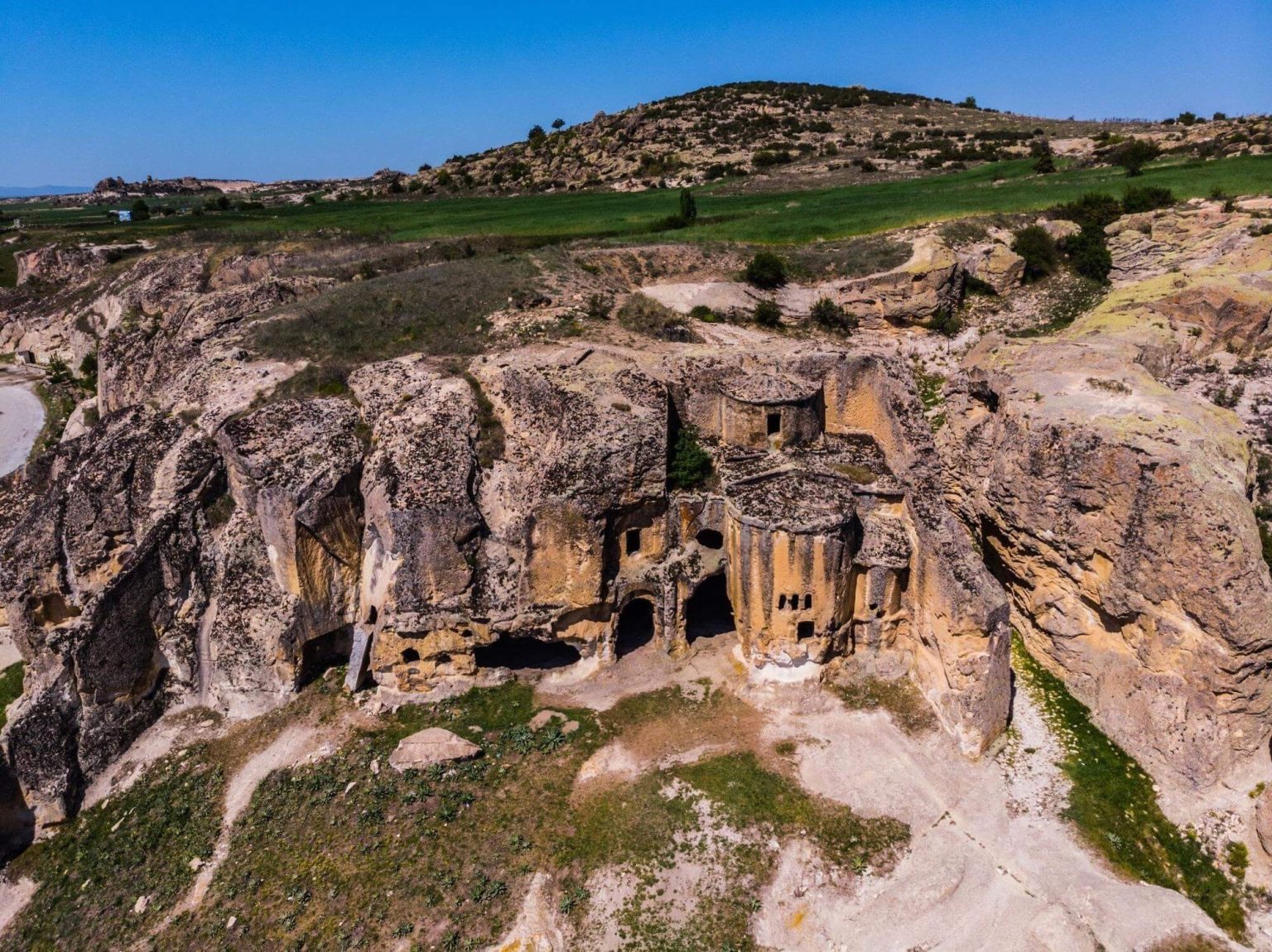 Phrygian Valley — Kings, Rock Monuments and Trails">

Road access into the Phrygian Valley is dominated by regional highways: Seyitgazi lies about 206 km southwest of Ankara, while the nearest practical urban bases are Eskişehir, Kütahya and Afyonkarahisar, each providing paved approaches and parking at trailheads. Public transport is limited; expect multi-stage transfers and a final leg over secondary rural roads. Vehicle type matters — high-clearance cars handle unpaved service tracks to sites such as Yazılıkaya and Üçlerkayası more reliably than low-slung sedans. The protected area spans roughly 55 hectares across seven provinces and is subject to local conservation regulations that restrict vehicle access and commercial operations in sensitive zones.
Logistics on the ground: routes, parking and seasonality
Most visitors arrive by private car or rental; road signage between the major towns and the valley is intermittent. Expect single-lane rural roads, occasional shepherd traffic, and seasonal weather impacts — winter frosts can render minor routes slippery while spring offers the best visibility and wildflower meadows. There are designated parking points adjacent to major monuments such as the Midas Monument (Yazılıkaya) and the Gerdekkaya Mausoleum, but facilities are basic: no formal visitor centre, limited sanitary services, and few shaded rest stops.
Practical table: bases, distances and travel times
| Base | Nearest major site | Approx. distance (km) | Estimated drive time |
|---|---|---|---|
| Eskişehir | Yazılıkaya / Seyitgazi | ~120–150 km | 2–2,5 hodiny |
| Kütahya | Ayazin / Üçlerkayası | ~70–110 km | 1–2 hours |
| Afyonkarahisar | Gerdekkaya / Kümbet | ~50–90 km | 1–1.5 hours |
| Ankara | Seyitgazi (region) | ~206 km | 3–3.5 hours |
Key sites and on-foot access
The valley’s signature remains the Midas Monument at Yazılıkaya: a rock façade carved with geometric motifs and Phrygian inscriptions, standing sentinel on a windswept plateau. Nearby, the Gerdekkaya Mausoleum and the Lion Tomb at Kümbet testify to funerary practice and royal iconography. Many monuments sit a short hike from roadhead parking, but some require cross-country walking across steppe and scrub.
- Yazılıkaya (Midas Monument) — best early morning for light on the façade; minimal shelter.
- Gerdekkaya and Kümbet — accessible with a short trail; fragile masonry and carved reliefs.
- Ayazin — early Christian cave chapels set into volcanic tuff, less restored than Cappadocia equivalents.
- Üçlerkayası — fairy chimneys and sculpted rock formations favored by photographers.
- Emre Lake — a freshwater feature that attracts birds and provides a contrasting water element to the steppe.
Visitor tips and conservation notice
Respect the protected status: avoid carving, climbing on fragile façades, or removing fragments. Carry water and navigational aids; cell coverage is intermittent in the hollows. Local guides can provide historical context and safer routing through underground settlements and connected cave networks. Overnight options in the towns are the practical choice; camping inside the strictest conservation zones is often prohibited.
Archaeological and historical overview
The Phrygians emerged after the collapse of the Hittite imperial order around 1150 BC, establishing a durable Anatolian power that flourished for nearly five centuries. Their cultural memory lives most visibly in the Midas legend — the king of folklore whose “touch of gold” belies an actual political and artistic legacy visible in rock-carved façades and inscriptions. Scholars date the main phases of monuments in the valley to the early first millennium BC, though the area saw continuous occupation and adaptation under successive powers: Hellenistic influences, Roman administrative structures, Byzantine ecclesiastical reworking and later Seljuk and Ottoman rural reorganizations.
Cave churches and monastic cells carved around Ayazin and neighboring villages reflect the valley’s transition from pagan shrines to Christian worship; frescos and simple arches remain, often less embellished and therefore more informative about daily monastic life than better-known touristed sites. Underground settlements and tomb complexes form networks linked by paths used by monks, traders and local communities over centuries.
Cultural continuity and landscape
The Phrygian Highlands preserve an uncommon continuity: land-use patterns, trackways and ritual topography that intersect Bronze Age kingship, early Christian asceticism and rural Ottoman village life. The term “sleeping Cappadocia” has been applied, but the comparison flattens distinct histories: here the rock forms, inscriptions and settlement patterns create a different archaeological signature and a quieter visitation profile.
Tourism outlook and international significance
From a tourism planning perspective, Phrygian Valley offers a model for low-density, heritage-focused travel. Infrastructure investments that remain sensitive to conservation — improved interpretive signage, limited shuttle services from base towns, and trained local guides — would elevate the valley’s profile without overwhelming its fragile sites. The valley’s combination of archaeological depth and accessible hiking routes positions it well for niche markets: archaeological tourism, cultural trekking, birdwatching and slow travel. International visitation is likely to grow incrementally as regional airports and road links are modernized and as travelers seek quieter, authentic alternatives to overcrowded heritage zones.
Short-term forecast
Expect measured increases in visitor numbers over the next decade, particularly during spring and autumn. Policy-makers face a choice: emphasize carrying-capacity limits and interpretive programming to preserve integrity, or accelerate access with the attendant risk of damage. Sustainable management models — small-group permits, timed entries at sensitive sites, and community-led hospitality — will determine whether Phrygian Valley remains a “sleeping” secret or becomes a calibrated heritage destination.
How the valley connects to broader travel patterns
Though inland, the valley complements coastal itineraries for travelers combining cultural inland routes with Aegean and Mediterranean circuits. Emre Lake introduces a modest water element that can be integrated into combined nature-and-history itineraries; however, deep-water activities and marina infrastructure are not relevant here.
In summary, Phrygian Valley is a logistics-minded traveller’s destination as much as an archaeologist’s site: plan for road travel, limited services, and protected-area rules. Visitors will encounter 3,000-year-old façades, early Christian cave complexes, underground settlements and steppe landscapes that reward slow exploration.
GetBoat keeps an eye on evolving tourism trends, and its editors routinely monitor developments in destinations both coastal and inland. As the world’s travel conversation names varied Destinations — from lake and beach escapes to sea, ocean and gulf itineraries — terms like yacht, charter, boat, beach, lake, sailing, captain, sale, superyacht, activities, yachting, sea, ocean, boating, water, sunseeker, marinas, clearwater, fishing appear frequently in broader coverage of tourism patterns. For updates on regional tourism news and how inland heritage sites fit into wider travel routes, GetBoat.com is always keeping an eye on the latest tourism news.