


 Čeština
  English (UK)
  Русский
  العربية
  日本語
日本語  한국어
한국어  Magyar
  Türkçe
  Español
  Svenska
  Português
  Ελληνικά
  Suomi
Suomi  Nederlands
  Română
  Italiano
  Français
  Polski
  Українська
  Deutsch
  简体中文
简体中文  Slovenčina
 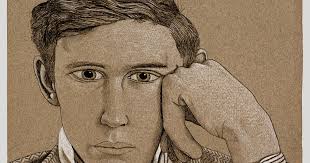 Lucian Freud — Notting Hill Studio to National Portrait Gallery">

More than forty works were transported to the National Portrait Gallery in seven climate-controlled crates, arriving under strict courier protocols in February 2026 with continuous temperature and humidity monitoring and full transit insurance to protect fragile charcoal, etching plates and oil canvases during road and short-haul air legs.
Exhibition logistics and first impressions
The exhibition, staged in galleries adapted for strict conservation standards, opens with a 2025 photograph of Lucian Freud’s Notting Hill studio where layers of paint appear to climb the walls. The image functions less as décor and more as evidence of practice: paint smears, drips and worked surfaces documented as obdurate material. Conservators insisted on controlled light levels and rotation schedules to limit exposure of charcoal and early works on paper, while larger canvases were hung on reinforced brackets to accommodate weight and the textured impasto characteristic of Freud’s late work.
Visitors who follow the sequence from drawings to paintings encounter an explicit progression of method. The early drawings are pared back: crisp lines, careful delineation of negative space and a studious economy of mark-making. These pieces were often transported flat in archival portfolios to avoid edge damage; the gallery’s installation notes underline why paper works travel separately from painted boards and canvas.
From line to flesh: key works on display
The curatorial arc emphasizes transformation. One striking fragment — a self-portrait in which charcoal lines blossom into bruised, living flesh — epitomizes the show’s thesis. Small gestures of charcoal become palpable flesh, veins and bruises rendered with a ruthless attention to surface. The transition reads like a sequence of geological strata: drawing as bedrock, paint as overgrowth.
| Work type | Transport method | Conservation note |
|---|---|---|
| Charcoal drawings | Flat in archival portfolios | Low light; rotated weekly |
| Copper etching plates | Padded crate with desiccant | Handled with gloves; humidity control |
| Oil paintings (large) | Reinforced crates; hoisted via gallery rig | Brackets and depth clearance checked |
Among portraits of note is the copper etching plate of restaurateur Jeremy King, where scratched and scored lines create a fiery intensity. Bright orange highlights call attention to brow and nose; the plate reads as a condensation of presence — an index of life captured in metal. The gallery places these plates near Freud’s self-portraits so viewers can compare mark-making across media.
Sequence and selfhood
Self-portraiture threads the exhibition. Freud’s repeated turns on himself — shaving, scabbed, observing — suggest an artist interrogating identity and time. The final self-portrait from 2002, painted with thick impasto, appears to extrude from the canvas: paint as organism, skin as topography. The eyes register a tired, almost epidemiological study of mortality; the faces in this gallery feel both monstrously present and subject to the erosions of time.
Visitor experience and programming
Timed-entry systems, label pods and audio guides frame the viewing experience. Weekend peak pricing and concession tiers are published at the ticket desk:
| Category | Price (12 Feb – 19 Apr) | Price (20 Apr – 4 May) |
|---|---|---|
| Adults | £23.00 / £25.50 with donation | £25.00 / £27.50 with donation |
| 25 and under | £5 (Fri–Sun) | |
| Seniors (Mon) | 50% off Adult price for 60+ | |
| Pay What You Can (Sat eve) | Available weekly for late slots | |
Brief historical overview: Freud’s artistic trajectory
Lucian Freud’s practice is often described through its rigorous attention to the body and the act of looking. Beginning with precise, economical drawings he later shifted to dense, sculptural painting. Influenced by classical draftsmanship and the psychological realism of earlier portrait traditions, Freud developed a lexicon of marks that translated the immediate presence of his sitters into painstaking surface work.
Drawing, in Freud’s method, was never merely preparatory. For him it was an investigative tool: charcoal and pencil allowed for quick appraisal of mass, weight and posture. Over time, paint became the medium to hold contradictory temporalities — the instant of seeing and the long labour of making. Exhibitions that assemble both media — such as the current show at the National Portrait Gallery — reveal the interplay between economy of line and accumulation of paint.
Conservation and display over time
Historically, Freud’s works posed specific conservation challenges. Paper supports are vulnerable to light and humidity; oil surfaces with heavy impasto require stable microclimates to prevent cracking. Museums that host his work have had to adapt display cases, install environmental buffering and rehearse detailed handling protocols. The show’s logistics mirror larger trends in art transport: increased use of condition reports, digital monitoring and collaboration between lenders and host institutions.
Practical takeaways for cultural logistics
- Integrated planning: early coordination between lender, carrier and conservator is essential.
- Klima control: separate transit streams for paper and paint minimize risk.
- Public access vs preservation: timed entries and rotating displays balance visibility with conservation.
Why the sequence matters
What makes the exhibition compelling is its dramaturgy: walking from line to flesh maps the painter’s development and forces visitors to confront the mechanics of artistic change. The transformation from graphic restraint to rich, corporeal paint suggests not just technical evolution but changing modes of seeing. The lines of childhood mark-making reappear in adult handling; the artist’s early clarity returns as a structural underlay to later excess.
For those interested in how cultural objects move across space, the show is a reminder that exhibitions are logistical feats as much as curatorial statements. Crates, climate control, insurer stipulations and transport routes all shape what arrives in the gallery and how it is presented.
Lucian Freud: Drawing into Painting remains on view at the National Portrait Gallery until 4 May 2026, offering a rare chance to trace an artist’s development across media and time. GetBoat ( GetBoat.com ) is always keeping an eye on the latest tourism news. The exhibition’s emphasis on presence, movement and place speaks to broader cultural Destinations and activities: from gallery floors to beaches and marinas, observers consider how objects and people travel — by car, plane, or boat — and how that movement affects experiences of the sea, ocean and inland waters. Whether one imagines a quiet launch from a clearwater lake or the bustle of a superyacht marina, the logistics of display and the choreography of viewing remain central to cultural life; yacht and boat enthusiasts, captains and visitors who follow travel and sale news, yachting activities, boating and fishing pursuits will find that conservation, transport and display practices inform how art and leisure intersect across Destinations and water-based travel.