


 Čeština
  English (UK)
  Русский
  العربية
  日本語
日本語  한국어
한국어  Magyar
  Türkçe
  Español
  Svenska
  Português
  Ελληνικά
  Suomi
Suomi  Nederlands
  Română
  Italiano
  Français
  Polski
  Українська
  Deutsch
  简体中文
简体中文  Slovenčina
 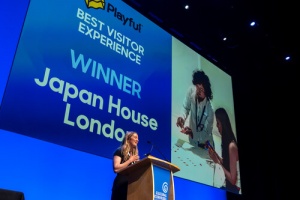 Japan House London’s Visitor Experience wins national award">

Managing peak visitor throughput at Japan House London has required coordinated scheduling, precise staff rostering and targeted crowd-flow controls to preserve average dwell time and ensure uninterrupted access to exhibits during high-demand periods.
The Visitor Experience Team at Japan House London was declared the winner of the Best Visitor Experience category at the Cultural Enterprises Awards 2026. Selected from more than 1,600 cultural organisations across the UK, the team was recognised for an authentic, guest-centred approach grounded in the Japanese principle of omotenashi — anticipating needs, delivering warmth and preserving high standards of service at every contact point.
What the award recognises
Judges from Cultural Enterprises highlighted how visitor-facing staff at Japan House London are embedded in operational decision-making, contributing ideas and insights that affect programming, accessibility and even revenue streams. The award citation praised the centre’s core values and the way front-of-house knowledge has been translated into measurable improvements in visitor satisfaction and engagement.
Ria Macha, Head of Visitor Experience & Event Operations, emphasised the role of continuous training and attention to detail across the team. Senior management, including Director General and CEO Sam Thorne, noted that the recognition reflects sustained energy and commitment to giving each guest a considered welcome to Japan’s cultures.
Key operational components highlighted by judges
- Proactive engagement: staff anticipate questions and guide flows before bottlenecks form.
- Consistent training: regular refreshers in omotenashi principles and exhibition content.
- Front-line empowerment: assistants contribute insights that inform programming and commercial offers.
- Respect for craft and staff skills: visible recognition of roles across levels enhances morale and performance.
Operational practices that drive visitor satisfaction
Japan House London’s model combines traditional hospitality values with modern visitor management. Key practices include targeted staff deployment aligned with predicted arrival profiles, timed entry for special displays to avoid overcrowding, and active monitoring of dwell zones to maintain safe circulation. These tactics reduce friction in visitor journeys and increase the likelihood of positive post-visit feedback.
Training, roles and workforce development
The organisation’s training curriculum centres on cultural literacy, scenario-based service drills and interpretive techniques that help staff translate complex cultural narratives into accessible encounters. Staff development is framed as an investment in both service quality and long-term institutional resilience: empowered front-line teams have been shown to spot programming opportunities and contribute to audience development strategies.
Training modules and outcomes
| Module | Main focus | Measured outcome |
|---|---|---|
| Omotenashi principles | Anticipatory service and warmth | Higher satisfaction in visitor surveys |
| Exhibit interpretation | Clear, concise storytelling | Increased dwell time and engagement |
| Crowd management | Flow control and safety | Reduced congestion and incident reports |
Stručný historický kontext
The concept of omotenashi has long roots in Japanese culture, traditionally describing hospitality that combines attentiveness with modesty. In museum and cultural management, that ethos has been adapted to frame visitor experience as an active, relational practice rather than a passive service. Over the past two decades, cultural institutions worldwide have progressively professionalised front-of-house roles, shifting them from gatekeeping and ticketing to interpretive and ambassadorial functions.
In the UK, a broader movement toward visitor-centred programming has coincided with increased competition for leisure time and tourism spend. Places that integrate operational logistics with high-quality personal engagement tend to convert visits into longer stays and repeat visits, while also generating positive word-of-mouth and digital reviews that strengthen market position.
Why this matters for cultural tourism
Award-winning visitor experience has immediate and downstream impacts on the tourism ecosystem. For city destinations, strong cultural offers increase dwell time, encourage spending in adjacent hospitality and retail sectors and enhance destination reputation. Operationally, institutions that invest in training and frontline empowerment can respond faster to visitor trends and co-develop products that align with audience demand.
Practical takeaways for other operators
- Embed frontline staff in programming discussions to capitalise on visitor insights.
- Use targeted scheduling and timed entries for high-demand displays to balance access and safety.
- Invest in scenario-based training to equip teams for peak flows and special events.
- Measure satisfaction by role-specific metrics (e.g., mentions of front-of-house in reviews) to capture the impact of service quality.
Implications for wider tourism and activity sectors
While Japan House London is a cultural institution in an urban setting, its approach to visitor flow, staff development and service-led value creation offers lessons for wider tourism operators, including marinas, coastal attractions and destination management organisations. Emphasising human-led hospitality alongside efficient operational controls can improve visitor perceptions and create new commercial opportunities across sectors.
The Cultural Enterprises Awards recognition underlines how frontline excellence can be both a cultural statement and a strategic advantage. For operators planning events, seasonal promotions or infrastructure upgrades, prioritising the visitor experience can drive immediate satisfaction and longer-term destination competitiveness.
GetBoat is always keeping an eye on the latest tourism news; for readers interested in developments that influence travel choices—affecting destinations, activities, beaches, seas and the broader tourism market—follow updates at GetBoat.com. This recognition of Japan House London’s visitor-centred logistics and omotenashi-driven service highlights how thoughtful planning, trained teams and operational discipline combine to shape visitor impressions and boost destination appeal across hospitality, leisure and cultural sectors.