


 Čeština
  English (UK)
  Русский
  العربية
  日本語
日本語  한국어
한국어  Magyar
  Türkçe
  Español
  Svenska
  Português
  Ελληνικά
  Suomi
Suomi  Nederlands
  Română
  Italiano
  Français
  Polski
  Українська
  Deutsch
  简体中文
简体中文  Slovenčina
 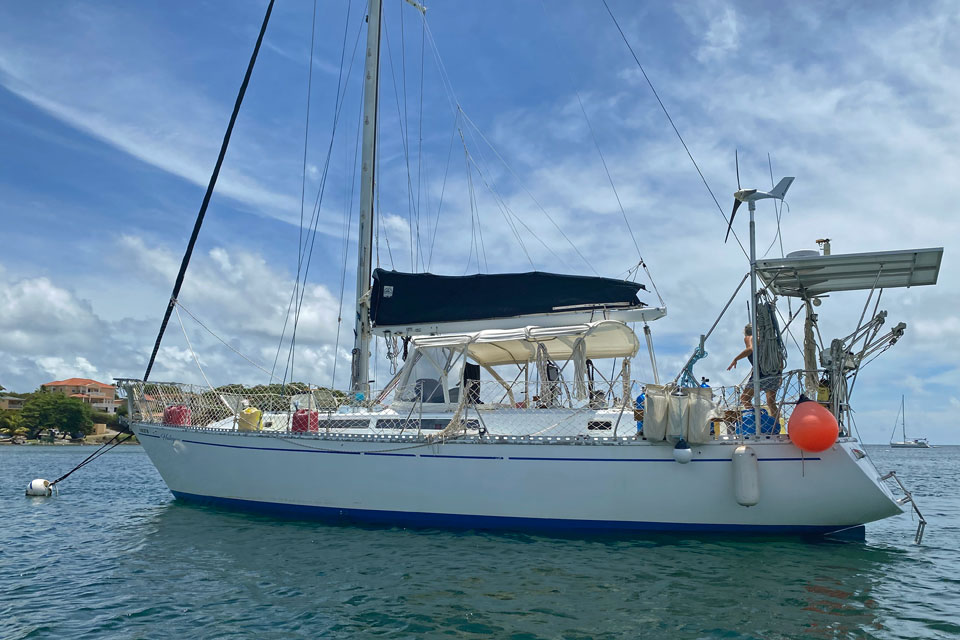 Gulfstar Hirsch 45: Practical Review for Renters and Buyers">

Na stránkách Gulfstar Hirsch 45 presents two logistic realities for marinas and charter operators: a choice between a shoal draft (wing or shortened fin) that eases access to shallow anchorages and tight marina berths, or a deep-draft version that improves upwind performance but limits berth options and increases lifting requirements and haulout costs. Fuel and water tankage—commonly over 100 gallons of diesel and 150 gallons of water—translate into longer provisioning cycles, fewer refuelling stops on coastal charters, and heavier berthing fees where displacement-based rules apply. Add fairly high freeboard and beam for a 45-footer and you get extra windage that affects maneuvering fees, tug assist needs, and mooring strategy in crosswind conditions.
Design & Construction
Built in Florida by Gulfstar Yachts, a firm founded by Vince Lazzara, the Hirsch 45 marks a shift from early thin laminates toward more robust GRP construction during its mid-1980s production run. The hull is generally solid fiberglass, while decks are often balsa-cored—a known inspection hotspot when evaluating a used example for sale or charter service. The underbody favors a modern combination of a fin keel with a skeg-mounted rudder, which balances straight-line tracking and maneuverability under sail and power.
Most examples were rigged as sloops, though a few keč variants exist. Owners and fleet managers should note that the model line includes both shoal and deep variants, allowing operators to match a given hull to intended cruising grounds—Bahamas-style shallow-water itineraries versus long offshore passages.
Sail Areas & Rig Dimensions
The Hirsch 45 carries a substantial rig intended to drive a relatively heavy hull in moderate winds; sail handling is straightforward but worth checking before charter use. Typical rig attributes include higher loads on terminal fittings and winches, so look for upgraded hardware if the yacht has been used intensively in a rental fleet.
| Specification | Typical Value / Note |
|---|---|
| LOA | 45′ (13.72 m) |
| Hull | Solid fiberglass |
| Deck | Balsa-cored (inspect closely) |
| Keel options | Shoal (wing/short fin) or deep fin |
| Typické tankage | Fuel >100 gal; Water >150 gal |
| Rig | Sloop (mostly); some ketches exist |
Configuration, Layout & Cruising Characteristics
The layout is a strong selling point: a true aft master stateroom usually contains a walk-around queen island berth and a private head with a separate shower—comfort that reads like a small apartment at sea. The galley sits along the starboard passage, giving a braced, sheltered position for cooking underway, which is a big plus for liveaboard owners and bareboat charters where guests expect usable cooking facilities.
From a charter or rental perspective, the center cockpit is elevated and dry—great for safety and privacy—but the height also raises windage and can complicate close-quarters handling during check-in and check-out. Tankage figures support extended cruises between ports, which is attractive for longer charter packages or week-long private hires where refuelling stops are costly or inconvenient.
Maintenance & Survey Notes
- Inspect balsa-cored decks for soft spots and core rot; re-coring is common on older hulls.
- Check fuel/water tanks for corrosion or replacement history—large capacity reduces dock visits but raises logistics for cleaning and certification.
- Rigging and winches bear higher loads; check standing rigging age and service history before commercial use.
- Skeg-mounted rudders are robust but look for keel-hull joint issues on grounding-prone vessels.
Charter-Fleet Buying Tips
- Prefer hulls with documented deck re-core or replacement to avoid expensive surprises.
- Choose shoal-draft for gulf, Bahamas, and shallow-draft destinations; deep-draft for offshore bluewater charters.
- Invest in upgraded winches, modern navigation, and comfortable interior refits to increase rental appeal.
- Factor haulout and berthing logistics into operating costs; larger tankage can reduce fuel stops but increases displacement fees.
| Draft Type | Operational Advantages | Trade-offs |
|---|---|---|
| Shoal | Easier access to shallow anchorages and marinas | Reduced upwind performance |
| Deep | Better pointing and ocean performance | Limited marina options; higher lifting costs |
Frequently Asked Questions (FAQs)
Is the Gulfstar Hirsch 45 suitable for bluewater cruising? Yes—when properly maintained and fitted with the deep-draft option and updated systems, it is a pragmatic bluewater platform rather than a light-air racer.
Would it work in a charter fleet? Absolutely—its comfortable aft cabin and large tankage make it attractive for couples’ charters and private hires, though operators should select shoal vs deep models to match destinations and marina infrastructure.
Zkrátka, Gulfstar Hirsch 45 offers a comfortable, spacious cruising platform with sensible construction for its era, but successful ownership or charter operation hinges on careful attention to deck coring, rigging, and logistic planning for fuel, water, berthing and marina access. From yacht sale considerations to rental readiness, the Hirsch 45 can serve as a reliable boat or charter yacht for sea, gulf and ocean cruising—ideal for activities like boating, fishing, and relaxed sailing to beach and clearwater destinations under the watchful eye of a competent captain.