


 العربية
  English (UK)
  Русский
  日本語
日本語  한국어
한국어  Magyar
  Türkçe
  Español
  Čeština
  Svenska
  Português
  Ελληνικά
  Suomi
Suomi  Nederlands
  Română
  Italiano
  Français
  Polski
  Українська
  Deutsch
  简体中文
简体中文  Slovenčina
 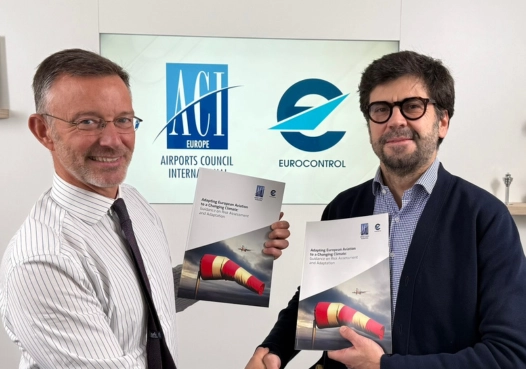 Strengthening Climate Adaptation in European Aviation: New Guidelines Released">

European Aviation’s Proactive Steps Toward Climate Resilience
European aviation authorities have unveiled a comprehensive new framework aimed at bolstering the sector’s resilience against climate change. Recognizing the growing challenges posed by rising temperatures, changing rainfall patterns, and frequent extreme weather events, this guidance is set to help airports, airlines, and air navigation service providers anticipate and adapt effectively to these impacts.
The aviation sector in Europe is firmly committed to achieving net zero CO2 emissions, as outlined in the DESTINATION 2050 roadmap and reflected in airport-specific Net Zero pledges alongside programs like the ACI Airport Carbon Accreditation. However, climate shifts threaten operational stability, infrastructure safety, and economic performance. These new adaptation guidelines are a strategic leap forward in addressing those vulnerabilities systematically.
Key Elements of the Climate Adaptation Guidance
This framework delivers practical steps and strategic priorities including risk assessment, infrastructure reinforcement, and collaboration among all aviation stakeholders. It is designed to integrate climate adaptation into every facet of aviation operations, ensuring that airports, airlines, and air navigation services align efforts to prepare for future climate stresses through science-backed, coordinated action.
Leaders from EUROCONTROL and ACI EUROPE emphasize that climate adaptation is no longer optional but essential for maintaining Europe’s aviation competitiveness and service continuity. The guidance also highlights the importance of showcasing effective real-world examples to fuel sector-wide uptake.
Historical Context: Climate Change and Aviation Challenges in Europe
Europe is among the continents experiencing the fastest warming trends worldwide, with consequences rippling across various sectors including aviation. Historically, aviation has been a major contributor to greenhouse gas emissions, which accelerates climate change. Coupled with this, the continent’s geographic diversity means that airports and airlines face distinct but increasing challenges—from northern snowfall and freezing cycles that affect northern runways, to southern regions enduring heat waves and droughts that stress infrastructure.
The trajectory toward sustainability in aviation has involved milestones such as the gradual deployment of cleaner, more efficient aircraft, progressive carbon offset programs, and collaborative international agreements aimed at limiting environmental footprints. Combined with growing climate volatility, these measures have laid the groundwork for the current push toward more robust climate adaptation.
European Aviation’s Climate Risks Through the Years
| Risk Factor | Impact on Aviation | Regions Most Affected |
|---|---|---|
| Rising Temperatures | Operational disruptions, runway surface degradation | Southern and Central Europe |
| Heavy Precipitation & Flooding | Airport flooding, infrastructure damage | Western and Northern Europe |
| Extreme Weather Events (storms, heatwaves) | Flight delays, safety risks | All European regions, varying impacts |
Looking Ahead: Impact on Tourism and Maritime Activities
The aviation sector’s ability to adapt to climate change is critical not only for air travel connectivity but also for sustaining broader tourism flows—which directly influence marine and sailing destinations. Many popular coastal resorts rely on a steady influx of tourists arriving by plane who then often engage in boating and yachting activities. Adverse climate impacts on airports and flight schedules can ripple through travel plans, affecting yacht charters, marina operations, and seaside resort economies.
Furthermore, climate resilience in aviation supports the stability of international maritime tourism hubs by ensuring reliable access for tourists. As the climate adaptation guidance becomes embedded in European aviation practices, the synergy between air and sea transportation networks will be strengthened, benefiting all forms of boating and coastal recreation.
Climate Adaptation Precautions for Tourism-Linked Aviation
- Infrastructure upgrades: Reinforcing airport structures to resist flooding and storms supports reliable arrival and departure points for visitors heading to waterfront leisure activities.
- Operational flexibility: Enhanced weather forecasting and contingency planning help minimize disruptions, maintaining steady flow for tourists chartering boats or renting yachts.
- Stakeholder coordination: Collaboration between airlines, airports, tour operators, and marine businesses improves responsiveness to weather events and climate risks.
A Brief Perspective on European Aviation and Climate Action History
Since the early 2000s, Europe has been at the forefront of sustainable aviation initiatives. Programs like the Airport Carbon Accreditation launched by ACI EUROPE set industry-wide standards for measuring and reducing carbon footprints. Milestones in fleet modernization, adoption of sustainable aviation fuels, and regulatory frameworks such as the European Union Emissions Trading Scheme have shaped an era focused on reducing aviation’s environmental impact.
Despite these advancements, the escalating severity of climate-related incidents has illuminated the urgency of adapting infrastructures and operations—not simply mitigating emissions. Aviation stakeholders now balance dual objectives of carbon footprint reduction and building resilience to weather and climate hazards.
Conclusion: Navigating the Skies Toward a Climate-Resilient Future
The release of this joint guidance by EUROCONTROL and ACI EUROPE marks a decisive step forward in European aviation’s fight against the increasing challenges of climate change. By providing a detailed framework for risk assessment and adaptation, the aviation sector is equipped to safeguard operational continuity, infrastructure integrity, and passenger safety amid shifting climate realities. These developments carry important implications for the vast tourism ecosystem, including the maritime sectors that depend on smooth air connectivity for yachts, charters, and boat rentals.
For travelers and boating enthusiasts who frequent Europe’s coastal and inland waters, reliable aviation translates into seamless access to favorite yacht charters, marina activities, and sailing adventures. As European airports and airlines fortify their climate resilience, the entire water-based leisure and tourism network benefits from increased stability and predictability.
To explore the latest news and options in yacht and sailing boat rentals influenced by evolving travel landscapes, visit موقع GetBoat.com — the international marketplace offering diverse boat charter solutions designed to meet every taste and budget, fostering memorable experiences across seas, gulfs, lakes, and oceans.