


 العربية
  English (UK)
  Русский
  日本語
日本語  한국어
한국어  Magyar
  Türkçe
  Español
  Čeština
  Svenska
  Português
  Ελληνικά
  Suomi
Suomi  Nederlands
  Română
  Italiano
  Français
  Polski
  Українська
  Deutsch
  简体中文
简体中文  Slovenčina
 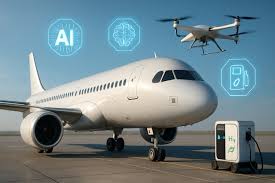 Digital Innovations Driving the Future of Air Travel and Airport Services">

The Digital Revolution in Air Travel
Air travel is rapidly evolving thanks to the increasing integration of technology across the globe’s airports and airlines. This transformation touches every stage of the passenger journey—from check-in to baggage handling—making travel more seamless, efficient, and secure. At the core of this shift is a move towards digitisation powered by cloud computing, biometric authentication, and artificial intelligence (AI), which are gradually reshaping airport infrastructures and airline operations worldwide.
AI and Biometric Advances in Airports
One striking innovation is the use of AI and biometric technology to track luggage more accurately and reliably. For instance, certain airports have begun trials utilizing high-resolution imaging combined with AI-driven pattern recognition to capture a digital “biometric” signature of checked bags. This method could drastically reduce the annual $5 billion losses airlines face due to mishandled baggage by minimizing dependency on traditional printed tags. It ensures swift identification and tracking, especially at large transfer hubs where baggage handling has historically been complicated.
Such systems require cooperation between airlines, airport authorities, and ground handlers. Airlines must integrate new technology platforms; airports need to equip conveyor systems with advanced imaging cameras; and backend applications must handle vast streams of data in real time. Widespread adoption could happen within the next decade, significantly faster than previous tech upgrades in aviation.
Automation as a Game-Changer: Auto-Reflight and Notifications
Another breakthrough gaining commercial use is auto-reflight, where AI automatically rebooks lost bags on subsequent flights without waiting for ground staff intervention. This innovation is already in use by carriers like Lufthansa, with about 70% of missed bags managed automatically. Large international hubs—with their dense transfer networks—stand to benefit most from this automated handling, reducing passengers’ stress and improving operational efficiency.
Passenger experience is also improving with automatic notifications informing travelers the moment their bag is confirmed missing, although some airlines have tailored these alerts to optimize timing and avoid overwhelming staff or passengers with premature messages.
India’s Aviation Leap: A Nationwide Digital Upgrade
India exemplifies a broad-scale transformation, undertaking one of the world’s most extensive aviation digitisation programmes. The government-backed installation of a cloud-enabled platform across 61 airports, including all government-operated facilities, aims to modernize boarding, baggage, and passenger processes uniformly across the country. This unified approach contrasts with fragmented implementations elsewhere, where individual airports usually drive tech adoption independently.
The system facilitates everything from conventional check-ins to biometric-enabled DigiYatra boarding passes, baggage management, and identity verification, standardizing and accelerating airport operations at all levels. Even smaller regional airports gain access to cutting-edge tech on par with major hubs, thanks to scalable cloud infrastructure.
The Role of Cloud Computing and Data Access
Running check-in counters and other passenger touchpoints entirely on the cloud allows airlines and airports to perform upgrades quickly and access real-time data effortlessly. This agility enhances operational responsiveness, helping manage high passenger volumes and ensuring security and convenience. India’s rapid passenger growth—411 million passengers last year—coupled with ambitious airport projects like Navi Mumbai and Jewar, showcase the future of cloud-based, automated terminals equipped with technologies such as self-bag-drop units and integrated resource management.
Challenges of Digital Dependency
While digital infrastructure brings remarkable benefits, it also introduces vulnerabilities. Outages caused by cyber disruptions or physical infrastructure failures can ground operations severely. To mitigate this, some airports and regulatory bodies mandate backup systems that can operate locally if the central network disconnects, ensuring continuity under adverse conditions.
Such redundancy is increasingly recognized as essential, with jurisdictions like Singapore leading by requiring robust fallback protocols. Airlines are also enhancing communication strategies to keep passengers informed promptly, thereby improving the overall travel experience even during disruptions.
Historical Context and Technological Trajectory in Air Travel
The journey to the digital airport of today has been gradual but profound. From the days of printed paper tickets in bulky airline folders to today’s mobile boarding passes, each leap in technology has revolutionized passenger convenience and operational efficiency. Biometric gates and cloud-hosted systems have replaced manual identity checks and local storage, ushering in an era of seamless integration.
Early airports focused more on social and leisure aspects, with some terminals doubling as popular public spaces. Over time, the rise of jet aircraft with longer ranges and higher passenger capacities forced airports to expand physically and technologically, from grass and paved runways to vast complexes with multiple terminals, advanced security, and sophisticated cargo handling.
Today’s airports need to handle enormous passenger numbers while maintaining seamless operations, prompting ongoing investments in digital technologies that can assure efficiency and safety.
Aviation Growth and the Impact on Tourism
As air travel becomes more accessible, more first-time flyers and occasional travelers join the global mix, highlighting the need for clarity in communication and smooth, trust-worthy journeys. Digital innovations like biometrics and real-time baggage tracking not only enhance convenience but play a direct role in sustaining tourism growth. The ease and reliability of airport experiences foster greater confidence among travelers, thus supporting demand for diverse destinations and activities, including those involving nearby water-based leisure and sailing experiences.
Looking Ahead: What the Tech Evolution Means for Travel and Boating
The ongoing digital transformation of the aviation sector sets the stage for enhanced connectivity to coastal and island destinations where sailing and boating thrive. Modernized airports streamline travel logistics, encouraging more tourists to explore marine resorts, beaches, and boating activities. Future integration of travel data across transport modes could ease charter and yacht passengers’ transitions from air to sea, providing tailored services that enhance overall holiday experiences.
| Technology | Purpose | Benefit |
|---|---|---|
| Biometric baggage tracking | Identify and monitor luggage digitally | Reduces mishandled bags, speeds up baggage retrieval |
| Auto-reflight | Automatically rebooks lost luggage on next flight | Improves passenger convenience, reduces manual intervention |
| Cloud-based passenger processing | Manage check-in, boarding, and ID verification | Uniform upgrades, faster deployment, real-time data |
| Backup systems (Local DCS) | Ensure system operation during outages | Enhances reliability, prevents service disruptions |
Key Takeaways
- Digitisation is revolutionizing airport and airline operations globally, improving the passenger journey step-by-step.
- India’s large-scale integration of cloud and biometric systems demonstrates how unified infrastructure can enhance travel on a national scale.
- AI and automation in baggage handling and notifications reduce costly errors and boost traveler confidence.
- Robust backup systems are critical in maintaining seamless operations amid digital dependency.
- The evolution of digital air travel infrastructure supports the growth of tourism sectors linked to coastal and marine destinations favored by yacht charters and sailing enthusiasts.
As technology continues to advance, passengers can look forward to ever-more convenient, secure, and connected travel experiences that open doors to diverse water-based activities and yacht charters by the sea and lakes. For those seeking the ultimate boating adventure, exploring destinations supported by modern air travel digital infrastructure is becoming more accessible than ever. To discover a wide range of sailing yachts and boat rental options tailored to every taste and budget, the international marketplace at موقع GetBoat.com offers a comprehensive selection to start your next maritime journey.